High-precision manufacturing was once considered something exclusive to large corporations. However, advances in robotic integration and automated manufacturing have changed this perception.
Sophisticated capabilities are becoming accessible to midmarket and smaller operations. This shift has led to a more even competitive landscape.
Smaller manufacturers have an opportunity to reach new levels of accuracy and efficiency. Today’s robotic systems can help these producers modernize targeted workflows without overhauling their entire production operations.
Robotic innovations drive efficiency for manufacturers
The evolution of robotics has led to more democratized precision manufacturing processes. This is evident across industrial robots and agile collaborative robots.
Key benefits of these innovations can include:
- Cost and footprint: The potential for lower investment costs and compact designs can make robotic systems economically viable. It can also simplify integration into existing layouts.
- Enhanced programming: Intuitive interfaces and lead-through teaching methods support quick deployment and reconfiguration. This reduces the training typically required for operators without robotics expertise.
- Sensors and AI-driven capabilities: Sensors, such as vision systems and force-torque sensors, can be integrated with AI. This enables robots to understand, react and adapt with precision.
- Safety and collaboration: Cobots can work safely alongside humans without extensive guarding. This fosters a flexible human-robot workforce that combines optimal utilization and human dexterity.
These advancements mean that midmarket manufacturers can overcome hurdles like skilled labor shortages, rising costs, and quality demands.
 Submit your innovation now!
Real-world impact of robotic integration for precision manufacturers
Here are some use cases that show how a diverse range of manufacturers have taken advantage of recent advances in robotics.
1. SCHUNK R-C2 automation for flexible production
Torneria Novoletto is an Italian organization specializing in sophisticated components for the chemical, medical, and pharmaceutical sectors.
The company faced obstacles in achieving high precision and process reliability for medium-sized batches. It implemented SCHUNK’s R-C2 automation concept, integrating advanced clamping devices and grippers with robotic handling.
Introducing this system helped to support high operational flexibility. Setup and changeover times were also significantly reduced because the SCHUNK R-C2 allows the continuous handling of workpiece sizes and automated reclamping.
This innovative robotic integration has helped Torneria Novoletto to pursue an unmanned 24/7 operation, increase machine utilization, and mitigate shortages of skilled labor.
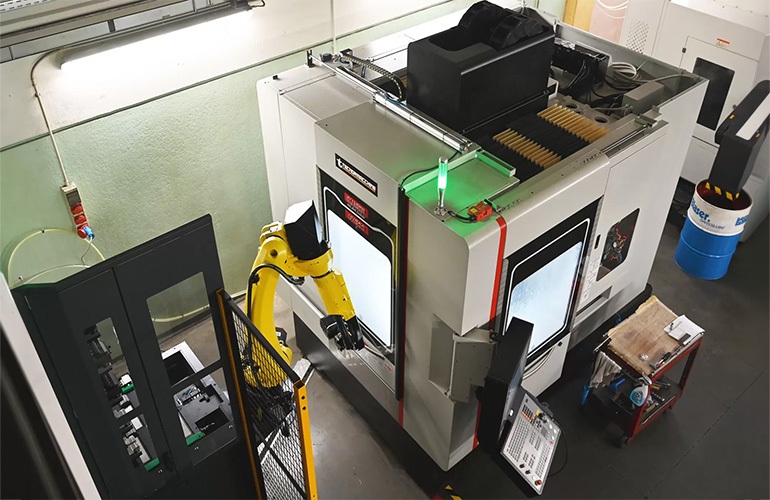
Torneria Novoletto shows the compact efficiency of the R-C2 automation. Source: SCHUNK
2. Cobot integration for part marking
Telesis, a leading provider of industrial marking solutions, integrated its part marking technology with systems from Universal Robots.
The company offers advanced laser and dot peen markers. When a Telesis laser marking system is integrated with a UR force- and power-limited robot arm, it creates a precise and flexible method of identifying automated parts.
Innovations like this ensure that systems can be safely deployed alongside human workers. Robotic integrations have provided Telesis with a streamlined marking process without complex safety enclosures, consistent high-quality marking on various materials and part geometries, and added traceability and quality control.
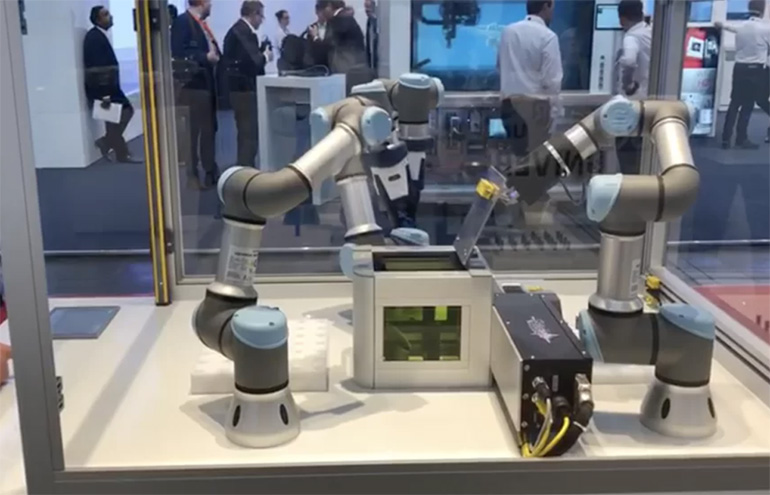
Telesis demonstrates integrated laser-marking systems with robotic control. Source: Universal Robots
3. FANUC M-20 robots enhance throughput and scale
Northern Kentucky Machine (NKM), a flexible job shop, experienced labor shortages and production capacity challenges. Its strategic response included the use of automated manufacturing solutions, such as deploying FANUC M-20 Series industrial robots.
By using Automation Within Reach’s (AWR) “RC-2” CNC machine-tending system, the integration increased NKM’s throughput and machine utilization.
Operators quickly adapted to programming and running these robotic cells. This helped to enable “lights-out” manufacturing for longer runs, freeing up human workers for other tasks.
The FANUC robots have provided NKM with the scalability needed to pursue and take on larger projects, deliver consistent part quality, drive growth, and compete with other midsize organizations.
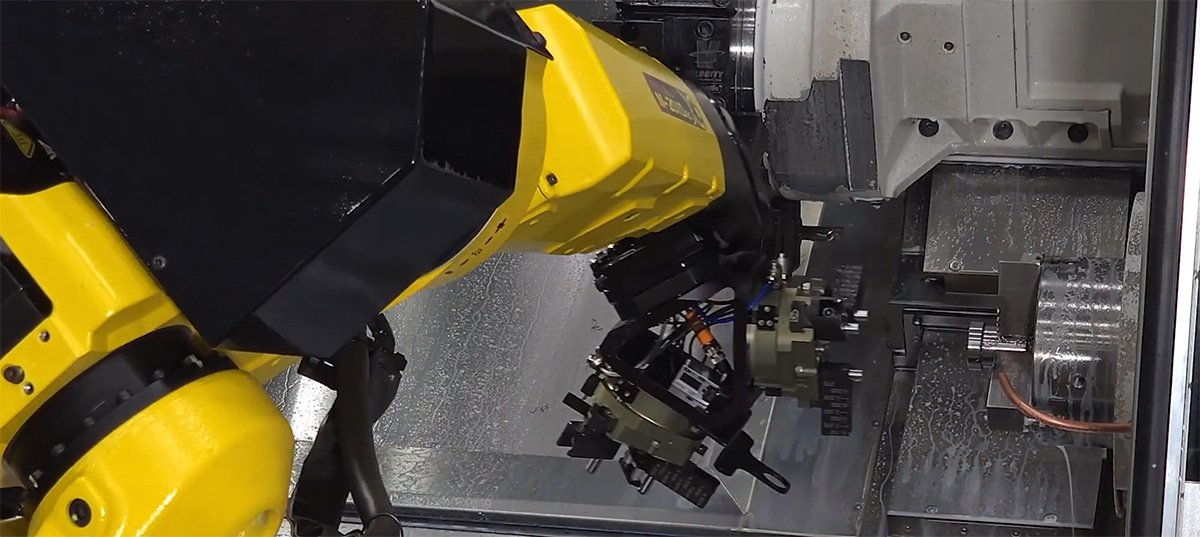
NKM used the M-20 Series robot to boost the efficiency of human workers. Source: FANUC
4. ActiNav enables bin picking and legacy equipment extension
PrecisionForm Inc. is a producer of small custom metal parts. It faced the challenge of automating bin picking for CNC machines.
By deploying Universal Robots’ ActiNav system, PrecisionForm integrated a UR5 cobot with advanced vision and path-planning capabilities. This approach led to reliable part picking from deep bins that were then loaded into CNC machines.
Challenging geometries were less of an issue, and operators were freed up to manage multiple machines. The UR cobots helped reduce labor challenges and extend the lifespan of older CNC equipment.
By adding a relatively inexpensive robotic solution, PrecisionForm Inc gained additional utility from existing machinery, increased the potential return on investment (ROI) as a midmarket operation, and improved daily production.
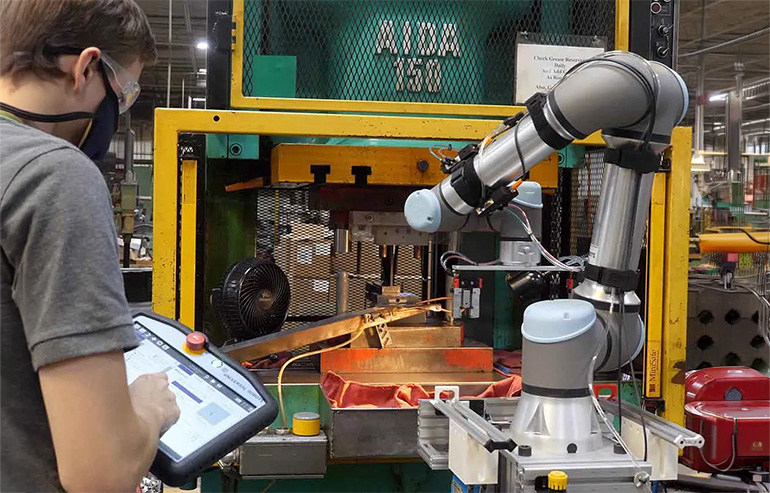
Uses can easily deploy and calibrate the ActiNav system, says UR. Source: Universal Robots
Capabilities evolve for midmarket manufacturers
The accessibility of precision manufacturing marks a crucial moment for many industries. Robotic integration is no longer exclusive to the world’s largest enterprises.
Innovations offering ultra-high accuracy and consistent quality are now economically and operationally viable for midsized manufacturers. The benefits that organizations such as Telesis, Torneria Novoletto, NKM, and PrecisionForm now have shown that modern robotics can drive sustainable growth.
Robotic solutions continue to evolve. As they do, the advantages of automated manufacturing will grow alongside those changes. With thoughtful and careful implementation, a new generation of agile and highly precise manufacturers will be waiting to reap the benefits of this exciting new world.
 About the author
Lou Farrell, a senior editor at Revolutionized, has written on the topics of robotics, computing, and technology for years. He has a great passion for the stories he covers and for writing in general.
This article is posted with permission.
Tell Us What You Think!