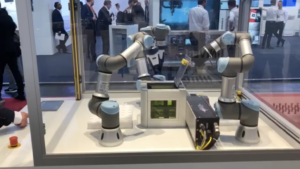
Properly integrated industrial and collaborative robots can help midmarket manufacturers, according to a columnist.
Top 10 robotics developments of October 2026
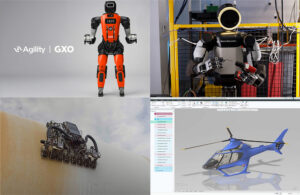
Last month, we celebrated the 20th anniversary of RoboBusiness, whic is being rebranded to Robotics Summit & Expo West.
Unusual robotic animals can prove their utility
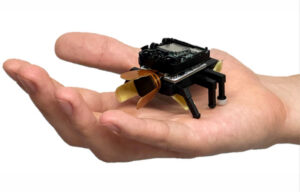
Robotic animals are designed to be helpful rather than scary, showing promise in disaster recovery, utility inspection, and companionship.
2026 Robotics Handbook looks at humanoids, AI, and design choices

The 2026 Robotics Handbook examines design choices behind dexterous manipulation, humanoid robots, and construction automation.
AGIBOT introduces Worken to measure robot productivity at AGIBOT Innovation Day 2026
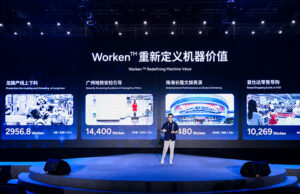
AGIBOT unveiled its AHA3 integrated platform, GO-3 Preview, and WITA-Omni 1.0 model, as well as the G2 Max robot and Link-U OS 1.0 framework.
Eka Robotics raises $150M to scale its vision-force-action model for robots
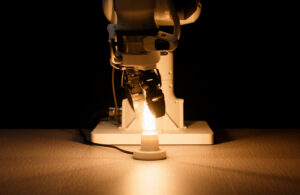
Eka Robotics is building a vision-force-action, or VFA, model to develop an intuition of physics through reinforcement learning at scale.
Why dexterity is physical AI’s real bottleneck
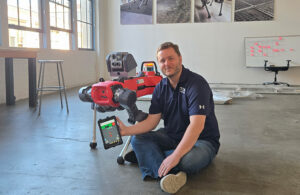
The next major challenge in robotic dexterity is making the entire system reliable enough to turn capabilities into useful work.
Why humanoid robot demos still fail the generalization test

How better data and human judgment can help robots move beyond demos toward reliable real-world performance.
Meet Flourish One, the Raspberry Pi-powered humanoid built for busy parents
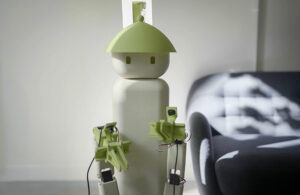
Flourish is releasing a $3,555 phone-trainable home robot, targeting busy parents with personalized, cloud-trained chore automation.
Epson introduces AX6 cobot with compact design, no-code programming
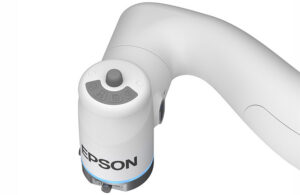
Epson Robots has expanded its six-axis robot line with the AX6, a lightweight force- and power-limited arm.
Icarus Robotics flies ISS-bound robot in microgravity for the first time
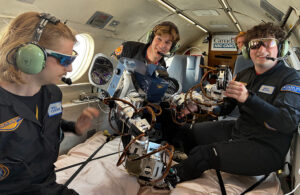
This is the last major test of the system before Icarus Robotics will be sending JOY the the ISS in early 2027.
Pressure sensors can help improve robotic gripping accuracy
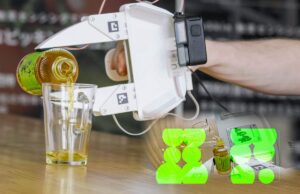
From first contact through surface deformation, load distribution, and final stable hold, pressure sensors can improve robotic bin picking.
Learn why food is physical AI’s hardest problem at RoboBusiness
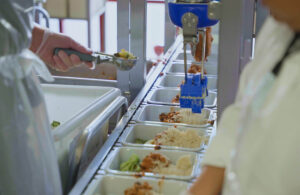
Rajat Bhageria, the founder and CEO of Chef Robotics, will explore what makes food such a demanding benchmark for physical AI.
How better grippers can unlock physical AI
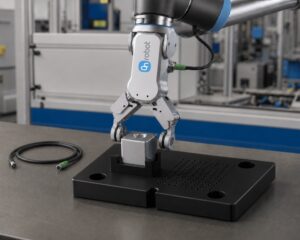
Physical AI depends on smarter grippers to give robots the dexterity, sensing and adaptability needed to handle real-world tasks.
How Locus Robotics is getting a grasp on one of robotics biggest challenges: manipulation
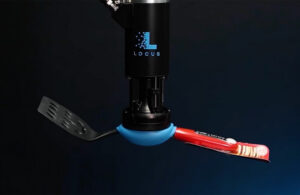
Locus Robotics recently acquired Nexera Robotics, which create unique soft picking technology, bolstering its manipulation capabilities.
Unichem acquires Loomia to accelerate entry into the humanoid ‘skin’ market
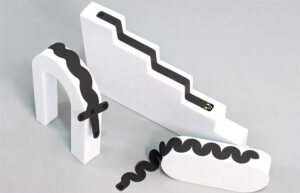
Automotive suppliers Unichem and R&Y are working with Loomia to develop tactile sensors for automotive and robotics applications.
How Generalist uses human demonstration data for robot learning
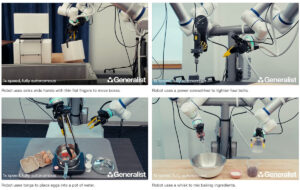
Research around the Universal Manipulation Interface is enabling Generalist, Walden Robotics, and others to turn data into robot behaviors.
BioflexBot robot hand aims to replicate key human hand motions
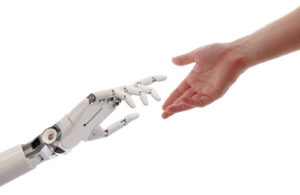
Researchers created the BioflexBot, a novel robot that mimics and even exceeds core motions of the hand with a simple design.
Tacta Systems takes aim at high-skilled manufacturing work with TactaBot
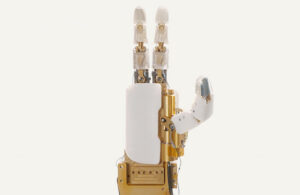
Tacta Systems unveiled a three-part system, including its robotic hand, that enables users to teach its robot new dexterous skills.
Google DeepMind says Gemini Robotics 2 enables full body control
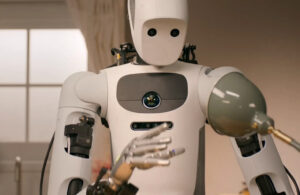
Gemini Robotics 2 enables robots to reason through every movement, unlocking a broad range of tasks, DeepMind said.
Generalist’s GEN-1 foundation model now supports a range of robot end effectors
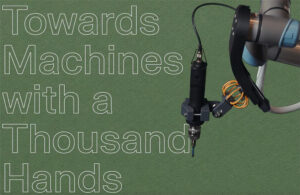
By training GEN-1 to work with new hands, Generalist said a single base model can learn sensorimotor policies on different robots.
Friction is key to making better robot world models
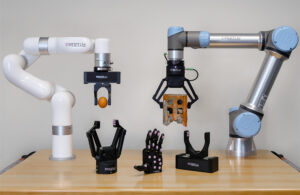
Deploying world models in real robotic systems requires a step that receives less attention than the models themselves: conditioning.