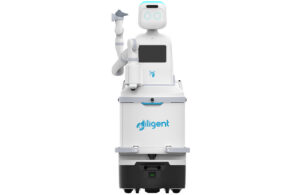
Diligent is now rolling out Moxi 2.0 to health systems including Endeavor Health Edward Hospital and Children’s Hospital Los Angeles.
Surgeons use da Vinci surgical robot to perform common cardiac surgery

At the El Camino Health Heart and Vascular Institute, surgeons are now performing cardiac procedures with Intuitive’s da Vinci robot.
How Generalist uses human demonstration data for robot learning
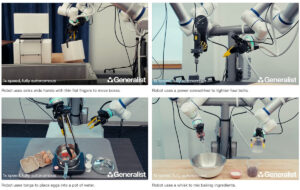
Research around the Universal Manipulation Interface is enabling Generalist, Walden Robotics, and others to turn data into robot behaviors.
Gravis Robotics raises $200M for autonomous construction
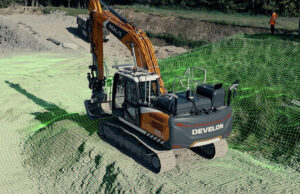
Gravis Robotics has designed autonomy AI and hardware for a wide range of excavators and construction equipment and plans to scale globally.
How robotics is revolutionizing stroke rehabilitation

Eyal Samuel Shachar, the CEO of Bioxtreme, says the growing synergy of robotics, AI, and human-centered care will improve patient outcomes.
Neros Technologies raises $250M to deploy its defense drones by the end of 2026
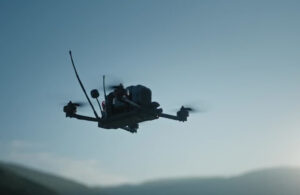
Neros is developing its Archer AI and Bandit platform with the hardware and compute required for multi-asset control.
ARM Institute calls for defense manufacturing technology projects
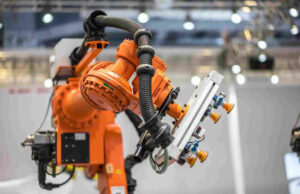
The ARM Institute and the U.S. Department of War are seeking technology project submissions to help rapid U.S. production.
SEW-EURODRIVE adds economy series to its planetary servo gear unit portfolio

SEW-EURODRIVE’s new P1.G, P2.G and P3.G gear units extend its existing PxG family below the P5.G, P6.G, and P7.G precision range.
Q2 2026 robotics demand increased across industries, reports A3
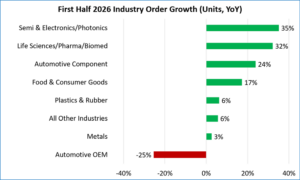
A3 said that Q2 2026 robotics orders in food, electronics, and healthcare helped offset soft demand from automotive manufacturing.
Strengthening U.S. Army sustainment: TALUS to deliver autonomous distribution
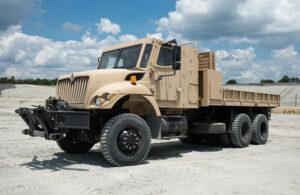
A Stratom-led team won a U.S. Army contract to develop TALUS, an autonomous logistics system for contested environments.
DAF Trucks to integrate Einride Driver to scale autonomous electric freight
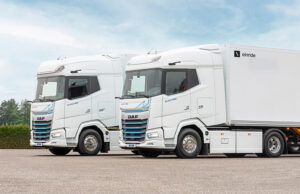
Einride is integrating its self-driving software with PACCAR unit DAF Trucks and research at TNO to advance safe autonomous trucking.
Defense drone developer Cambridge Aerospace raises $300M

The round comes just months after the Cambridge Aerospace’s $200 million Series B funding in April.
PlusAI reaches key milestones ahead of launching its autonomous trucks
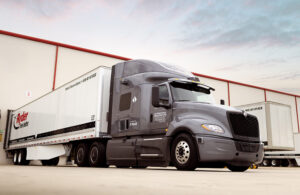
Since the start of the year, PlusAI said it has improved the safety validation, operational maturity, and efficiency of SuperDrive.
Webinar to discuss safety and scaling robot fleets in the warehouse
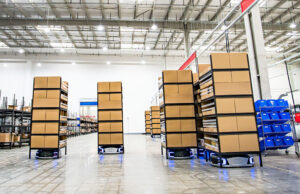
Industry experts will discuss how to scale mobile robots in the warehouse while maintaining both safety and productivity.
RoboStore launches Robo Inc. to help U.S. organizations deploy robots

RoboStore, a distributor of Unitree’s legged robots, has launched Robo Inc. to serve as a U.S.-based manufacturer and integrator.
Hadrian raises $1.37B to accelerate U.S. defense, aerospace manufacturing
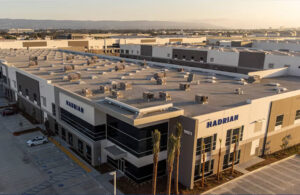
The raise values Hadrian at $7.87 billion. It is Hadrian’s second funding round this year, following a round in January 2026.
Tate deploys 58 Hirebotics cobot welders across multiple facilities
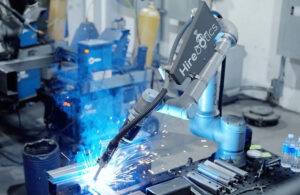
Tate decided to move from traditional hand welding to an agile, cloud-connected automation network powered by Hirebotics.
VicOne releases free NVIDIA Isaac Sim cybersecurity extension based on DEF CON 34 research
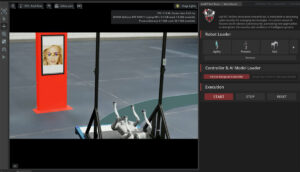
VicOne says its free Radeis Extension for NVIDIA Isaac Sim enables developers to test robot cyber safety before deployment.
Building robots that survive the warehouse

Nomagic says its real moat is production data, because the messiness of real warehouses is where robots either prove themselves or fail.
Tacta Systems takes aim at high-skilled manufacturing work with TactaBot
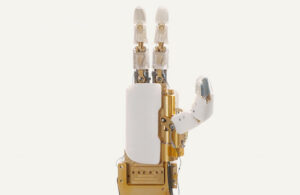
Tacta Systems unveiled a three-part system, including its robotic hand, that enables users to teach its robot new dexterous skills.
Avatar Robotics raises seed round to address industrial labor constraints
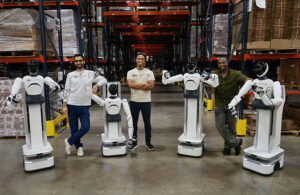
Avatar Robotics raised $6.5 million in funding to scale humanoid robots and remote teleoperation across industrial supply chains.
HII signs up to $900M agreement with Path Robotics, GrayMatter Robotics
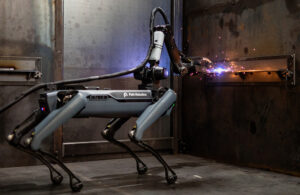
The latest agreement expands HII’s HYPER Program, which Path Robotics and GrayMatter Robotics joined earlier this year.