Humanoid robots have become an important area of research in robotics, attracting attention from universities, research institutions, and technology companies. Compared with traditional industrial robots that usually perform repetitive tasks in controlled environments, humanoid robots are designed to operate in more complex scenarios where balance, flexibility, and interaction capabilities are required.
To achieve human-like movements, humanoid robots need dozens of joints working together, including joints in the shoulders, elbows, wrists, hips, knees, and ankles. Each joint must provide accurate movement control while maintaining a compact structure and reasonable overall weight. Therefore, robotic actuators have become one of the most critical components in humanoid robot development.
The Importance of Actuators in Humanoid Robot Design
A robotic actuator directly affects how a robot moves, responds, and interacts with its environment. In humanoid robot systems, actuators are responsible for converting electrical energy into controlled mechanical motion, allowing the robot to perform actions such as walking, balancing, reaching, and manipulating objects.
However, designing suitable actuators for humanoid robots involves several challenges.
First, the actuator needs to provide sufficient torque output while occupying limited installation space. Since humanoid robots require many joints, oversized actuators can significantly increase the robot’s weight and reduce energy efficiency.
Second, robotic joints require accurate and responsive control. Dynamic movements such as walking or maintaining balance require continuous adjustments based on sensor feedback. Small delays or inaccurate motion control can affect the stability of the entire robot system.
Third, engineers need to simplify system integration. Traditional robotic joint designs often require separate components, including motors, gearboxes, encoders, and controllers. Although these configurations offer flexibility, they also increase assembly complexity, wiring requirements, and maintenance difficulty.
For these reasons, integrated robotic actuators have become an increasingly practical solution for compact robotic systems.
Integrated Actuator Design for Compact Robotic Platforms
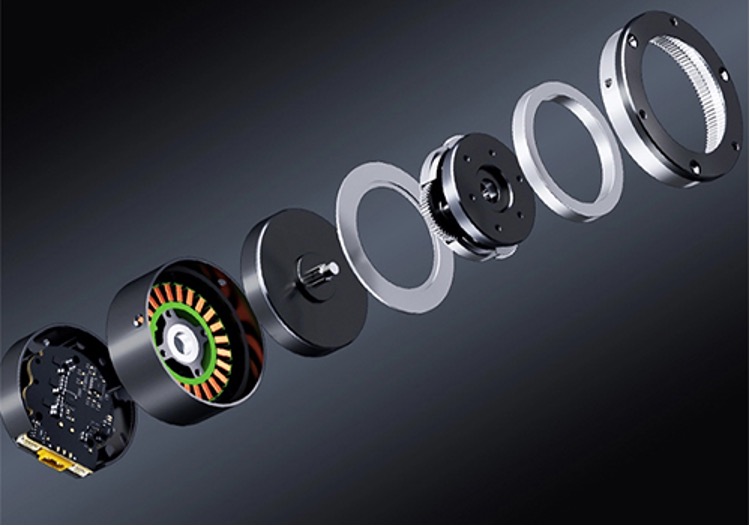
Integrated actuators combine multiple components into a single module, including the motor, reduction mechanism, encoder, and control electronics. This approach helps reduce the number of external components and provides a more compact solution for robotic joint development.
For humanoid robots, compact actuator modules are especially valuable because the available space inside the robot structure is limited. Lightweight joint solutions allow engineers to optimize mechanical design while maintaining sufficient output performance.
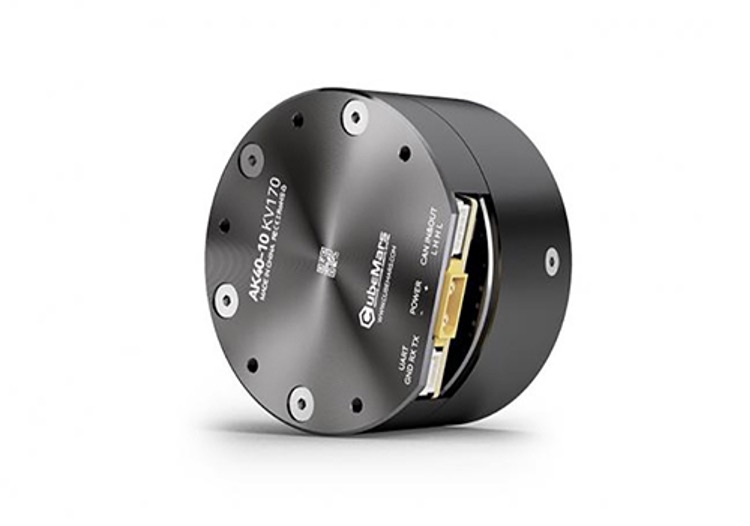
The CubeMars AK45-10 robotic actuator is developed for applications that require a balance between size, weight, torque output, and control performance.
With a compact diameter of 53mm and a weight of approximately 260g, the AK45-10 delivers up to 7Nm peak torque through a 10:1 planetary gearbox. Its lightweight structure and integrated design make it suitable for robotic joints where installation space and overall weight are important considerations.
AK45-10 Supporting Humanoid Robot Joint Applications
Humanoid robots require different types of joint performance depending on their mechanical structure and intended application.
For example, arm joints such as elbows and wrists require lightweight and responsive actuators to support precise manipulation tasks. Meanwhile, lower-body joints require different performance characteristics. A Hip Joint Motor needs to provide sufficient torque to support leg movement and body balance, while a Knee Joint Motor requires stable output during repeated loading cycles.
The AK45-10 integrates a brushless motor, planetary gearbox, encoder, and driver electronics into one module, helping developers reduce system complexity during robot assembly.
The integrated design also provides advantages in terms of wiring and mechanical layout. Instead of connecting multiple independent components, engineers can install a complete actuator module directly into the robotic structure, reducing design workload and improving consistency between different joints.
In addition, the actuator supports advanced control methods, including servo control and MIT-style control modes. These control capabilities allow developers to manage position, speed, and torque parameters more accurately, which is important for robots that require coordinated multi-joint movement.
Improving Motion Performance Through Lightweight Actuation
Weight reduction is a major consideration in humanoid robot development. A lighter robot generally requires less energy consumption and places lower mechanical loads on structural components.
However, reducing weight cannot come at the expense of performance. Robotic joints still need enough torque density and control accuracy to handle dynamic movements.
This is where lightweight integrated actuators provide practical advantages. By combining efficient motor design, compact transmission systems, and integrated electronics, these actuators help engineers achieve a better balance between mobility and output capability.
For research teams developing humanoid robots, robotic arms, or other dynamic robotic platforms, selecting suitable actuators at an early design stage can significantly influence the final system performance.
Applications Beyond Humanoid Robots
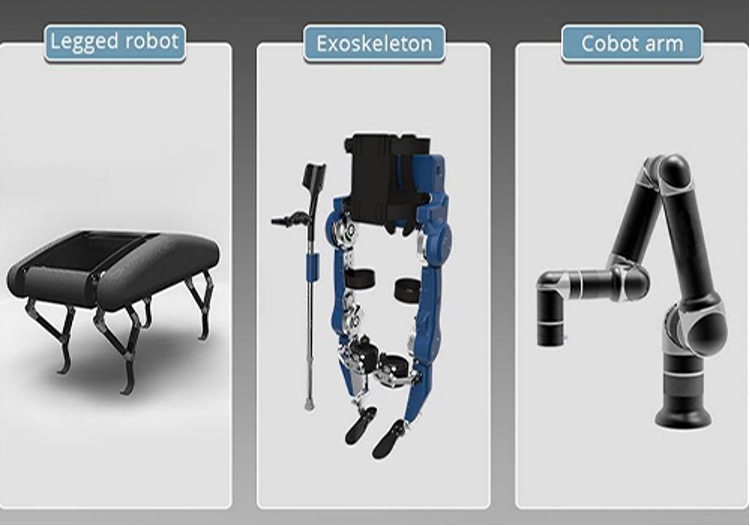
Although humanoid robots represent one of the most demanding applications for robotic actuators, compact actuator technology is also widely used across other robotic fields.
Potential applications include:
- Lightweight robotic arms for automation and research
- Quadruped and legged robots requiring dynamic movement
- Wearable exoskeleton systems for motion assistance
- Collaborative robots designed for flexible interaction
These applications share similar requirements: compact mechanical design, accurate motion control, and reliable operation.
As robotics continues expanding into more flexible and interactive systems, actuator technology remains an important foundation for improving robot performance and usability.
A Practical Actuation Solution for Robotics Developers
The development of humanoid robots requires cooperation between mechanical design, electronics, control algorithms, and actuator technology. Among these elements, the actuator plays a direct role in determining movement capability and system reliability.
By integrating the motor, gearbox, encoder, and driver electronics into a compact module, the CubeMars AK45-10 provides a practical solution for engineers developing humanoid robots and other robotic platforms.
Sponsored content by Cubemars



Tell Us What You Think!