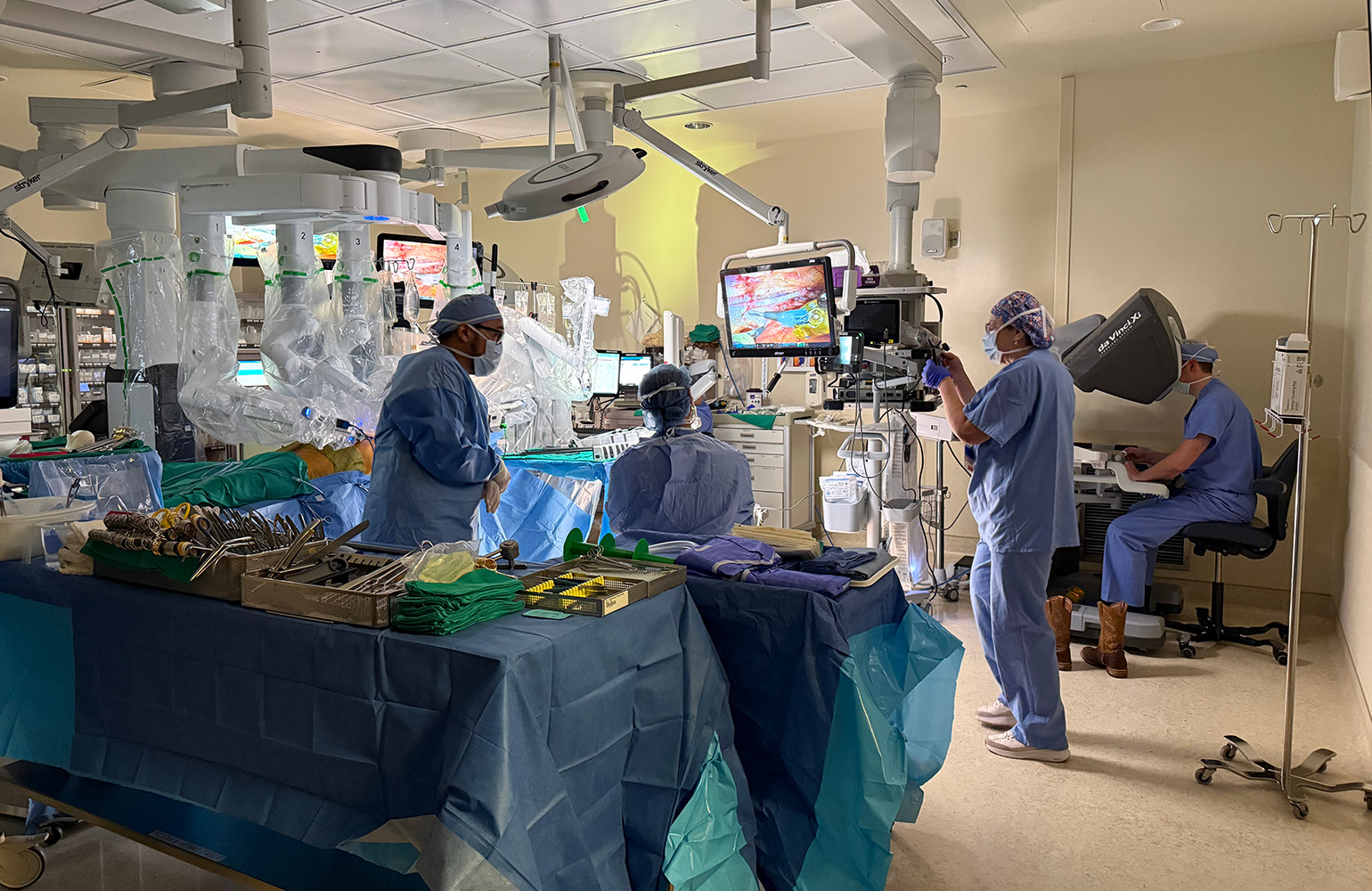
Surgeons at El Camino Health Heart and Vascular Institute prepare for surgery. | Source: El Camino Health Heart and Vascular Institute
Coronary artery bypass grafting, or CABG, is the most common type of cardiac surgery in the world. Despite this, and the heavily invasive nature of the surgery, only 1% of these procedures are performed with the help of robots.
At the El Camino Health Heart and Vascular Institute (HVI), surgeons are now performing CABG with Intuitive Surgical‘s da Vinci robotic system. The first procedure was performed by Dr. Nels Carroll, who has extensive experience in robotic cardiac techniques and one of only a few surgeons in the Bay Area offering this robotic-assisted bypass capability.
“Think of the heart as the engine that’s pumping the blood and delivering energy and oxygen to the body. Basically, that engine has its own fuel lines, those are the arteries on the surface of the heart,” Carroll told The Robot Report. “They’re providing the fuel to keep that engine pumping, and it’s very common for people to develop disease in those fuel lines. Bypass surgery is just us putting on new fuel lines.”
The cardiac surgery itself is straightforward, he noted. The tricky part is reaching the heart in the first place.
“The most challenging thing for the patient is that, historically, we have to cut their chest open,” said Carroll. “We have to divide the sternum and spread it to the side.”
“Doing the same thing robotically means that instead of making that big incision and instead of cutting that bone and opening all that space, we just put little incisions between the ribs,” he continued. “We don’t cut any bone, and we don’t cut any major muscle groups.”
The robotic instruments and cameras can fit inside the small incisions, which allows cardiac surgeons to perform the same procedure.
Smaller incisions means faster recovery for cardiac patients
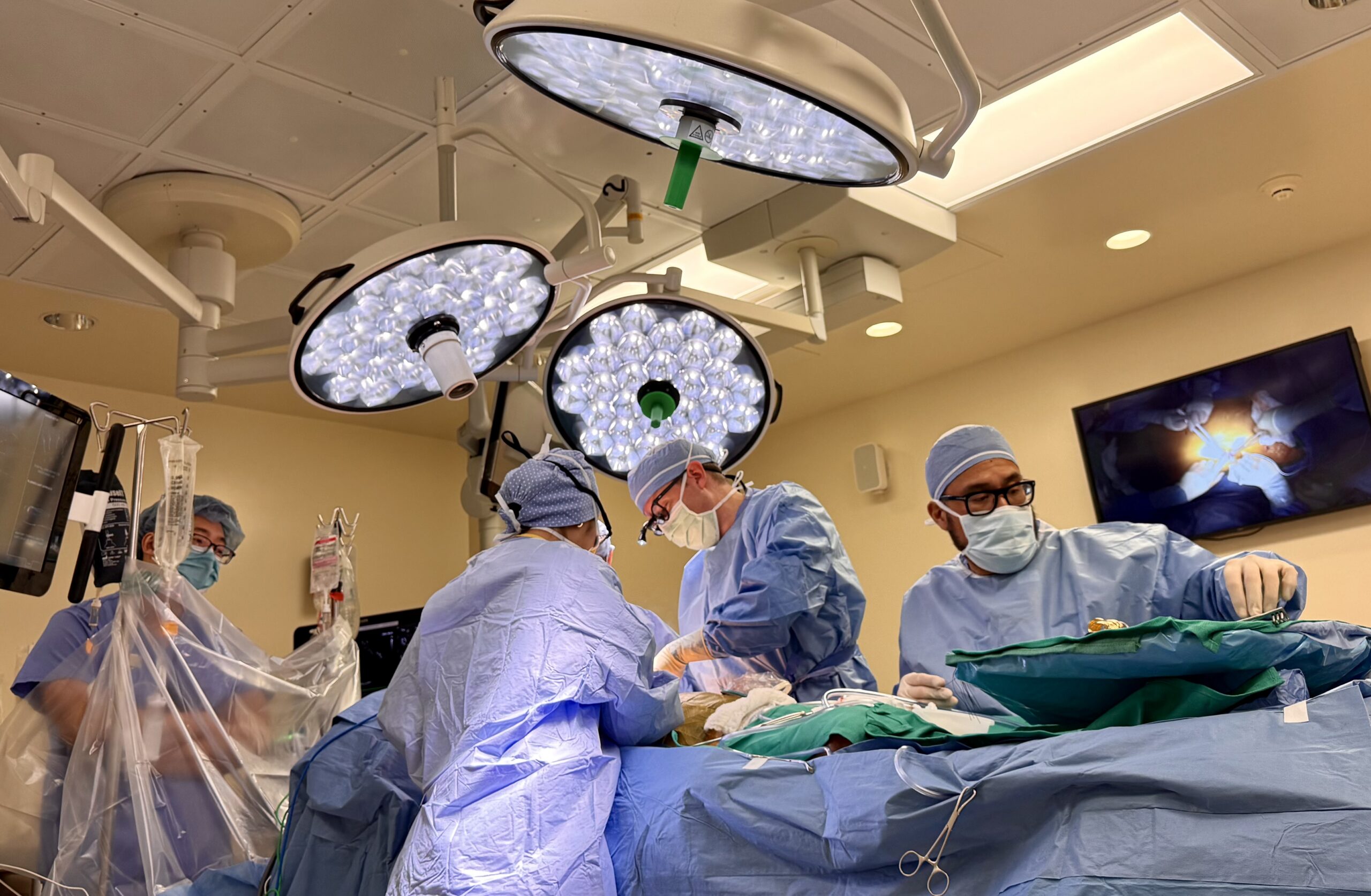
The most common approach to a CABG involves the surgeon opening the chest by dividing the breastbone to reach the heart. | Source: El Camino Health Heart and Vascular Institute
The biggest benefit of robotic surgery for cardiac bypass patients is in the recovery time, according to Carroll.
“It’s so much easier to recover from small incisions between the ribs than it is from a conventional surgery, where the bone is put back together with stainless steel wires,” he said. “The big difference is how quickly people get back to their daily lives, how much less pain they encounter, and how much less traumatic the experience is for them overall.”
One of these patients is Raul Martin, a 64-year-old man who walked three to five miles a day and doing resistance training. One Sunday, he was in the gym exercising when he felt his heart racing. Martin checked his smartwatch.
“It was saying 200. I know that that’s obviously not right,” Martin recalled. “And so, there was a security guard going through the building. I grabbed him, and he called the EMTs.”
Martin was taken to El Camino Health, where he eventually underwent a robotic bypass procedure. The day after his surgery, Martin was up and walking the halls. He says he felt fine. And a couple of days later he went home and is now back to his usual routine.
Robotics takes the pressure off surgeons
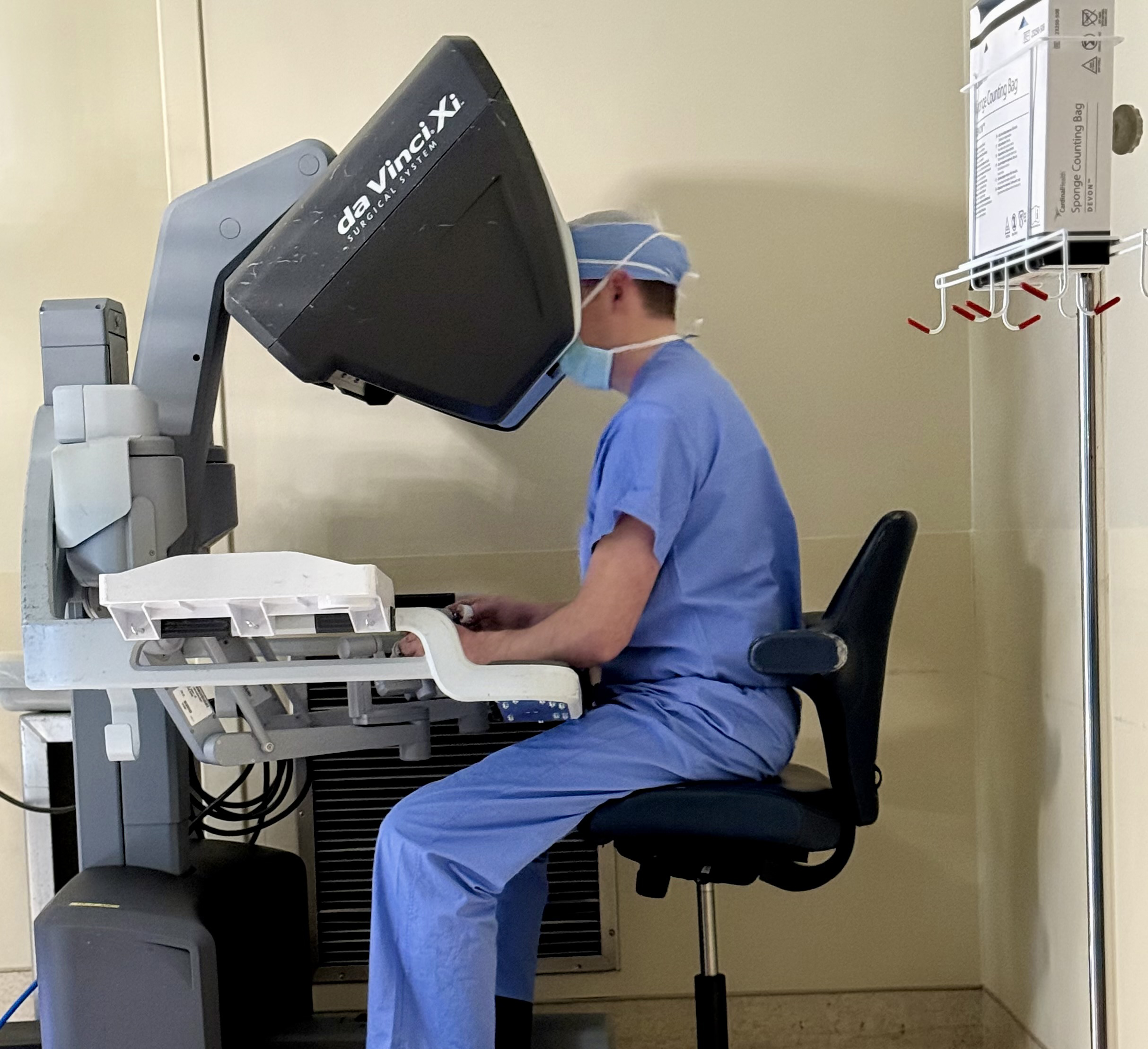
Surgical robotics can improve patient outcomes and improve ergonomics for the surgeon. | Source: El Camino Health Heart and Vascular Institute
Using a surgical robot isn’t just better for the cardiac patient, it can also take away some of the physical strain of the job for surgeons.
“The ergonomics of the robotic platform is dramatically different,” Carroll said. “A busy day of robotic heart surgery versus a busy day of conventional heart surgery, at the end of the day, your back’s not as achy, your neck’s not sore, and you still have a little bit of energy to get to the gym and have some other balance in your life.”
And this change isn’t just physical. Being able to provide better outcomes with easier recovery for patients takes off some of the mental load for surgeons. This means they could suffer less from burnout.
For new surgeons, surgical systems typically offer a virtual simulation environment, which makes an ideal training space. During procedures, a clear view of the patient and the work the surgeon is doing also helps.
“Heart surgery is a team sport. There’s a whole group of people who are assisting and helping and facilitating that surgery,” said Carroll. “When everybody can see beautifully exactly what’s going on, the communication improves. For a trainee that’s present, that really accelerates their ability to mentally process what they’re going to need to do when they eventually take the reins.”
Why aren’t more hospitals using robotics for cardiac procedures?
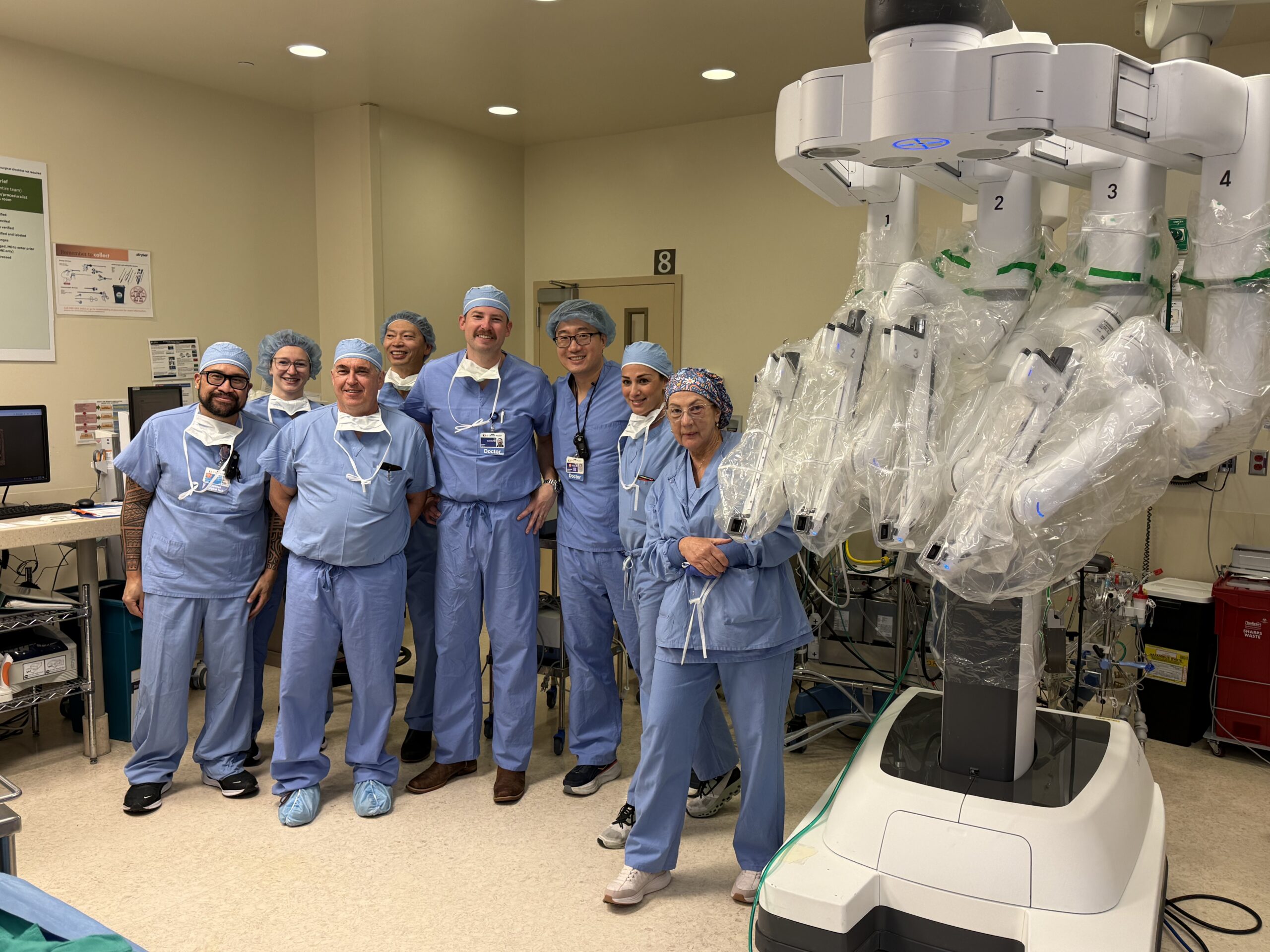
The surgical team at the El Camino Health Heart and Vascular Institute. | Source: El Camino Health Heart and Vascular Institute
With such a dramatic change in outcomes, it seems obvious to deploy more surgical robots. So, why are less than 1% of these procedures performed robotically? Carroll said there are a few reasons for this.
“This approach isn’t right for every patient. Some surgeries, we really need that bigger incision,” he said. “We need to have full access to the heart that we wouldn’t have with a less invasive approach.”
In addition, more doctors need to know about this kind of technology. The heart surgeon is certainly not the first doctor a patient would see, so it’s important for every doctor to understand robotics is a treatment option, asserted Carroll. Beyond this, there is some hesitation from surgeons when it comes to implementing any new practice, he said.
“Oftentimes there is the analogy used of a surgeon going into surgery for a complex problem with a sick patient, it’s almost like going to battle. You don’t want to go to battle with any more question marks than you already have to face,” Carroll said. “Once you have survived a number of battles, once you’ve had success doing things a certain way, it’s very much part of human nature to want to continue to rely on that.”
“The flip side of that is potentially falling into the trap of not being able to deviate from a stepwise approach,” he added. “I think that is a very important part of any surgical practice, to rely on the foundations of experience and knowledge and knowing what works, but also incorporating newer technologies and newer techniques.”
How can robotics companies work better with surgeons?
Carroll has been working with surgical robots for over 10 years, and has had extensive experience with the Intuitive team. He recalled times when the Intuitive team would come into the operating room and observe cases. This gave them the opportunity to talk through the challenges of different clinical scenarios.
“The time when the field is the most fertile for ideas for surgeons, at least in my experience and anecdotally from colleagues, is when you are faced with a problem and you see it and you verbalize it.” Carroll said.
If there’s an engineer or a developer in the room, they can see what the cardiac surgeon is trying to do, and where the challenges are. These people, who have a completely different background than a surgeon, might have a new idea about how to approach the problem.
“Surgeons never really can succeed in a silo. It’s a community. The heart surgery community is large and complex, but an extremely talented and intelligent group of people,” said Carroll. “The more we interact with each other, the more we learn, the more we push each other to do a better job.”
 Register now and save on your pass to RoboBusiness 2026

Tell Us What You Think!