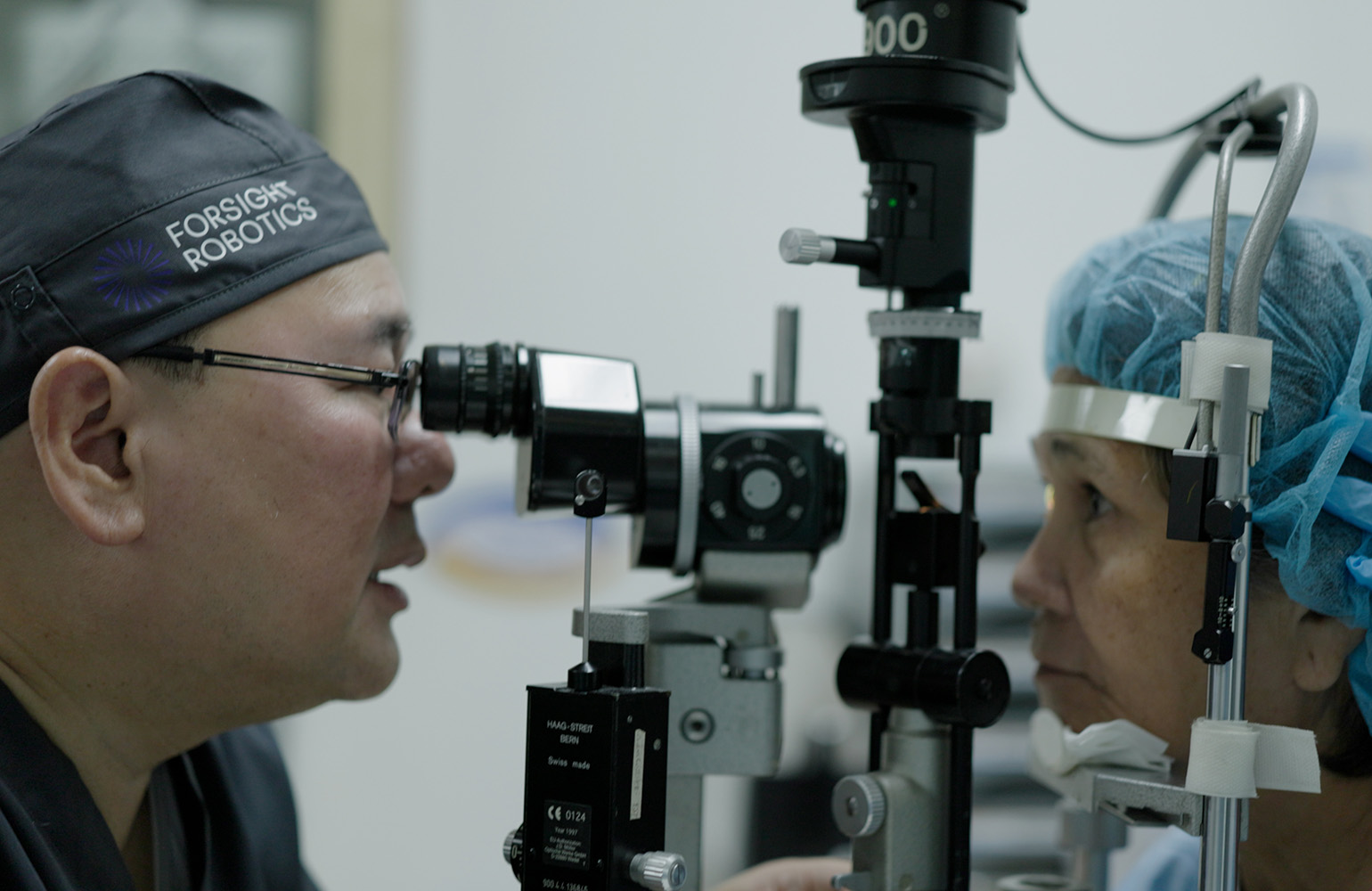
Dr. Robert Ang, the study’s principal investigator, performing a post-op patient exam. | Source: ForSight Robotics
Cataracts are currently the world’s leading cause of blindness, and the only way to treat them is with surgery. However, there is a shortage of trained surgeons who can tackle these difficult procedures. ForSight Robotics said robotics and artificial intelligence can ease this burden and make cataract surgeries more accessible.
“When I was starting to do ophthalmic surgery, eye surgery, I noticed a few things. It’s very hard to do those procedures. The movements are very delicate,” Dr. Joseph Nathan, ForSight Robotics’ co-founder, president, and chief medical officer, told The Robot Report. “We don’t have enough surgeons. We have this huge gap between the number of surgeons and the surge in patients.”
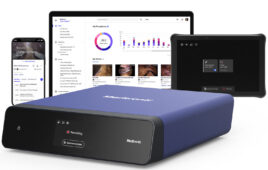
ForSight has created the JASPER Platform, formerly known as ORYOM. The company said JASPER assists surgeons with every step of cataract surgeries. It empowers them with advanced imaging, precision, and motion scaling that reduce surgeon fatigue and variability between procedures.
Inside JASPER’s first fully robotic cataract surgery
ForSight Robotics said it recently made a significant advancement. In April, JASPER completed a robot-assisted cataract surgery in a human patient. The procedure was performed by Dr. Alexey Rapoport, with Dr. Robert Edward T. Ang of the Asian Eye Institute in Manila serving as principal investigator.
“This is a transformative event that happened because this is the gateway to really accomplishing the vision of standard designing or doing consistent surgery and being able to accommodate many more surgeons,” Nathan said.
ForSight said that JASPER completed the full procedure from start to finish. This is in contrast to previous ophthalmic robotic procedures that only performed partial tasks during cataract surgery.
“We’re not changing anything, and we’re doing the whole procedure — every step from the first incision to the incision closure,” said Nathan. “This really shows that this field can be elevated by robotics.”
While the robot used AI to prevent surgeons from making mistakes, it did not operate autonomously. Instead, it was controlled by a skilled surgeon.
“We worked with many, many surgeons from many different geographies on animal models, artificial models, to really optimize their ability to control the platform and to benefit from the platform,” Nathan explained. “It’s a completely assisted robot that helps in every step, but the surgeon is in full control. The benefit is that the surgeons have different dexterity or manual abilities, and [the robot] makes it more unified and consistent.”
The challenges that come with eye surgery
Robots have been assisting physicians in surgeries for decades now, so why have the eyes remained overlooked by the industry?
“The eye is very unique. It’s one inch from the back of the eye to the front of the eye. It’s a very small organ. It’s highly unusual,” Nathan said. “If you look at other soft tissue robots like [Intuitive Surgical’s] da Vinci, these are big working spaces for the robot. So this is completely different.”
“The other really unique thing about the eye is that it’s a transparent tissue,” he added. “If you think about it, it’s probably the only transparent tissue in the body.”
However, the combination of these precise, tiny movements and a lack of skilled surgeons who can perform these surgeries leaves the perfect opportunity for robotics to step in, noted Nathan. When he worked as a physician performing eye surgeries, Nathan said he saw a clear need for automation.
“You need a very, very sophisticated and precise robotic platform that really encompasses the cutting edge of what we can offer in terms of computing power, micromechanics, all that stuff,” Nathan said.
Right now, ForSight is focusing on cataracts because of the condition’s prevalence.
“We started with cataracts, and this is the most common procedure in all of medicine, not just eye surgery,” said Nathan. “So, the challenge is immense. The market is huge. I think we brought the best people on the planet to go and get it.”

JASPER is ForSight’s fourth-generation system. With each iteration, it has handled more and more of the cataract surgery. | Source: ForSight Robotics
Jasper can help surgeons train faster and work longer
ForSight designed its platform to work in harmony with surgeons. The robot provides advanced dexterity and better patient outcomes, and it makes the job easier for surgeons, claimed the company.
“We’re seeing over two-thirds of surgeons report having musculoskeletal issues, and 15% actually terminated their careers early due to poor ergonomics,” Nathan said. “The first thing I learned in medical school is that in order to give the best results, the best outcomes, you need to be very comfortable in how you operate.”
In addition, the robot also gives confidence to the surgeon, he said. Regardless of whether they’re operating on the first or last patient of their career, the robot brings consistency.
“This is really the gateway for being a skill enabler for surgeons in general, but also kind of bumping those young novice surgeons to be at the elite level of surgeons,” Nathan said.
ForSight aims to bring Jasper to market in the U.S.
With its first fully robotic procedure completed, ForSight is setting its sights on gaining regulatory approval in the U.S.
“Our target is getting to the market in the U.S. This is our first target market, and in the next few years, we’re going to do some more clinical work,” Nathan said. “We’re going to go through the regulatory process that is needed in order to be a very safe and efficient technology in the market.”
The Yokne’am Illit, Israel-based company said it plans to build on the momentum it gained from its 2025 $125 million funding round and its first full surgery milestone.
“This is a super exciting time because we’re kind of in uncharted territory,” Nathan said. “This is going to be something that helps us to set the bar in terms of what robotic eye surgery is going to be like in the next decade or so.”
As ForSight moves forward, Nathan said two things help the company to stand out: its people and its unique fit for the industry.
“People make the company. They make the products. We have an amazing core team that has built this amazing technology,” Nathan said. “It’s all about the product fit in the right industry. You see the need. How do you see all the stakeholders and how everything needs to be aligned and connected?”

Tell Us What You Think!