The Robot Report

  • Home
  • News
  • Technologies
    • Batteries / Power Supplies
    • Cameras / Imaging / Vision
    • Controllers
    • End Effectors
    • Microprocessors / SoCs
    • Motion Control
    • Sensors
    • Soft Robotics
    • Software / Simulation
  • Development
    • Artificial Intelligence
    • Human Robot Interaction / Haptics
    • Mobility / Navigation
    • Research
  • Robots
    • AGVs
    • AMRs
    • Consumer
    • Collaborative Robots
    • Drones
    • Humanoids
    • Industrial
    • Self-Driving Vehicles
    • Unmanned Maritime Systems
  • Business
    • Financial
      • Investments
      • Mergers & Acquisitions
      • Earnings
    • Markets
      • Agriculture
      • Healthcare
      • Logistics
      • Manufacturing
      • Mining
      • Security
    • RBR50
      • RBR50 Winners 2025
      • RBR50 Winners 2024
      • RBR50 Winners 2023
      • RBR50 Winners 2022
      • RBR50 Winners 2021
  • Resources
    • Automated Warehouse Research Reports
    • Digital Issues
    • eBooks
    • Publications
      • Automated Warehouse
      • Collaborative Robotics Trends
    • Search Robotics Database
    • Videos
    • Webinars / Digital Events
  • Events
    • RoboBusiness
    • Robotics Summit & Expo
    • DeviceTalks
    • R&D 100
    • Robotics Weeks
  • Podcast
    • Episodes
  • Advertise
  • Subscribe

Cruise, Waymo can now charge for SF robotaxi rides

By Steve Crowe | March 1, 2022

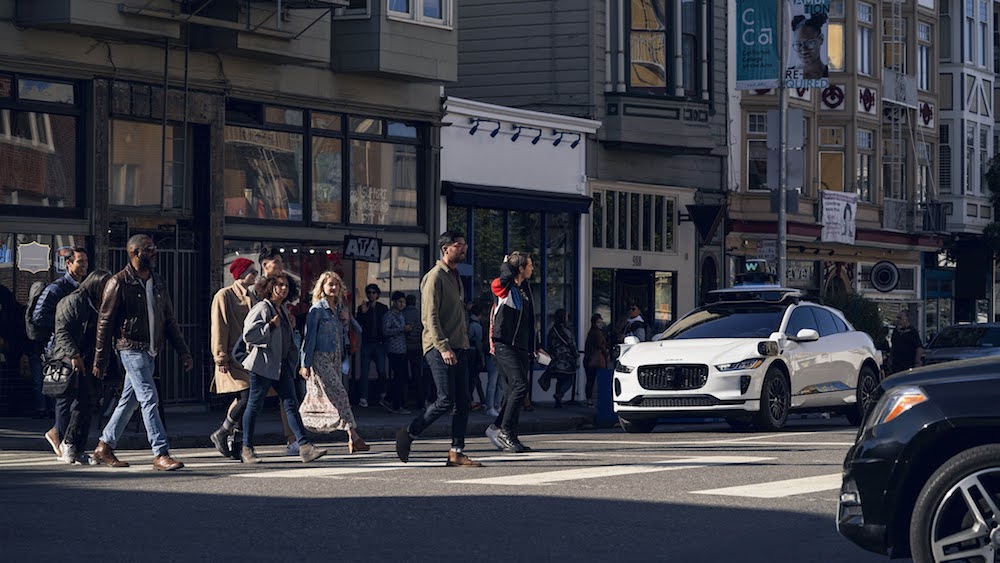
Waymo San Francisco

A Waymo robotaxi operating in San Francisco. | Credit: Waymo

Robotaxi operations in San Francisco continue to inch forward. The California Public Utilities Commission (CPUC) issued Drivered Deployment permits to Cruise and Waymo that allow both companies to charge customers fares for their services. However, the permits require both companies to have a safety driver present in the vehicles at all times.

Cruise‘s permit allows its robotaxis to operate on select public roads in San Francisco from 10 PM to 6 AM at speeds of up to 30 MPH. Waymo‘s Drivered Deployment service can operate in designated parts of San Francisco and San Mateo counties at any time of day or night at speeds of up to 65 MPH.

The CPUC said neither company is authorized to operate during heavy fog or heavy rain.

“Autonomous vehicles are a breakthrough technology that hold the potential to improve safety for all road users, and issuing these permits allowing for fare collection and shared rides is an important and measured step toward the commercialization and expansion of the service,” said CPUC commissioner Genevieve Shiroma. “As the technology is deployed, we will keep a close eye on the impacts of autonomous vehicles on safety, the environment, and on disadvantaged communities.”

The California Department of Motor Vehicles (DMV) in October 2021 approved Cruise and Waymo to operate robotaxi rides in California. The DMV required Waymo to have human safety drivers in all of its vehicles, but it allowed Cruise to operate fully driverless robotaxis. Cruise has since opened its fully driverless robotaxi service to a small portion of the public.

Cruise has applied for a driverless deployment permit, which would allow it to charge a fare to passengers using its fully driverless robotaxi service. At press time, however, Cruise has not received a response from the CPUC about its request for a driverless deployment permit.

“[This is] another positive, incremental step forward,” said Prashanthi Raman, Cruise’s vice president for global government affairs. “Our mission has always been to launch a driverless commercial ridehail service here in San Francisco, and that’s what we’ll continue working with our regulators to deliver.”

On February 28, 2022, Kyle Vogt, who co-founded Cruise in 2013, was named CEO of the GM-owned company. He had served as interim CEO since December 2021 when Dan Ammann, who had been CEO since 2018, abruptly left Cruise. Vogt, 36, also will serve as chief technology officer and president of Cruise, which GM bought in 2016 for $1 billion.

Motional and Via announced on February 24, 2022 the launch of a robotaxi service in downtown Las Vegas. The service operates from 9 AM to 5 PM Monday through Friday and will provide pick-ups and drop-offs in certain locations, including the RTC Bonneville Transit Center, Las Vegas City Hall, Container Park, Las Vegas Arts District and Clark County Government Center. The autonomous vehicles will have human safety operators behind the wheel.

About The Author

Steve Crowe

Steve Crowe is Executive Editor, Robotics, WTWH Media, and chair of the Robotics Summit & Expo and RoboBusiness. He is also co-host of The Robot Report Podcast, the top-rated podcast for the robotics industry. He joined WTWH Media in January 2018 after spending four-plus years as Managing Editor of Robotics Trends Media. He can be reached at [email protected]

Tell Us What You Think! Cancel reply

This site uses Akismet to reduce spam. Learn how your comment data is processed.

Related Articles Read More >

Demonstration, in collaboration with Waseda University, shows how a sensitive robotic nail can pick up a playing card autonomously, as a learned skill, following a human demonstration.
XELA Robotics to show tactile sensing at the 2026 Robotics Summit & Expo
Allient banner for its exhibit at the 2026 Robotics Summit & Expo.
Allient to demonstrate advanced motion control systems at 2026 Robotics Summit & Expo
The Nylo service humanoid exhibited at CES 2026, according to IntBot, which is partnering with Certis in Singapore.
IntBot and Certis Group partner to scale physical AI for enterprises across Singapore
Robotics developers gather at the Robotics Summit & Expo. Registration is now open for the May 2026 event.
A guide to everything happening at the 2026 Robotics Summit & Expo

RBR50 Innovation Awards

“2026”
“rr
EXPAND YOUR KNOWLEDGE AND STAY CONNECTED
Get the latest info on technologies, tools and strategies for Robotics Professionals.

Latest Episode of The Robot Report Podcast

Automated Warehouse Research Reports

Sponsored Content

  • How humanoids learn to read the room
  • GMSL and the growing ecosystem around robotic vision systems
  • The Convergence in Perception Systems from Cars to Robots
  • How humanoids learn to read the room
  • GMSL and the growing ecosystem around robotic vision systems
The Robot Report
  • Automated Warehouse
  • RoboBusiness Event
  • Robotics Summit & Expo
  • About The Robot Report
  • Subscribe
  • Contact Us

Copyright © 2026 WTWH Media LLC. All Rights Reserved. The material on this site may not be reproduced, distributed, transmitted, cached or otherwise used, except with the prior written permission of WTWH Media
Privacy Policy | Advertising | About Us

Search The Robot Report

  • Home
  • News
  • Technologies
    • Batteries / Power Supplies
    • Cameras / Imaging / Vision
    • Controllers
    • End Effectors
    • Microprocessors / SoCs
    • Motion Control
    • Sensors
    • Soft Robotics
    • Software / Simulation
  • Development
    • Artificial Intelligence
    • Human Robot Interaction / Haptics
    • Mobility / Navigation
    • Research
  • Robots
    • AGVs
    • AMRs
    • Consumer
    • Collaborative Robots
    • Drones
    • Humanoids
    • Industrial
    • Self-Driving Vehicles
    • Unmanned Maritime Systems
  • Business
    • Financial
      • Investments
      • Mergers & Acquisitions
      • Earnings
    • Markets
      • Agriculture
      • Healthcare
      • Logistics
      • Manufacturing
      • Mining
      • Security
    • RBR50
      • RBR50 Winners 2025
      • RBR50 Winners 2024
      • RBR50 Winners 2023
      • RBR50 Winners 2022
      • RBR50 Winners 2021
  • Resources
    • Automated Warehouse Research Reports
    • Digital Issues
    • eBooks
    • Publications
      • Automated Warehouse
      • Collaborative Robotics Trends
    • Search Robotics Database
    • Videos
    • Webinars / Digital Events
  • Events
    • RoboBusiness
    • Robotics Summit & Expo
    • DeviceTalks
    • R&D 100
    • Robotics Weeks
  • Podcast
    • Episodes
  • Advertise
  • Subscribe