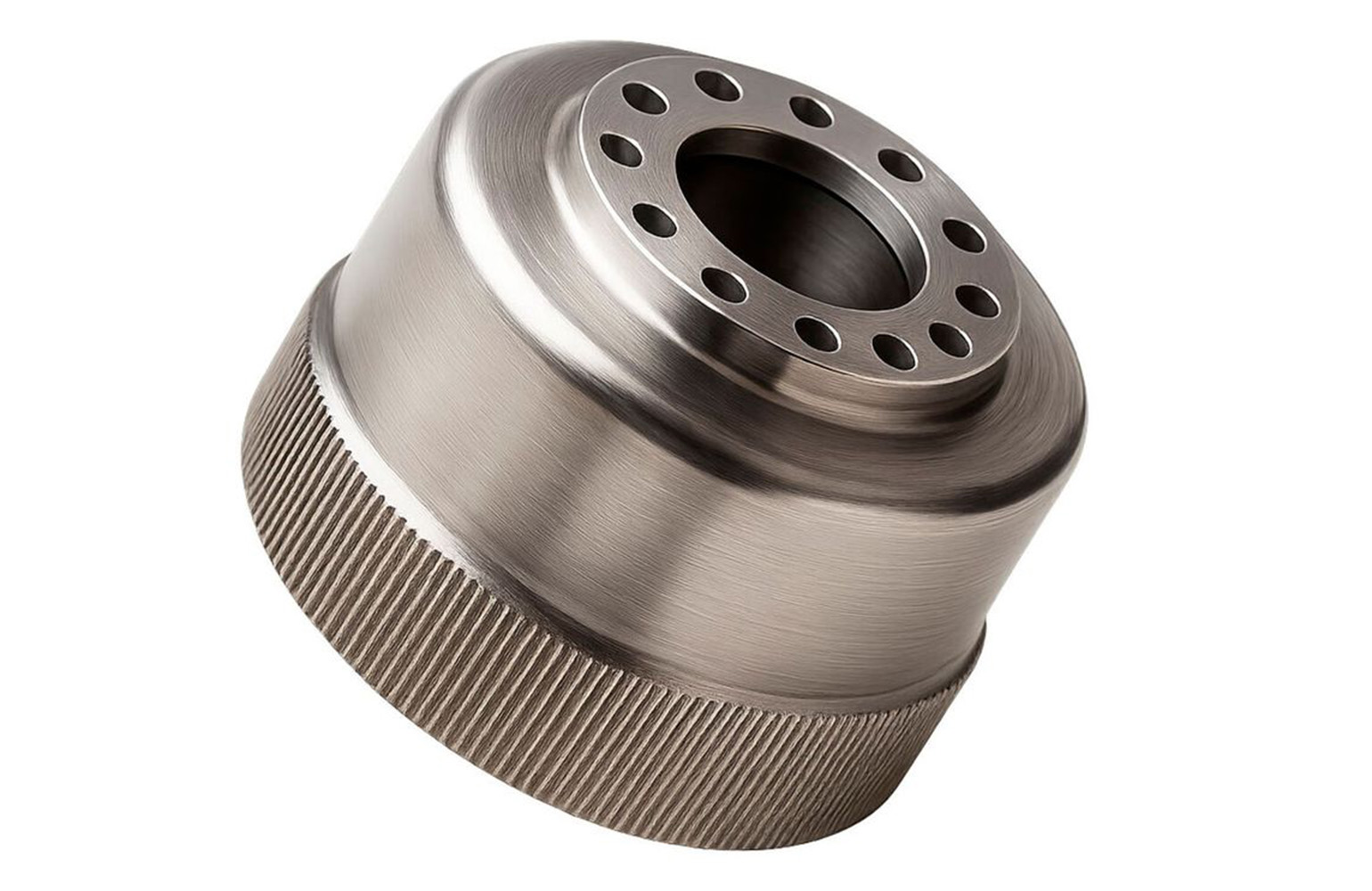
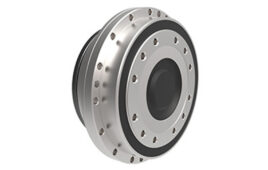
Schaeffler developer its formed strain wave gearboxes especially for humanoid robots. | Source: Schaeffler
Schaeffler Technologies AG is expanding its humanoid robotics product portfolio with its latest formed strain wave gearboxes. The company said it has concluded the extensive validation testing of the gearboxes and will be ready to start manufacturing them at scale in 2027.
Strain wave gearboxes are key components in actuators, which make up around half of the total costs of manufacturing a humanoid robot. They can transmit movements precisely and with a high torque capacity and a high gear reduction ratio in compact spaces.
Strain wave gearboxes also offer high accuracy and stiffness. These capabilities help satisfy the central requirements of humanoid joints, said the Herzogenaurach, Germany-based company.
“Schaeffler will take a leading role in the market for humanoid robots,” said David Kehr, president of humanoid robotics at Schaeffler. “We deploy humanoids along our entire global value chain and therefore have first-hand knowledge of the requirements of this technology and can develop key components based on our know-how.”
“Using this knowledge in combination with our decades of manufacturing experience and our automotive DNA, we can create solutions geared toward quality, economy, and scalability,” he added. “The formed strain wave gearbox is another example of how we are readying key robot components for industrial high-volume mass manufacturing.”
Schaeffler to utilize new forming technology for manufacturing
Typically, manufacturers use precision machining to create strain wave gearboxes. However, this method is time-consuming and capital-intensive. Schaeffler believes it could become a major bottleneck in the scaling of humanoid robots.
Instead, Schaeffler is creating its strain wave gearboxes with a forming technology. Unlike conventional machining, in which high-precision gear geometries are created through material removal, this forming process gets the component into the desired geometrical shape in seconds through the use of high pressing forces.
The formed strain wave gearboxes achieve comparable torques and efficiencies to those achieved by conventionally manufactured components, Schaeffler claimed.
The company said this method enables manufacturing steps for key components that can be completed in seconds instead of minutes. At the same time, it cuts manufacturing costs by more than 25% and material consumption by more than 75%. Schaeffler plans to start production in Germany and later roll it out to other regions.
Schaeffler is no stranger to developing strain wave gearboxes, having experience with the technology in the automotive industry. The company, whose U.S. headquarters are in Fort Mill, S.C., noted that it has already supplied more than 2 million formed strain wave gearboxes to all major markets in the world over the past 10 years. It said it hopes to transfer this manufacturing expertise to humanoid robots.
 Register now and save on your pass to RoboBusiness 2026
Tell Us What You Think!