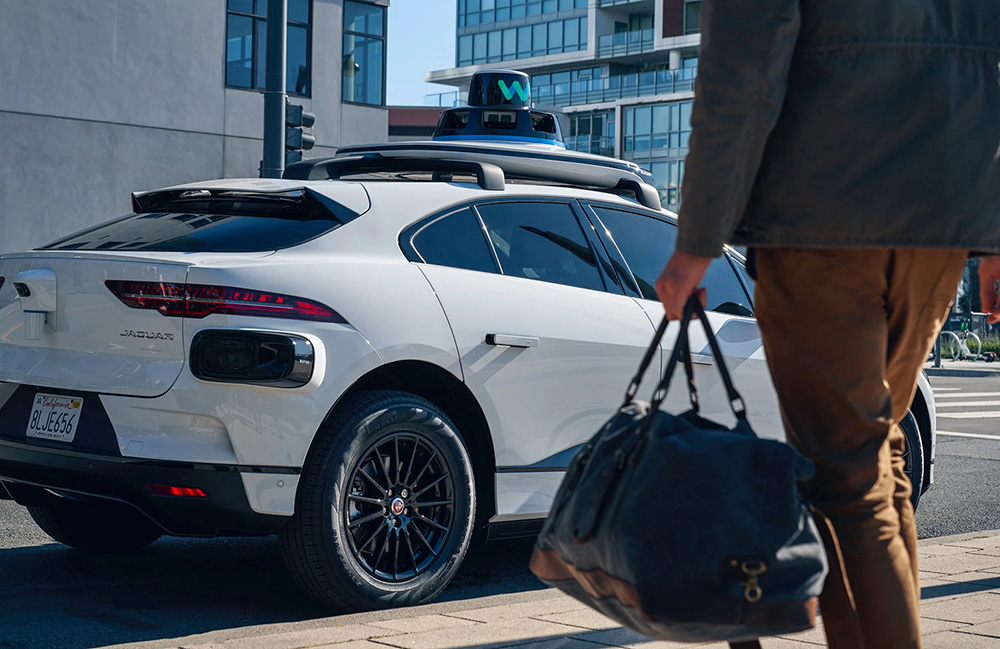
Waymo said each deployment starts with mapping the city, which its AVs use to keep track of their location at all times. | Source: Waymo
Today, Waymo LLC announced it’s bringing its autonomous ride-hailing service to three more cities: Las Vegas, San Diego, and Detroit. The company started driving in each city today with a mixed fleet of its Jaguar I-PACE and Zeekr RT vehicles equipped with its sixth-generation Waymo Driver.
Waymo said it hopes to begin serving riders in San Diego next year and in Las Vegas in the summer of 2026. The company didn’t share a timeline for when it hopes to begin serving riders in Detroit.
The news comes just a few weeks after Waymo shared its plans to bring its robotaxi services to London in 2026. The company’s other international plans include Tokyo, where it had deployed test vehicles to adapt it autonomous vehicle (AV) technology to local traffic patterns and road features.
In addition to London and Tokyo, Waymo has said it intends to expand to launch services in Miami, Atlanta, Dallas, and Nashville in the coming years.
In the U.S., the Waymo Driver has already driven over 100 million fully autonomous miles on public roads and provided more than 10 million paid rides. The company said it is now driving more than 2 million fully autonomous miles and providing over a quarter of a million rides per week. The company currently operates services in Phoenix, San Francisco, Los Angeles, and Austin.
Waymo said its Driver’s generalizability enables its rapid expansion, particularly in its home state of California. The company has also had an engineering team in Michigan for years.
Waymo bundles up for cold weather
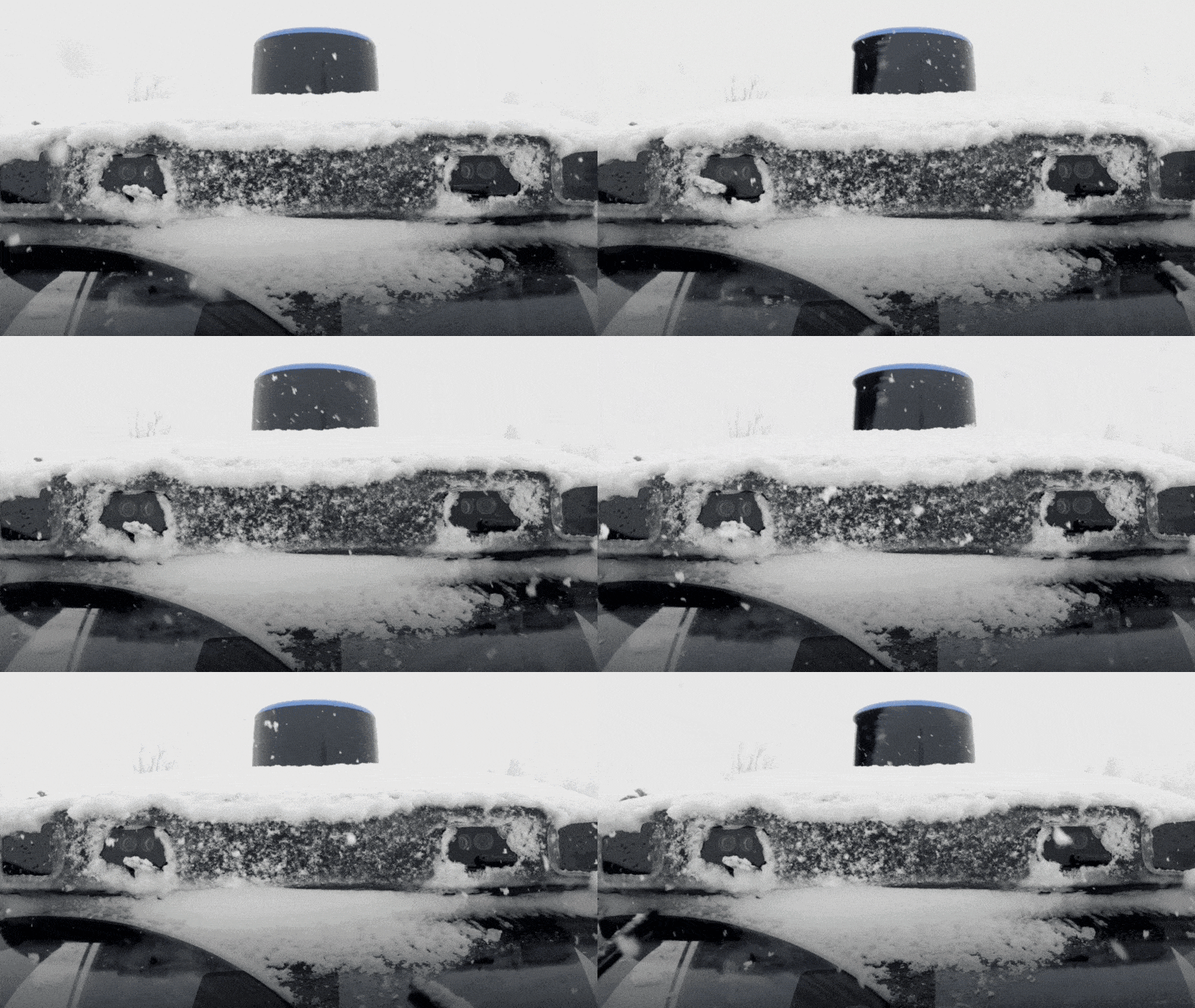
Waymo’s sensors have an automated cleaning system that uses engineering and heating elements to keep sensors clear during snow. | Source: Waymo
While Waymo has hit some major milestones, there’s a key similarity between all of its autonomous driving environments so far: None of them get regular, heavy snowfall. Now, it seems to be ready to tackle this challenge.
In March, Waymo announced plans to bring its robotaxis to Washington, D.C., in 2026. The district gets an average of 13.7 in. of snow a year, according to the National Weather Service.
Waymo has also shown some interest in the city of Boston. In May, it sent a small fleet of robotaxis, driven by human drivers, to map Boston’s unique driving environment.
Additionally, in August, New York City granted Waymo a permit to test a limited number of AVs, equipped with safety drivers, in parts of Manhattan and downtown Brooklyn.
Recently, Waymo gave a look at how it has fortified its driver for snowy weather. To start, the company has regularly driven its system in Upstate New York, Michigan’s Upper Peninsula, and the Sierra Nevada to get familiar with the range of conditions that come with winter weather.
The Waymo Driver uses cameras, radar, and lidar to perceive the world around it, with each sensor providing a complementary field of view that’s especially helpful in inclement weather. Its automated cleaning system — using engineered and heating elements — keeps the sensors clear so the vehicle can continue serving riders without needing to pull over.
The company said its AI can distinguish between snow, slush, ice, and a normal road surface. The Waymo Driver then uses this information to adjust its driving behavior to match the road conditions in real time, allowing the Waymo Driver to navigate based on what it sees and feels, the company said.
The AI system also infers insights from other road users—adapting to blocked roads, detours, and changing surface conditions. When the system detects lower traction, it automatically adjusts its speed, acceleration, and braking.
While Waymo’s longtime rival Cruise is no longer in operation, it still faces competitors such as Zoox and Nuro, which are earlier in their deployment journeys. In 2024, Nuro expanded its capabilities using zero-occupant vehicles with the Nuro Driver system, while Zoox grew its operations in California and Nevada.



Tell Us What You Think!