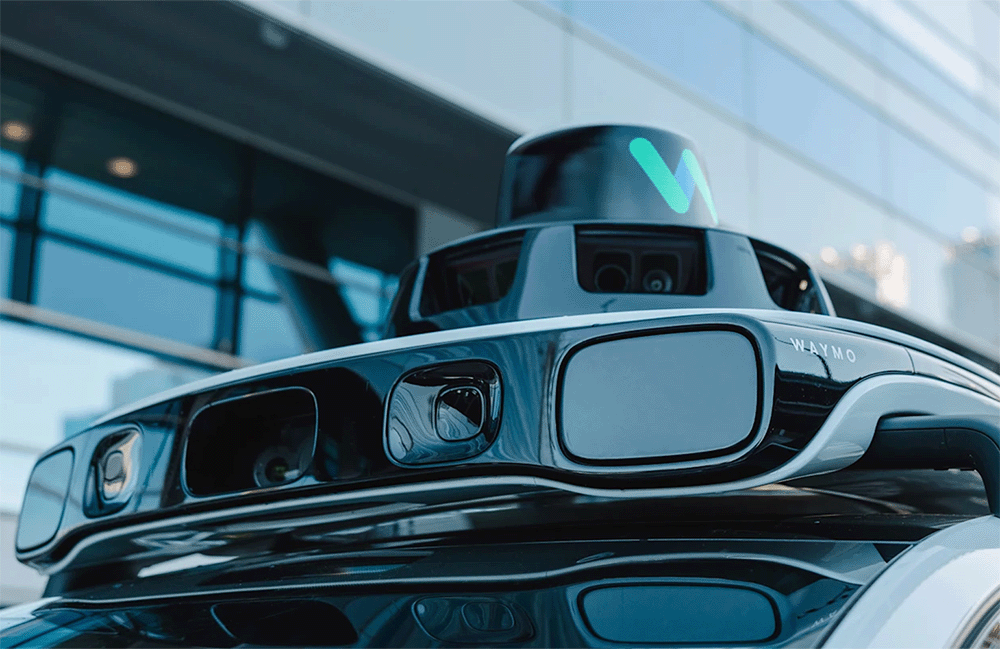
Waymo’s sensor stack on top of a Waymo autonomous vehicle. | Source: Waymo
The National Highway Traffic Safety Administration, or NHTSA, today said it is opening an investigation into Waymo LLC, a self-driving vehicle developer and subsidiary of Alphabet Inc. The agency is investigating an incident in which a Waymo vehicle struck a child near an elementary school in Santa Monica, Calif., last week.
According to the NHTSA, on Jan. 23, a child ran across the street from behind a double-parked SUV toward an elementary school. When the child emerged from behind the SUV, a Waymo autonomous vehicle (AV) struck the child.
The accident occurred during normal school drop-off hours, said the NHTSA. It added that other children, a crossing guard, and several double-parked vehicles were in the vicinity.
Waymo claimed that its technology detected the child as soon as she emerged from behind the parked vehicles. The company said its vehicle braked hard, reducing speed from approximately 17 mph to under 6 mph (27.3 to 9.6 kph) before contact was made.
After the AV struck the child, Waymo said the child stood up immediately and walked to the sidewalk. The company called 911, and the vehicle moved to the side of the road to wait for law enforcement to arrive. Waymo also noted that it voluntarily contacted the NHTSA on the same day and that it plans to fully cooperate with the investigation. It said the child sustained minor injuries.
In addition, Waymo asserted that its peer-reviewed study showed that a fully attentive human driver would have made contact with the pedestrian at approximately 14 mph (22.5 kph). This is difficult to verify, as the company has not released a video of the incident.
Inside the NHTSA investigation, Waymo’s school bus troubles
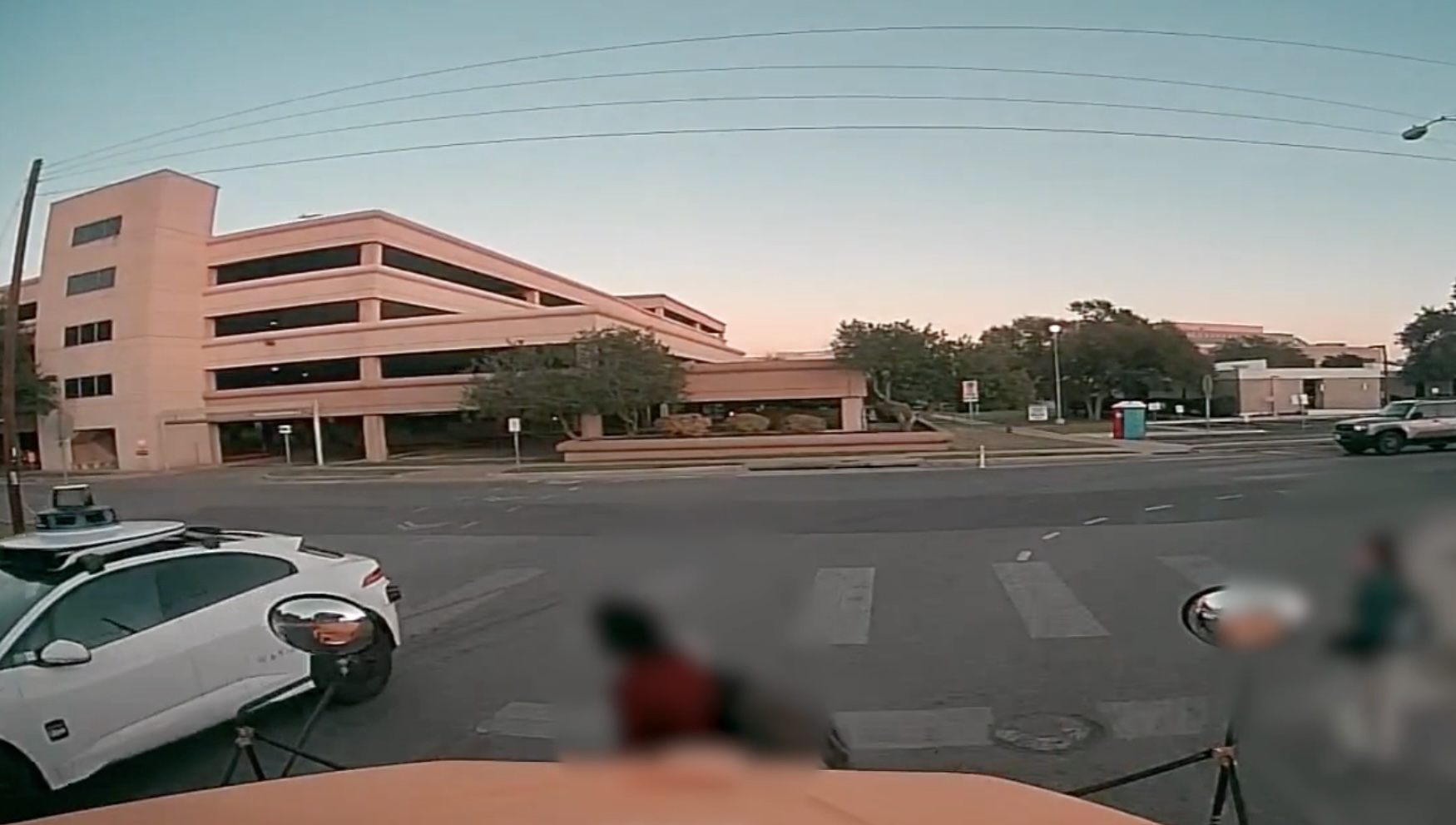
Screenshot from a video capturing one of the incidents of a Waymo robotaxi illegally passing a stopped school bus. | Credit: Austin ISD
The NHTSA’s Office of Defects Investigation (ODI) has opened a preliminary evaluation into whether the automated driving system (ADS) exercised appropriate caution given its proximity to the elementary school during drop-off hours.
ODI said it will likely examine the ADS’s intended behavior in school zones and neighboring areas, especially during normal school pick up/drop off times, including but not limited to its adherence to posted speed limits. The office will also investigate Waymo’s post-impact response.
But this isn’t the first problem Waymo has had when trying to navigate school drop-offs. In December, Waymo announced that it would file a voluntary software recall in response to its robotaxis illegally passing stopped school buses in a number of incidents across different states.
In September, WXIA-TV in Atlanta aired a video showing a Waymo illegally passing a stopped school bus. A month later, the NHTSA opened an investigation into Waymo around “traffic safety violations relating to stopping when encountering a school bus, particularly when the bus is boarding or offboarding students.”
Residents and school officials saw similar problems in Austin, Texas. The Austin Independent School District detailed 19 different instances of a Waymo robotaxi “illegally and dangerously” passing Austin school buses since the 2025-2026 school year in a letter it sent to the NHTSA.
The school district requested that Waymo cease operations during the times school buses would be loading and unloading.
Looking back at Waymo’s safety record
This also isn’t the first time a Waymo vehicle has struck a person. In February 2024, a Waymo vehicle ran into a bicyclist in Potrero Hill in San Francisco. The cyclist turned left in front of the vehicle as it entered the intersection.
The Waymo vehicle was unable to detect the bicyclist earlier because it was following closely behind a large truck that passed through the intersection immediately before the vehicle started to go through.
According to NHTSA, Waymo’s robotaxis surpassed 100 million miles of driving in July 2025, and the company continues to accumulate 2 million miles a week. The company currently operates autonomous ride-hailing services in Atlanta, Austin, Los Angeles, Phoenix, and San Francisco. In the U.S., Waymo said its robotaxis have already driven more than 10 million paid rides.
Waymo last issued a voluntary recall in May 2025, when it recalled 1,212 robotaxis to address risks of collisions with chains, gates, and other roadway barriers. The company said it resolved the underlying software issue through a November 2024 update that reduced the likelihood of these types of events.
Waymo will be under increasing safety scrutiny as it continues to expand its AV service. It intends to expand or launch services in Nashville, Las Vegas, San Diego, Detroit, Washington D.C., Miami, Dallas, Seattle, Houston, Orlando, San Antonio, Baltimore, Philadelphia, Pittsburgh, St. Louis, and Denver in the coming years.
In addition, the company is planning to bring its technology overseas. Waymo said it wants to deploy in London in 2026, and it has already deployed test vehicles in Tokyo to learn local traffic patterns.
 Register now and help us celebrate 20 years of RoboBusiness!




Tell Us What You Think!