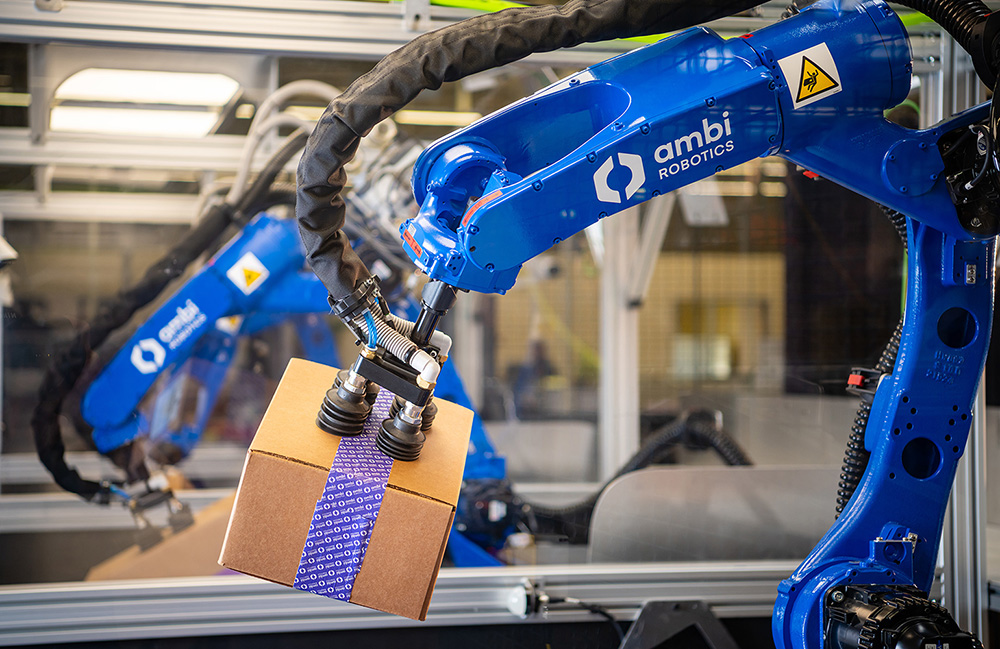
The AmbiSort B Series can streamline final-mile deliver operations with automated induction, scanning, and ‘end-to-end’ sortation. | Source: Ambi Robotics
As Black Friday and the start of peak season draw near, logistics providers across the country are getting ready for the rush. Each year, these providers could see a 25% to 40% increase in throughput, according to Stephen McKinley, co-founder and chief operating officer at Ambi Robotics.
This year, Ambi is expecting its customers to experience a 9% to 10% increase compared with peak season last year.
“Despite anything that might be going on in the economy, volume continues to ramp and e-commerce spending remains high,” McKinley told The Robot Report. “That puts familiar pressures on our clients to perform in all of their individual sites, and we’re feeling that pressure also, because our systems are core to their functions.”
For Ambi, preparing for the season means installing new systems at eight facilities before peak season starts.
“Most of those new sites are with this new version of AmbiSort, and though that’s not a new product, it’s definitely a new variation,” said McKinley. “We’re excited about supporting that through peak season, and we want to make sure that goes perfectly, of course, for our customers.”
The Berkeley, Calif.-based company is also working to ensure that its team members will be readily available for logistics customers when they need them.
“We move into a more reactive state of being, where we’ll have about half of the team traveling around to different sites to check in with what’s going on, and the other half of the team is ready to jump to solve issues as they come up,” McKinley said.
How to increase throughput without adding new systems
While some of Ambi Robotics’ customers plan to have more systems go live for peak season, there are other ways to increase throughput, McKinley said.
“[Customers] will often add more shifts into existing operations or bring on more people to be working alongside our systems, so we can help with training,” he noted. “We offer more training to customers right before peak season to make sure they know how to effectively use the systems.”
Properly training the operators working with robots on a daily basis can make a big difference in how the system performs.
“Over the course of the year, we’re tracking how the systems are performing all the time,” said McKinley. “The performance of the systems is related to the inherent quality of that piece of machinery, which doesn’t really fluctuate, but also related to how the customer interacts with that machine and how attentive they are to it, or how well trained the operators are. So, we can help by stepping in and making sure that everybody knows what to do and has the right mindset when they’re approaching their system.”
Ambi decreases downtime, rolls out incremental improvements
Nobody wants a robot to fail, but they especially don’t want a robot to fail when they need to handle a massive increase in volume. This means reducing downtime is even more important for Ambi Robotics right now. To do this, the company forward-deploys spare parts to different sites.
“Normally, we would have spare inventory here at our headquarters in Berkeley, and we would send things out as needed. That spares inventory is also what we use to pull form to build new systems,” McKinley said. “During peak seasons, we’ll bring in more spares and then deploy those out to specific locations in the East Coast that are hubs of customer activity.”
For example, McKinley said Cincinnati is a central zone for a lot of the Ambi’s installs in the Midwest. “We’ll even go so far as to put spare computers or spare high critical items at each site that will carry more inventory at customer locations during peak season,” he continued.
When it comes to rolling out improvements in its AI systems, Ambi takes a conservative approach.
“We’ve been a physical AI company since 2018 when we started. We know how important it is to have systems out there in the world that are performing at predictable levels. So, we don’t have systems that are self-improving over time,” McKinley said. “As we generate more data from our systems, we’ll use that to retrain our systems and then process that improvement through an A/B test within a controlled environment to see what happens before we roll it out into the rest of the field.”
When customers need help from Ambi, they will always speak with a person
While it’s important to improve the technology, roll out new systems, and add more shifts, McKinley said it’s just as important for Ambi to build trust with its customers.
“The people who will be answering the phones for our support hotline are the people who will go to the facilities and do the training and make the fixes,” he explained. “I think that’s very important, because we’re building a layer of trust with the operators and with the people on site who need to maintain the systems in our absence, and the management who’s on site.”
“When they pick up the phone, they’ll know the voice on the other end, and that person will be familiar with them,” McKinley added. “That’s helped build trust significantly. That trust has been, in my opinion, the most important factor for those large customers to be adopting physical AI in the real world.”
Instead of using AI to directly interact with customers, Ambi has developed an AI system to help its employees more quickly solve problems for its customers. This AI system also makes it easier for Ambi to onboard new employees, McKinley said.
“We’ve been working on basically collecting all the data from our support tickets and then feeding that into our own AI model to assist in support. We have a very lean, very small team,” he said. “Now, we’ve got these AI assistants that are helping us keep track of performance on sites, then predict when things might be going wrong, and then helping us as a support organization.”
 Submit your innovation now!


Tell Us What You Think!