The Robot Report

  • Home
  • News
  • Technologies
    • Batteries / Power Supplies
    • Cameras / Imaging / Vision
    • Controllers
    • End Effectors
    • Microprocessors / SoCs
    • Motion Control
    • Sensors
    • Soft Robotics
    • Software / Simulation
  • Development
    • Artificial Intelligence
    • Human Robot Interaction / Haptics
    • Mobility / Navigation
    • Research
  • Robots
    • AGVs
    • AMRs
    • Consumer
    • Collaborative Robots
    • Drones
    • Humanoids
    • Industrial
    • Self-Driving Vehicles
    • Unmanned Maritime Systems
  • Business
    • Financial
      • Investments
      • Mergers & Acquisitions
      • Earnings
    • Markets
      • Agriculture
      • Healthcare
      • Logistics
      • Manufacturing
      • Mining
      • Security
    • RBR50
      • RBR50 Winners 2025
      • RBR50 Winners 2024
      • RBR50 Winners 2023
      • RBR50 Winners 2022
      • RBR50 Winners 2021
  • Resources
    • Automated Warehouse Research Reports
    • Digital Issues
    • eBooks
    • Publications
      • Automated Warehouse
      • Collaborative Robotics Trends
    • Search Robotics Database
    • Videos
    • Webinars / Digital Events
  • Events
    • RoboBusiness
    • Robotics Summit & Expo
    • DeviceTalks
    • R&D 100
    • Robotics Weeks
  • Podcast
    • Episodes
  • Advertise
  • Subscribe

Gecko Robotics, Rho Impact study how robots and AI could improve sustainability

By Matthew Greenwood | January 21, 2024

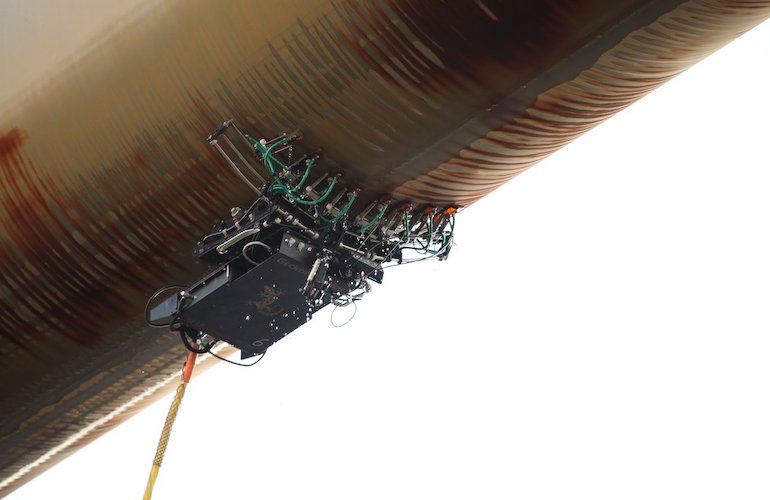
Pipeline inspection robots can improve sustainability and profitability, says Gecko Robotics.

Robotics, data, and AI promise to help both sustainability and profitability. Source: Gecko Robotics

Robots and artificial intelligence have a significant role to play in maintaining crumbling infrastructure — and they could help bring about a zero-carbon economy while they’re at it.

That’s the conclusion of a new report by Gecko Robotics and Rho Impact, which studied how these technologies could reduce the environmental impact of critical infrastructure by bringing them into the digital world.

The potential is massive: The report claimed that digitizing carbon-intensive infrastructure could reduce emissions by a whopping 853 million metric tons (MMT) of CO2 annually. This is the equivalent of taking almost two thirds of gas-powered vehicles in the U.S. off the road, according to Gecko Robotics and Rho Impact.

Gecko identifies five areas for digital transformation

The report looked at five different sectors to demonstrate how digital transformation technologies could help create efficiencies and reduce emissions.

Oil and gas pipelines: Using robots for early detection of corrosion and other damage on components could reduce fugitive emissions, the unintended discharge of gases. AI-powered preventative maintenance programs can help avoid pipeline failure, resulting in a possible 556 MMT CO2e reduction in fugitive emissions, according to the companies.

Pulp and paper industry: Digitizing physical assets in this industry could help prevent corrosion of components. Robotics can be used to identify and address corrosion in paper mill tanks and pressure vessels, and AI can be used to make paper mill boiler operations more efficient.

Not only could digitalization reduce annual emissions by 46 MMT CO2e, per the report, but it could also result in a 6% improvement in emissions efficiency.

Maritime transportation: Digitalization could reduce greenhouse gas emissions by optimizing loads and detecting leaks on large ships, which can be up to 70% more efficient than smaller ones.

The report suggested that robots could inspect these large vessels more efficiently, reducing their time in the repair dock. Shippers could deploy AI to optimize loads. As a result, 11 MMT of CO2e emissions could be prevented by making the most efficient vessels more available.

Bridge infrastructure: Deploying robots to collect inspection and maintenance data, and using AI to analyze it and predict outcomes, could help reduce the time bridges are partially or fully closed for maintenance and repair, said Gecko Robotics and Rho Impact.

Digitalizing the inspection process would generate better data on bridges and could help reduce traffic-related emissions by 10 MMT CO2e, the report claimed.

Data key to addressing climate change, says report

The report concluded that it all comes down to data. Bringing major carbon-emitting industries into the digital world requires a comprehensive and detailed understanding of their infrastructure.

But manual inspection methods can result in limited data that doesn’t adequately identify the critical defects in infrastructural assets. Those assets don’t get the maintenance they need, leading to a shortened lifespan and premature replacement—which can have significant and avoidable business and environmental impacts. 

By contrast, robotic inspections enable operators to collect comprehensive and detailed data, allowing them to prioritize maintenance and repair work that helps make their operations more efficient and extends their lifetime.

Deploying robots and AI as part of a digital transformation strategy makes the task of collecting and gaining insight from that critical data easier than ever. Not only could these technologies help industry meet the challenge of global warming, but they could also help boost their bottom lines.

About the author

Matthew Greenwood is a freelance writer for Engineering.com, a sibling site to The Robot Report. He has a background in strategic communications. He writes about technology, manufacturing, and aerospace.
Tell Us What You Think! Cancel reply

This site uses Akismet to reduce spam. Learn how your comment data is processed.

Related Articles Read More >

CivNav works with existing solar equipment such as this loader, says Civ Robotics.
Civ Robotics provides CivNav AI navigation for solar construction systems
The ANYmal gas-leak and presence-detection robot is an example of where autonomous operations are going. Source: ANYbotics
Beyond the robot: Shaping the future of autonomous operations
Drones and self-driving tractors are examples of autonomous machines using physical AI.
Is physical world AI the future of autonomous machines?
Draganfly provides drones and services for defense, civilian, and public safety. Source: Draganfly
Draganfly and Palladyne partner to develop drone swarms for defense

RBR50 Innovation Awards

“rr
EXPAND YOUR KNOWLEDGE AND STAY CONNECTED
Get the latest info on technologies, tools and strategies for Robotics Professionals.

Latest Episode of The Robot Report Podcast

Automated Warehouse Research Reports

Sponsored Content

  • Supporting the future of medical robotics with smarter motor solutions
  • YUAN Unveils Next-Gen AI Robotics Powered by NVIDIA for Land, Sea & Air
  • ASMPT chooses Renishaw for high-quality motion control
  • Revolutionizing Manufacturing with Smart Factories
  • How to Set Up a Planetary Gear Motion with SOLIDWORKS
The Robot Report
  • Automated Warehouse
  • RoboBusiness Event
  • Robotics Summit & Expo
  • About The Robot Report
  • Subscribe
  • Contact Us

Copyright © 2025 WTWH Media LLC. All Rights Reserved. The material on this site may not be reproduced, distributed, transmitted, cached or otherwise used, except with the prior written permission of WTWH Media
Privacy Policy | Advertising | About Us

Search The Robot Report

  • Home
  • News
  • Technologies
    • Batteries / Power Supplies
    • Cameras / Imaging / Vision
    • Controllers
    • End Effectors
    • Microprocessors / SoCs
    • Motion Control
    • Sensors
    • Soft Robotics
    • Software / Simulation
  • Development
    • Artificial Intelligence
    • Human Robot Interaction / Haptics
    • Mobility / Navigation
    • Research
  • Robots
    • AGVs
    • AMRs
    • Consumer
    • Collaborative Robots
    • Drones
    • Humanoids
    • Industrial
    • Self-Driving Vehicles
    • Unmanned Maritime Systems
  • Business
    • Financial
      • Investments
      • Mergers & Acquisitions
      • Earnings
    • Markets
      • Agriculture
      • Healthcare
      • Logistics
      • Manufacturing
      • Mining
      • Security
    • RBR50
      • RBR50 Winners 2025
      • RBR50 Winners 2024
      • RBR50 Winners 2023
      • RBR50 Winners 2022
      • RBR50 Winners 2021
  • Resources
    • Automated Warehouse Research Reports
    • Digital Issues
    • eBooks
    • Publications
      • Automated Warehouse
      • Collaborative Robotics Trends
    • Search Robotics Database
    • Videos
    • Webinars / Digital Events
  • Events
    • RoboBusiness
    • Robotics Summit & Expo
    • DeviceTalks
    • R&D 100
    • Robotics Weeks
  • Podcast
    • Episodes
  • Advertise
  • Subscribe