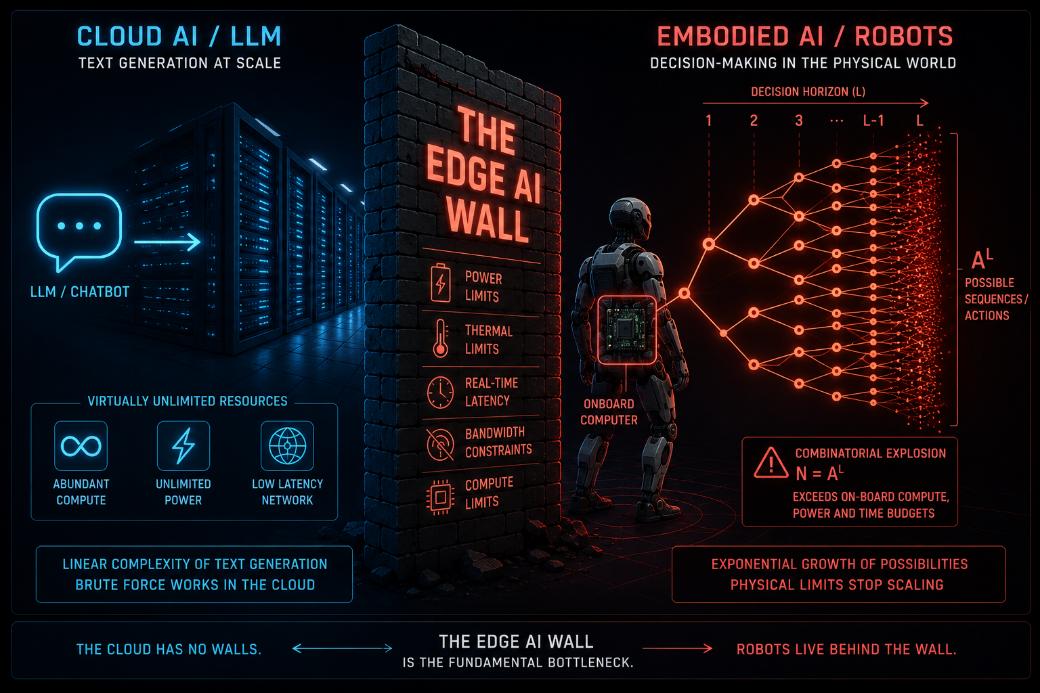
The ‘edge AI wall.’ Click here to enlarge. Credit: Zhengis Tileubay
My previous article for The Robot Report examined the problem of computational instability in autonomous mobile robots, or AMRs. Since then, the rapid development of artificial intelligence over the past year has led to a broader perspective about edge AI.
The article, “Phase stability regulator based on two dynamic parameters for autonomous mobile robots,” focused on situations in which a machine operates in a complex, rapidly changing environment characterized by a progressive growth of alternative trajectories and scenarios. In such cases, sensors, actuators, and core software may remain fully operational, yet the quality of decision-making starts to deteriorate.
My main argument was that behavioral degradation often results not from hardware failure, but from an information overload within the planner, which is forced to evaluate an excessive number of alternatives in real time, leading to reduced system stability.
When that article was published, this challenge appeared to be a relatively narrow problem within the local navigation of mobile platforms. However, with recent AI developments, is becoming increasingly clear that computational overload is not a localized bug of a specific planner, but a fundamental limitation common to the entire class of physical AI systems.
What initially appeared to be a local failure of a navigation stack reveals itself, upon closer examination, to be a manifestation of a systemic barrier confronting the new wave of embodied AI. This article is an attempt to understand the nature of that barrier and explore mathematical pathways to overcome it.
Expanding the scope: From autonomous robots to embodied AI
The rapid progress of large language models (LLMs) and multimodal foundation models has pushed the industry toward a logical next step — transferring these heavy architectures directly into the physical world. This shift has given rise to a wave of ambitious projects, ranging from general-purpose humanoid robotic assistants to next-generation autonomous delivery systems and self-driving vehicles.
Underlying most of these initiatives is a linear scaling hypothesis or scaling law. The implicit assumption is that if expanding computational resources and data volumes enabled major breakthroughs in cloud AI, a comparable strategy should yield success when controlling physical bodies in the real world.
However, this approach overlooks a fundamental distinction in the physics of environments. Cloud intelligence operates under the cozy constraints of flexible scaling. Any shortage of memory or processing power can be mitigated by deploying additional servers and accelerators within a data center, and response latencies of a few seconds remain acceptable for many applications.
By contrast, physical AI systems operate under rigid hardware constraints: Every additional watt consumed by an onboard computer requires an increase in battery capacity and weight, while the generated heat complicates the thermal management system.
In real-time systems, decision latency is critical down to the millisecond. If a robot fails to process a scene in time, it begins responding to an outdated state of the environment, resulting in a loss of control stability, behavioral oscillations, and potential accidents.
Consequently, the fundamental problem of computational instability observed in a single robot scales across the entire embodied AI stack. As tasks in the physical world become more complex, the exponential growth of solution spaces will manifest with increasing frequency.
This elevates the challenge to an architectural question: Is there a threshold beyond which the extensional expansion of onboard computing resources ceases to be a physically and economically viable strategy for advancing embodied AI systems?
Editor’s note: Physical AI is the topic of a session track at RoboBusiness 2026, which will be on Oct. 20 and 21 in Santa Clara, Calif. Register now to attend.
 Register now and save on your pass to RoboBusiness 2026
The edge AI wall: Physical and mathematical limits
Attempts to directly deploy heavy neural network models onto the onboard computing hardware of mobile platforms have driven the industry into a systemic bottleneck that can be described as “The edge AI wall.” This barrier is dual in nature, combining the harsh physical constraints of the real world with the fundamental laws of computational complexity theory.
From a physical perspective, an autonomous system is always restricted by a strict energy budget. An AMR or an autonomous vehicle is not connected to a power grid by a cable; it relies entirely on a localized battery pack.
Pursuing an extensional path that requires mounting massive graphics processing units (GPUs) or specialized accelerators directly onto a mobile platform creates a vicious engineering circle. Increasing processing power accelerates energy consumption and thermal dissipation.
This forces engineers to install heavier batteries and complex cooling systems, which increases the total mass of the platform, reduces useful payload capacity, and shortens critical operating uptime. The industry hits a ceiling where each additional watt of performance becomes excessively expensive from an engineering standpoint.
Yet, even if we imagine a future scenario where silicon microelectronics makes a monumental leap forward, providing robots with virtually “infinite” onboard compute at near-zero power consumption, the system will still collide with a second, far more resilient wall — a mathematical one.
In the real world, a physical environment continuously generates a stream of chaotic changes. Modeling a robot’s behavior in such a setting inevitably encounters the phenomenon of combinatorial explosion. As the number of dynamic objects and their potential interactions grows, the planner’s state-space and decision tree branch out exponentially.
If we simplify this dynamic into discrete steps, we obtain a classic sequential composition governed by the brutal mathematics of an exponential power law:
N = A^L, where:
- N is the total search space
- A is the number of alternative actions available at a decision point
- L si the planning depth (the number of steps forward)
Even under the extremely conservative assumption that a robot faces only 10 alternative options at each step (A = 10), the size of the search space expands exponentially as planning depth increases:
| Alternatives per step (A) | Planning depth / steps (L) | Size of the search space (A^L) | Real-world task context |
|---|---|---|---|
| 10 | 1 | 10 | Single isolated decision |
| 10 | 5 | 100,000 | Local obstacle avoidance |
| 10 | 10 | 10,000,000,000 (10^10) | Warehouse robot navigation |
| 10 | 20 | 100,000,000,000,000,000,000 (10^20) | Multi-agent planning and collision avoidance |
In real-world deployment, autonomous systems operate within continuous action spaces involving joint angles, velocity vectors, and accelerations, where the effective number of alternatives (A) is orders of magnitude larger. When the value of A^L skyrockets toward extreme realms like 10^20, the planning task becomes asymptotically intractable for traditional computing architectures.
Extensional scaling of hardware power is merely an attempt to traverse this endlessly expanding tree faster. However, classical brute-force search algorithms remain powerless against exponential explosion. The problem is not that processors run slowly, but that the sheer volume of search options expands incomparably faster than the capabilities of any hardware.
Faced with such a real-time explosion of choices, developers are forced into trade-offs: either artificially limit planning depth (L), which robs the robot of foresight and causes it to freeze or execute dangerous oscillations, or overload the processor, accelerating battery depletion.
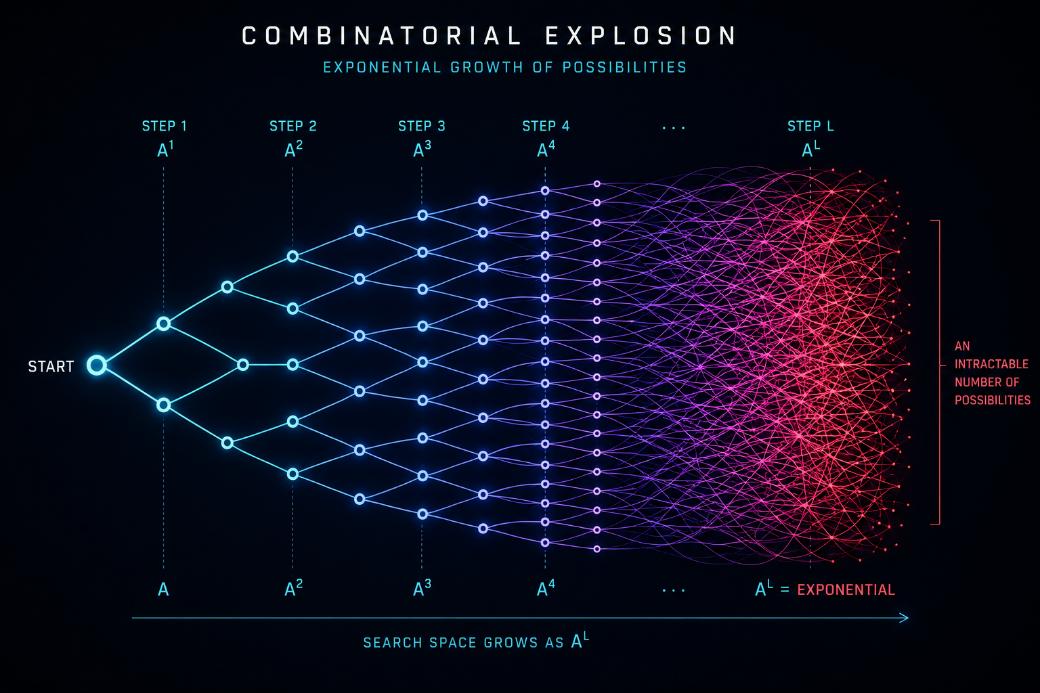
Figure 1: Illustration of a combinatorial explosion. Source: Zhengis Tileubay
Why a ‘remote brain’ does not solve the problem
As an alternative to onboard computation, the industry frequently considers the concept of a “remote brain,” a.k.a. cloud robotics. The idea seems appealing: Why overload a mobile platform with heavy hardware when raw sensor data can be streamed over wireless communication networks (such as 5G/6G) to powerful remote servers, processed there, and streamed back as ready commands for the actuators?
In practice, this architecture often proves non-viable for safety-critical control loops due to two fundamental factors: latency and network reliability.
The physical world operates in strict real time, where control loop latency dictates system stability. Transmission of high-resolution video streams and cloud-generated commands introduces an unpredictable time lag, comprising signal encoding, network packet propagation, and remote processing.
For a cloud-based text chatbot, a 500-millisecond delay goes unnoticed by the user. For a bipedal humanoid robot or an autonomous vehicle at an intersection, a latency of even 50 milliseconds carries a high risk of an accident. During this interval, the physical body of the robot shifts due to inertia, meaning the cloud command arrives to interact with an outdated state of reality that no longer exists.
The second critical factor is the inherent unreliability of wireless communications. In real urban environments, industrial facilities, or high-density zones, radio signals inevitably encounter attenuation, interference, and localized dropouts or “dead zones.”
Shifting the critical decision-making loop to the cloud means that even a minor packet loss or a temporary connection drop instantly turns the robot into an unguided physical object weighing dozens or hundreds of kilograms, posing an immediate threat to its surroundings.
A safe, embodied system must possess autonomous computing capabilities. Since an edge AI architecture remains the only viable path forward for robotics, the solution to combinatorial explosion must be found directly onboard.
Theoretical basis: Combinatorial compression engine
As one experimental approach to breaching this edge AI wall and managing the exponential branching of decision spaces (A^L), we consider the concept of the combinatorial compression engine (CCE) — an algorithmic engine for structural compression.
Traditional computation optimization strategies in robotics, such as neural network pruning, quantization, or distillation, attempt to make the model itself more compact, but they leave the underlying structure of the problem untouched.
In contrast, CCE is directed at the dynamic compression of the search space itself, operating directly during the robot’s execution cycle. The engine lops off inherently redundant or destructive branches of the planning tree before valuable onboard watts and milliseconds of compute time are wasted on their evaluation.
The mathematical foundation of this approach is provided by the theoretical model of Duality-Nonequilibrium (DN). Within this framework, the state of a system is described via the dynamics of its structural complexity, denoted by S.
Here, it is critical to highlight a terminological distinction. Unlike classical thermodynamics, where the variable S traditionally represents entropy (a measure of chaos), in DN theory, the parameter S signifies a measure of structural complexity-a diametrically opposite concept. The rate of change of this value reflects how effectively a system organizes its internal resources to counteract external disturbances.
In a series of controlled simulations and computational experiments, the CCE algorithm demonstrated an ability to compress the search space by a factor of 8 to 11 while preserving the functional quality of decisions, establishing a pathway toward enhancing edge AI efficiency.
Practical realization: The ΔN-ΔD regulator in simulation
As a next phase of research, this approach was implemented and evaluated within an open simulation testbed for an autonomous robot (the DeltaCore-Robot-Sim repository on GitHub). In this project, the core principles of DN theory are applied not merely to compress a search space, but to actively regulate the behavior of a mobile platform in real time based on two dynamic parameters.
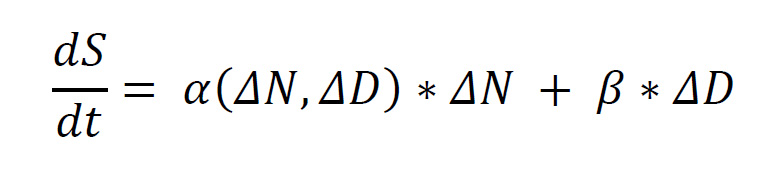
The simulation is anchored by the system dynamics equation:
Where:
- dS/dt is the rate of change of structural complexity
- ΔN is a measure of external nonequilibrium (the intensity and chaos of environmental changes)
- ΔD is a measure of internal duality (the level of conflict within the planner when choosing between equivalent alternative paths, or the divergence of competing hypotheses)
- β is the coefficient weighting the contribution of internal duality
- α(ΔN, ΔD) is the system response function that dictates the regulator’s sensitivity to current conditions.
By analyzing the robot’s state within the ΔN-ΔD coordinate space, the CCE regulator dynamically shifts its behavioral mode-temporarily narrowing the planner’s bandwidth, reducing velocity, or prioritizing safety.
To evaluate the effectiveness of the ΔN-ΔD regulator, batch testing was conducted across two edge scenarios, comparing the DN regulator’s performance against a traditional trajectory planner (baseline):
- Under intense external chaos — the random_chaos scenario — the regulator automatically engaged a safety-priority mode. This restricted solution-space branching, cutting dangerous near-collision events by over 90% (dropping from a baseline average of 27.000 down to 2.200 for the DN regulator) and significantly expanding the minimum clearance distance to obstacles, though the robot intentionally sacrificed goal-achievement speed to ensure survival.
- In scenarios featuring symmetrical ambiguity and uncertain path choices — the internal_conflict scenario — where traditional planners suffer from behavioral oscillations, freezing or twitching before an obstacle, the DN regulator completely eliminated oscillations in 100% of the test runs (the oscillation metric dropped from 5.000 to 0.000), stabilizing the decision path without degrading core navigation efficiency.
While these results have been validated only within a simplified 2D simulation environment, they demonstrate that complexity management can directly influence not just computational efficiency, but the behavioral stability of embodied AI systems.
However, the proposed architecture has not yet been verified on physical robots in the real world. Transferring this mathematical model from simulation to physical edge hardware presents a massive engineering challenge that requires significant computational and R&D resources.
The next stage of research must involve its integration and experimental evaluation on real robotic platforms and edge AI hardware, for which we are actively seeking academic and industrial research partnerships.
Manage the structure of the solution space to overcome the edge AI wall
For a long time, the evolution of the AI industry moved along a path of extensional scaling. This paradigm proved highly effective for cloud-based systems, where virtually unlimited computational resources compensated for the mounting complexity of tasks.
However, attempts to migrate these principles into the physical world and the embodied AI stack have brought developers face-to-face with a systemic barrier in the form of the edge AI wall, where the hardware limits of onboard computers clash directly with the mathematical laws of combinatorial explosion.
This work has outlined an alternative paradigm for optimizing physical intelligence systems, grounded in the Duality-Nonequilibrium (DN) theoretical model and Combinatorial Compression Engine (CCE) algorithms. Rather than engaging in a fruitless race for raw computing power to accelerate the enumeration of an exponentially branching decision tree, the proposed approach focuses on actively managing the structure of the solution space itself.
Simulation tests of the ΔN-ΔD regulator confirmed that shifting focus from hardware optimization to real-time search-complexity management slashes computational workloads while radically improving the safety and stability of autonomous machines navigating critical regimes of chaos and ambiguity.
The evolution of robotics mirrors the history of many other engineering disciplines: Long-term success is achieved not by ramping up brute force, but by enhancing the internal organizational efficiency of system processes. Bound by the physical constraints of the real world, a defining trait of next-generation embodied AI will be its ability to avoid unnecessary computational overhead altogether, rather than merely processing massive datasets faster.
Consequently, managing the complexity of decision spaces promises to become as fundamental a direction for robotics as memory management, network bandwidth allocation, and power optimization once became for general computing.
About the author
Zhengis Tileubay is an independent researcher from the Republic of Kazakhstan working on issues related to the interaction between humans, autonomous systems, and artificial intelligence. His work is focused on developing safe architectures for robot behavior control and proposing new legal approaches to the status of autonomous technologies.
In the course of his research, Tileubay developed a behavior control architecture based on a hierarchy of missions and interacting subjects. He has also proposed the concept of the “neutral-autonomous status.”
Tileubay has filed a patent application for this architecture entitled “Autonomous Robot Behavior Control System Based on Hierarchies of Missions and Interaction Subjects, with Context Awareness” with the Patent Office of the Republic of Kazakhstan. He can be reached at [email protected].



Tell Us What You Think!