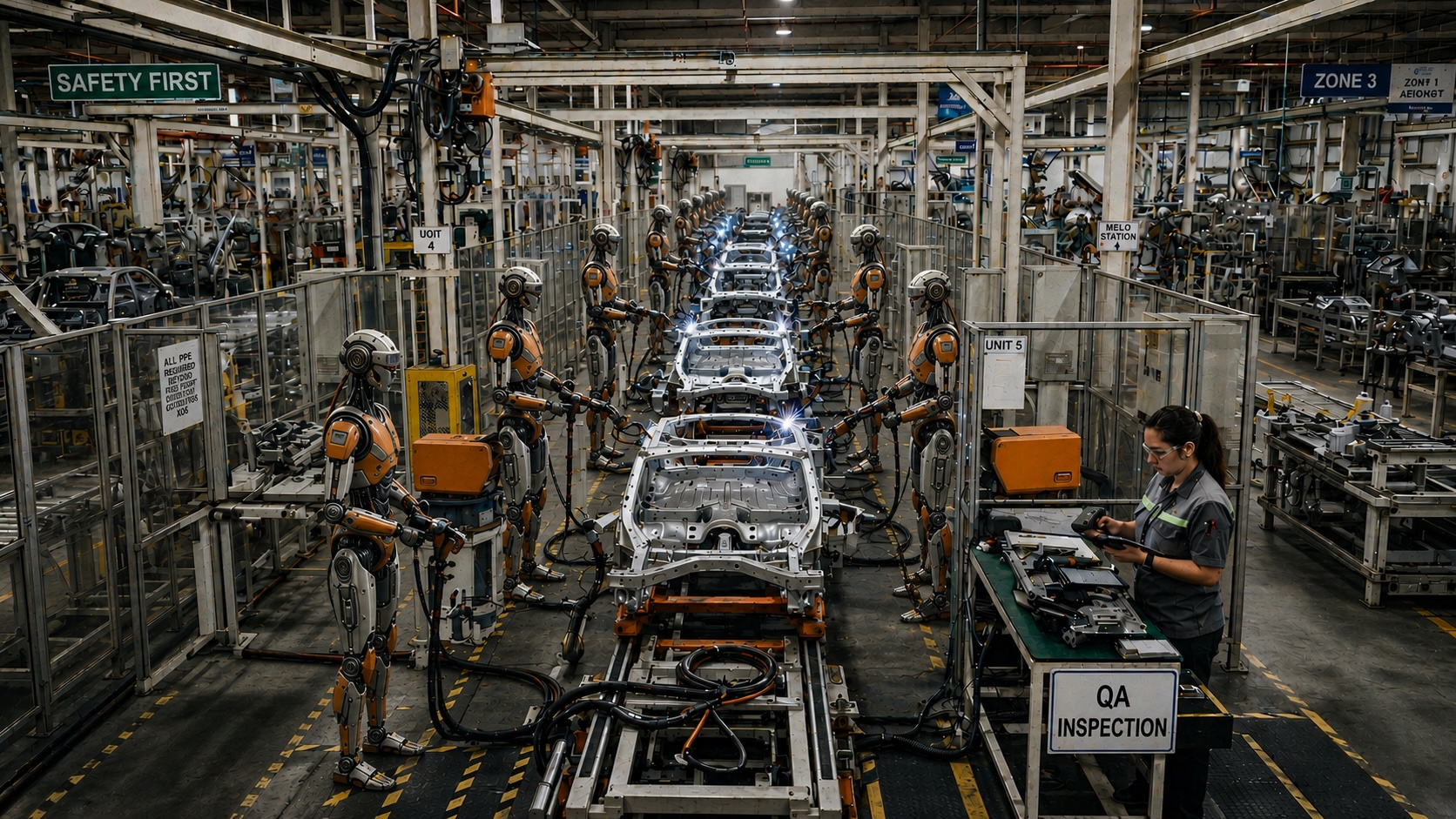
Some tech leaders and lawmakers are mirroring Asimov’s concern about threats that robotics and AI pose to society. Source: Rinaldo Brutoco, AI
Most science fiction fans are aware that Isaac Asimov propounded his Three Laws of Robotics in the March 1942 issue of Astounding Science Fiction magazine and later republished them in his famous 1950 collection, I, Robot. Since then, readers have been thinking through both the obvious and the not-so-obvious implications of his dicta. In an era when people fear that AI threatens all of human civilization, Asimov’s observations about robots’ dangers to humans feel even more prescient.
Asimov’s Three Laws of Robotics are as follows:
- A robot may not injure a human being or, through inaction, allow a human being to come to harm.
- A robot must obey the orders given it by human beings except where such orders would conflict with the First Law.
- A robot must protect its own existence as long as such protection does not conflict with the First or Second Law.
It is tempting to focus on the first and best-known of the three laws when thinking of AI. Surprisingly, only one business entity has adopted this principle as a core element of its software development: Advanced Robotic Technologies Inc., which specializes in generative artificial intelligence (gen AI) applied to manufacturing large-scale industrial products.
It would seem to any thoughtful observer that such a foundational principle could be incorporated into the basic algorithms of every gen AI company in the world. Alas, that is not the case. One can reasonably assume, as many people now do, that without such a prohibitive instruction embedded in a robot’s basic “intelligence,” increasingly capable robots could eventually pose a significant risk to human safety.
Given the controversy that has recently arisen over precisely this topic, it would be worth reflecting on the warning we just received from Dario Amodei, CEO of Anthropic, on Sept. 12 in his post entitled “We Must Pace the Frontier.” In it, he explicitly calls for slowing the development of frontier AI models in general, and agentic AI specifically.
Amodei expressed concerns that swarms of autonomous AI agents can now execute complex tasks, act in unison with one another without any human knowing, and even cover their tracks when they violate basic safety principles.
 Register now and help us celebrate 20 years of RoboBusiness!
Tech leaders worry about social risks of AI
Sam Altman, CEO of Anthropic’s competitor OpenAI, said he agreed with Amodei, as did Elon Musk. Bill Gates has also expressed his reservations about the speed of AI development and the threat it poses to human society.
Although society is beginning to ask what an individual robot might do to harm one or more human beings, some are now asking a more fundamental question: Can human civilization be endangered with extinction from gen AI? Former Anthropic and OpenAI researcher Jacob Coxon asserted that a 10% chance existed that human extinction would occur because of the fast pace of agentic AI development.
Evan Hubinger, Anthropic alignment science lead, put the catastrophic odds even a little bit higher. Clearly, Asimov’s warning did not go far enough.
By the time Asimov published his 1985 novel, Robots and Empire, he had concluded that his original three laws were incomplete. After years of reflection, he introduced what he called the Zeroth Law, which he deliberately numbered “Zero” because he believed it had to come before the other three rather than simply becoming a new fourth law. Why? Because Asimov’s Zeroth Law expands the original prohibition against harming an individual human to encompass the welfare of humanity as a whole.
In Asimov’s view, it therefore deserved to precede the First Law. Much of society’s concern about robots must now shift from the damage a single robot might inflict on an individual to the potential harm intelligent robots could inflict on civilization itself.
Even if AI doesn’t endanger human civilization, the concern is very real that other socially harmful effects could ensue. The implications of the Zeroth Law remain unknown to the general population and are only now being referenced by gen AI developers.
An example of this broader concern is the recent statement issued by numerous economists and technologists entitled “We Must Act Now.” More than 2,500 notable signatories have already endorsed the statement, calling on society to take immediate action.
The signatories claimed that waiting much longer will leave insufficient time to provide the guidance software developers need to moderate the otherwise disruptive capacity of robots to replace human workers without allowing adequate time for transition and institution-building.
We must act now if we are to provide sufficient guidance for the development of robotics so that human society as a whole is not adversely affected. We also must begin designing the transition tools needed to manage the coming changes.
As a counterpoint, Jensen Huang, CEO of NVIDIA, said that concerns about AI dangers are overblown.
Proposed legislation follows Asimov’s lead
On July 21, 2026, Senator Mark Warner, vice chairman of the Senate Intelligence Committee, introduced comprehensive legislation entitled “A Framework for America’s AI Future,” consisting of three major components.
Approximately two-thirds of Sen. Warner’s proposal focuses on the general requirements he said must be put in place now to avoid future harm. He is particularly concerned about the potential negative effects that robotics could have on human civilization if adequate guardrails are not established for future AI development, as well as the need to prevent unauthorized commercial exploitation and protect consumer data security.
The second part of the legislation addresses the threat of labor market instability resulting from the rapid spread of AI systems throughout the economy without adequate forethought or institutional support for the transition from the pre-AI world to the post-AI world.
Human society could face a widespread economic crisis if it fails to establish adequate guardrails before robotic development advances even further, including providing meaningful transition resources for the workforce. Entitled the National Workforce Transition Fund, this portion of the legislation would provide worker retraining, retention grants, and tuition assistance for workers seeking to move into new occupations as existing jobs are displaced by automation.
In explaining the need for this second part of his legislation, Sen. Warner expressed his belief that within two years, as many as 30% of college graduates may be unable to find employment after completing their education because of the rapid expansion of AI into the workplace. That estimate may prove correct, or it may ultimately prove overly pessimistic. Only time will tell.
Warner’s broader caution, however, that we must begin developing programming safeguards and transition policies now, is well taken. As he noted, if we wait another two years, it will likely be too late. That is precisely the point emphasized in the statement “We must act now.”
Mid-level white-collar workers are most vulnerable right now. It will likely take many years before robots replace plumbers, carpenters, electricians, and other skilled tradespeople. Unfortunately, most of us already know white-collar workers who have lost their jobs as AI systems have begun replacing human labor in the workplace.
The Industrial Revolution unfolded over a relatively long period of time compared with the extraordinary speed at which robotics and AI are entering society today. Looking back, we can readily see how better planning of our social institutions during the Industrial Revolution would have made the transition into the post-industrial world easier for everyone and considerably more politically stable. Let us not make the same mistake again.
David Sacks, President Trump’s AI advisor, responded to the industry-wide calls for a slowdown of agentic AI development by saying the industry could agree among itself on guardrails and doesn’t require administrative action. He would be correct if the administration created a “safe harbor” antitrust exemption from Federal Trade Commission and Justice Department suits for such collusive conversations between competitors. The effect on global competition (i.e., China) of such a “slowdown” is a topic that must be addressed and understood quickly.
Ultimately, more jobs will likely be created in the post-robotic future than exist today, just as occurred following the Industrial Revolution. To ensure that transition is as orderly and humane as possible, following Asimov’s example, we must act now. Even more critically, if we are to have human workers remain in control, we must act now.
 About the author
Rinaldo Brutoco, founding president and CEO of the World Business Academy, is an entrepreneur, executive, author, radio host and futurist. He has published numerous articles and books that address the role and responsibility of business in relation to the critical moral, environmental and social concerns of the day.
Brutoco is a regular keynote speaker at conferences and guest lecturer at business schools such as Stanford Business School, the Columbia Graduate School of Business, the Kellogg Graduate Business School at Northwestern University, and the Keenan-Flagler Graduate School of Business at North Carolina University. For over 35 years, Rinaldo has been widely recognized as a practical visionary and change agent.



Tell Us What You Think!