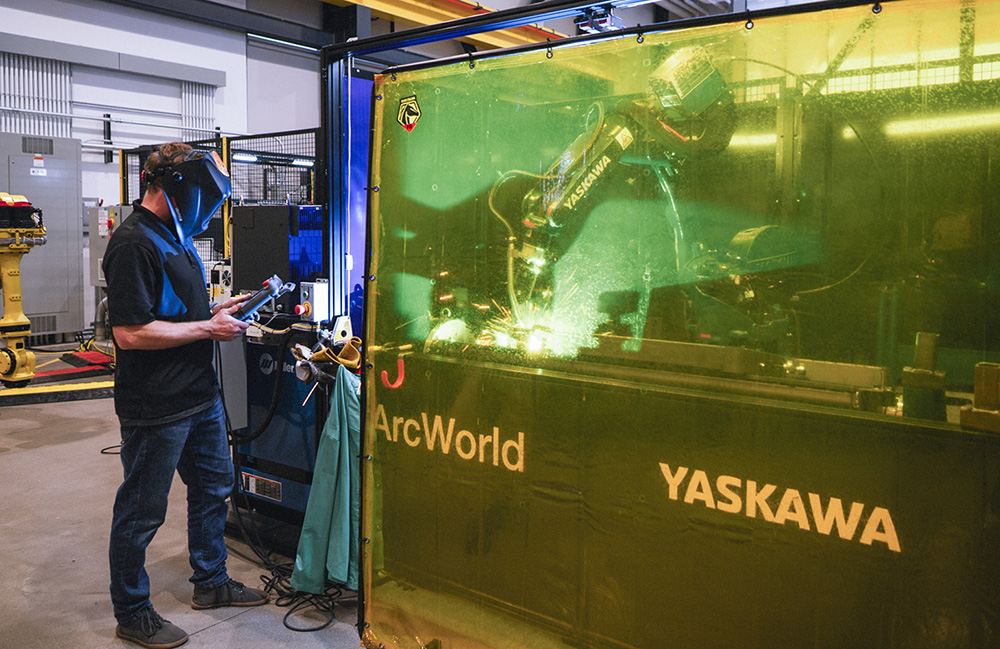
The ARM Institute has over 500 member organizations and partners across industry, academia, and government. | Source: ARM Institute
This week, the Advanced Robotics for Manufacturing, or ARM, Institute received nearly $90 million in funding for 10 projects led by the consortium and its members.
The institute was awarded the funding through an Organic Industrial Base (OIB) Modernization Challenge from the Office of the Undersecretary of War Manufacturing Technology Office (OSW ManTech). The challenge supports the U.S. Department of War (DoW)’s focus on modernizing defense manufacturing through practical technology and workforce innovations.
Fifteen member organizations will deliver viable working solutions within a two-year timeframe, said the ARM Institute. They will aim to solve complex automation and modernization challenges at 12 military manufacturing sites, often referred to as the “Organic Industrial Base” (OIB), across the U.S.
“This funding award recognizes not only the leadership role the ARM Institute plays in modernizing manufacturing, but the key role our member consortium plays in these efforts,” stated Jorgen Pedersen, CEO of the ARM Institute. “We are honored to work on this important initiative for our nation, and we congratulate our members on the role they will play in this historic effort to modernize the Organic Industrial Base.”
ARM Institute aims to improve safety and quality at OIB sites
The OIB is a network of arsenals, depots, and ammunition plants that build and maintain the U.S. military’s equipment. The DoW has embarked on an extensive strategic effort to modernize the operations at these facilities. It plans to do so through advanced technologies, such as robotics and physical AI.
The Pittsburgh-based ARM Institute said its members stepped up to this challenge by bridging innovation with practicality to propose solutions that would solve challenges affecting each branch of the U.S. military. The selected projects include:
- Improving safety in energetics production and increasing manufacturing quality using AI
- Accelerating mission readiness using drones
- Removing bottlenecks through robotics
Technology innovations will only have impact if there is a prepared workforce ready to work alongside new systems and processes. Each solution plan includes a workforce readiness component that the Institute will lead with its workforce partners.
This work will center on identifying the skills workers need to operate these systems and, as necessary, identifying ways to upskill and/or recruit additional workers to support the new technologies.
“Innovation cannot exist in a vacuum. A skilled workforce is needed to support these technologies,” said Lisa Masciantonio, chief workforce officer at the ARM Institute. “We are thrilled that the Department of War recognizes the importance of the human workforce. We look forward to working with OIB sites across the nation to not only upgrade their technologies but also ensure that their workforce is ready for the forthcoming improvements to their operations.”
 Register now and save on your pass to RoboBusiness 2026


Tell Us What You Think!