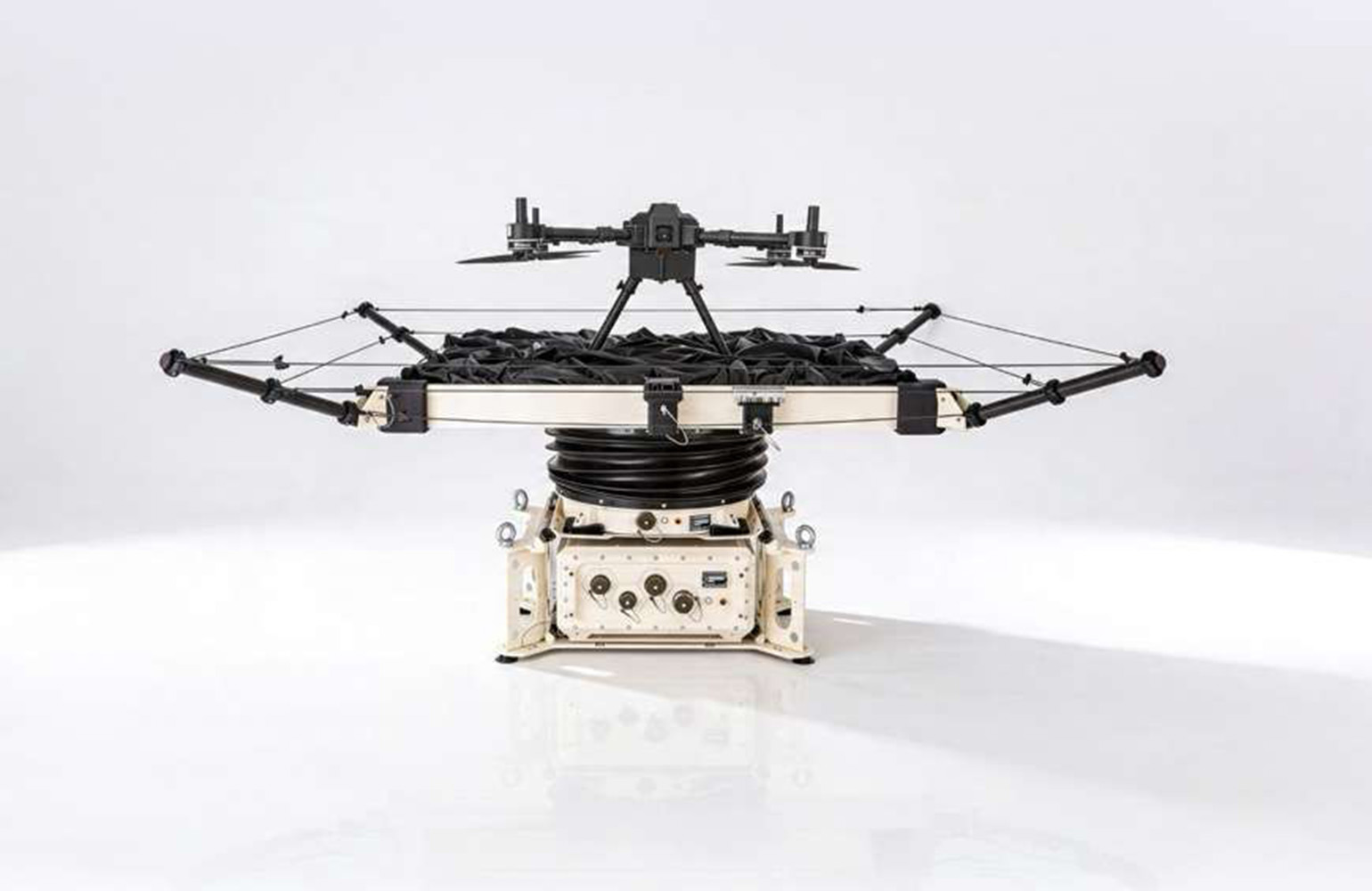
WaiV Robotics’ drone landing system includes stabilized landing infrastructure, impact absorption, and a unique locking mechanism. | Source: WaiV Robotics
WaiV Robotics today introduced a fully automatic landing and takeoff platform. The company designed it to enable reliable vertical takeoff and landing, or VTOL, drone operations in high sea states.
Backed by $7.5 million in seed funding, the system enables uncrewed aerial vehicles (UAVs) to operate from vessels as small as 10 m (32.8 ft.) long and decks of any size. It can do this without any hardware or software modifications to the drone.
WaiV’s patent-pending catch-lock-release landing mechanism, combined with AI-driven predictive algorithms, enables safe and precise drone recovery even while vessels are in motion on the open sea, said WaiV Robotics.
The platform supports UAVs up to 15 kg (33 lb.), with plans to accommodate smaller aircraft carriers as small as 3 kg (6.6 lb.) and larger carriers weighing 100 to 300 kg (220.4 to 661.3 lb.).
Drone landings at sea pose challenges
Johnny Carni, the founder and CEO of WaiV Robotics Ltd., told The Robot Report that there are a few major technical challenges that come with landing drones at sea. The first challenge comes in lowering the drone slowly and safely while a ship is moving.
“You’ve got the deck of a ship, which is rolling on the ocean, and it’s moving, and it’s drifting, and it’s full of motions and quite stochastic,” he said. “The waves don’t really behave seamlessly.”
The next challenge comes in making contact with the ship. The deck could be covered in slippery salt water, and the drone cannot slip or roll off the landing pad.
“When drones come to land, they land very gently,” said Carni. “That kind of gentle landing is not good for the maritime environment, because during that gentle landing, the boat is moving, and that can create an impact that will turn over the drone. So, you need to have a different kind of landing.”
A harder landing, however, could cause the drone to bounce, which WaiV wants to prevent. “So we need to prevent that bounce back, and we need to prevent it from slipping,” Carni explained. “And once it’s touched down, we actually need to keep it down, because it can always land, and then the boat is moving, and you roll off because of those motions.”
“From our perspective, the requirement was that once you land, you lock the system,” he added. “And when somebody wants to take off again, you just push a button, remotely controlling the unlock. The lock will be released, and you can take off.”
London-based WaiV also uses a gyro-stabilized landing pad to keep it level for the drone.
WaiV aims to work with any drone provider
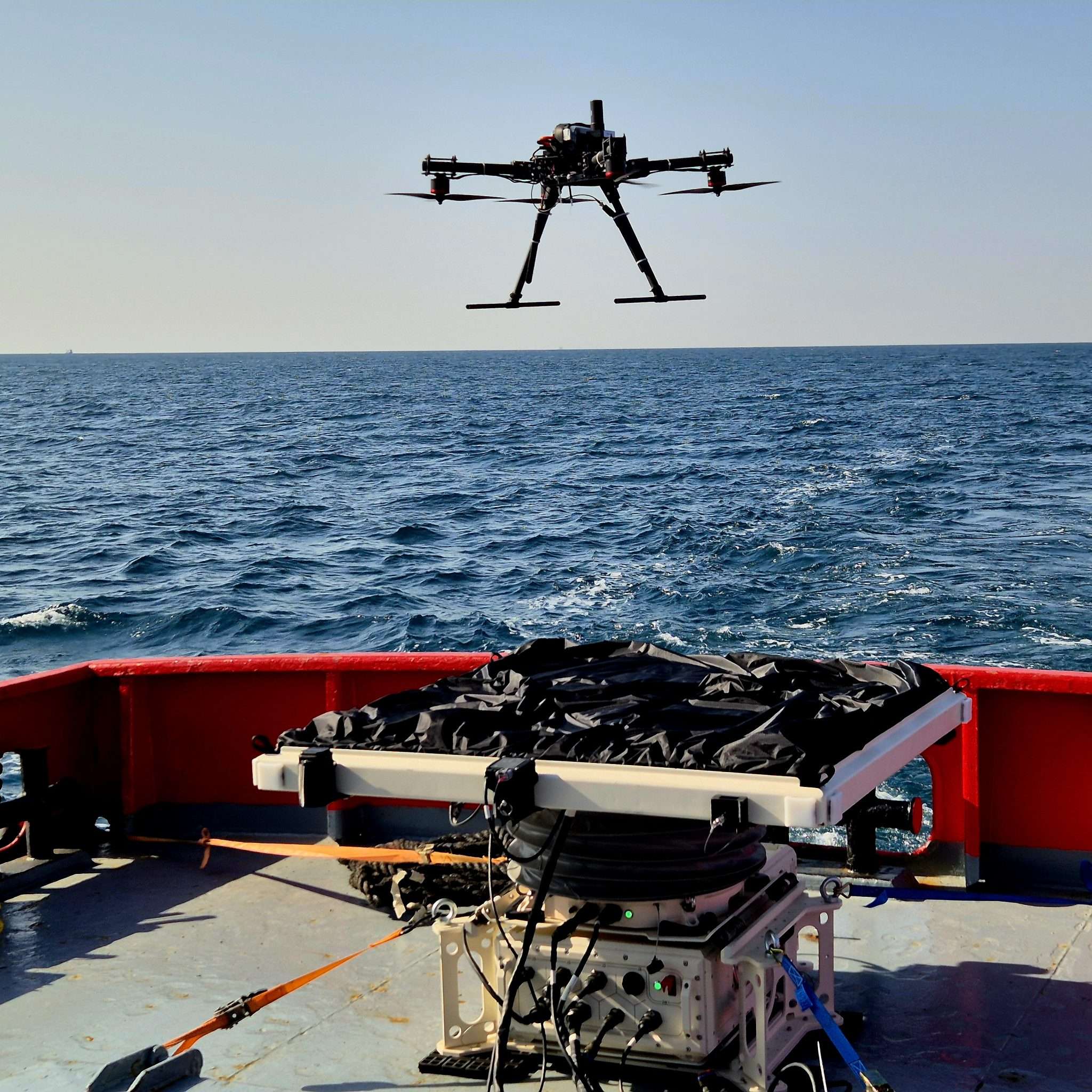
WaiV’s landing platform operates independently of human input under difficult sea conditions. | Source: WaiV Robotics
WaiV Robotics said it aims to work with any drone from any provider.
“Our policy is not to touch the drone,” said Carni. “We developed this component that is installed on the deck of the boat, and we don’t put anything on the drone, not hardware or software.”
Adding more components to a drone could reduce its battery life and performance. Carni said WaiV wants to ensure that drones can still perform to their full potential. Additional components could also add complications to cybersecurity, which WaiV wants to avoid.
“We’ve got this system on the deck, it’s got different sensors which track the drone,” explained Carni. “You have radar or an EO system, which actually provides the exact location of the drone relative to the landing pad. It doesn’t matter where [the drone] is in the world; [the system] gives a relative position of these two.”
Instead of interfering with the drone’s software, WaiV takes advantage of the drone’s ability to communicate with its remote control.
“We connect our system to the drone’s remote0control unit, the one that the pilot uses,” Carni said. “We actually behave exactly like a pilot, but instead of us moving joysticks, the software does the same thing the sticks do.”
When it’s time for WaiV’s software to take over, the drone operator can press a button and hand over control. The human operator can always interrupt WaiV’s operations if needed.
The company said it can connect to the vast majority of drones. It works with the major control computers on the drone market, and if a drone manufacturer has it own system, WaiV will work to set up the connection.
AI enables drones to handle unpredictable ocean conditions
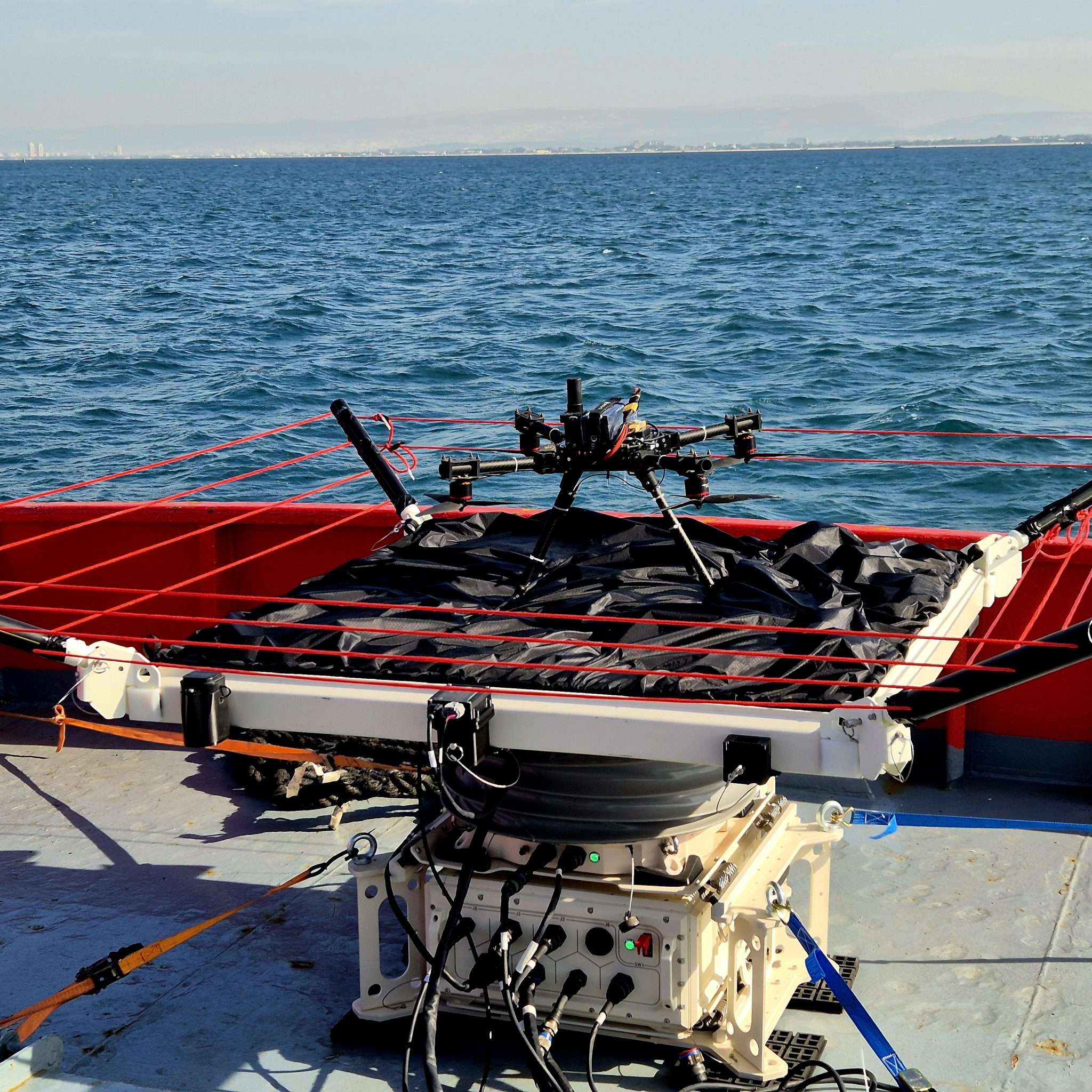
WaiV designed its system to support any type of VTOL UAV, including multicopter, fixed-wing, and helicopter platforms, regardless of the manufacturer. | Source: WaiV Robotics
WaiV created AI algorithms that guide the drone as it lands and takes off. “When we guide the drone to meet the landing pad, it’s always a different situation because the waves behave differently,” Carni said.
Carni said the team used simulation to do a lot of its training, which allows the company to test using a wide variety of physical characteristics, including different ships and sea environments.
“Then you back up the simulation during the development process by doing simple recordings at sea,” he said.
WaiV tested its system with different drones to see how they behave differently. “Each one is a bit different in behavior, which depends on its weight, its power, and uncertainty,” observed Carni.
He added that it’s important that the team creates accurate simulations if it wants robust results.
“You must make sure that your simulation is good, that you put in the right information, and that it does what you expect it to do,” Carni said. “And you always, always need to test it in the real world.”
WaiV targets a wide range of use cases
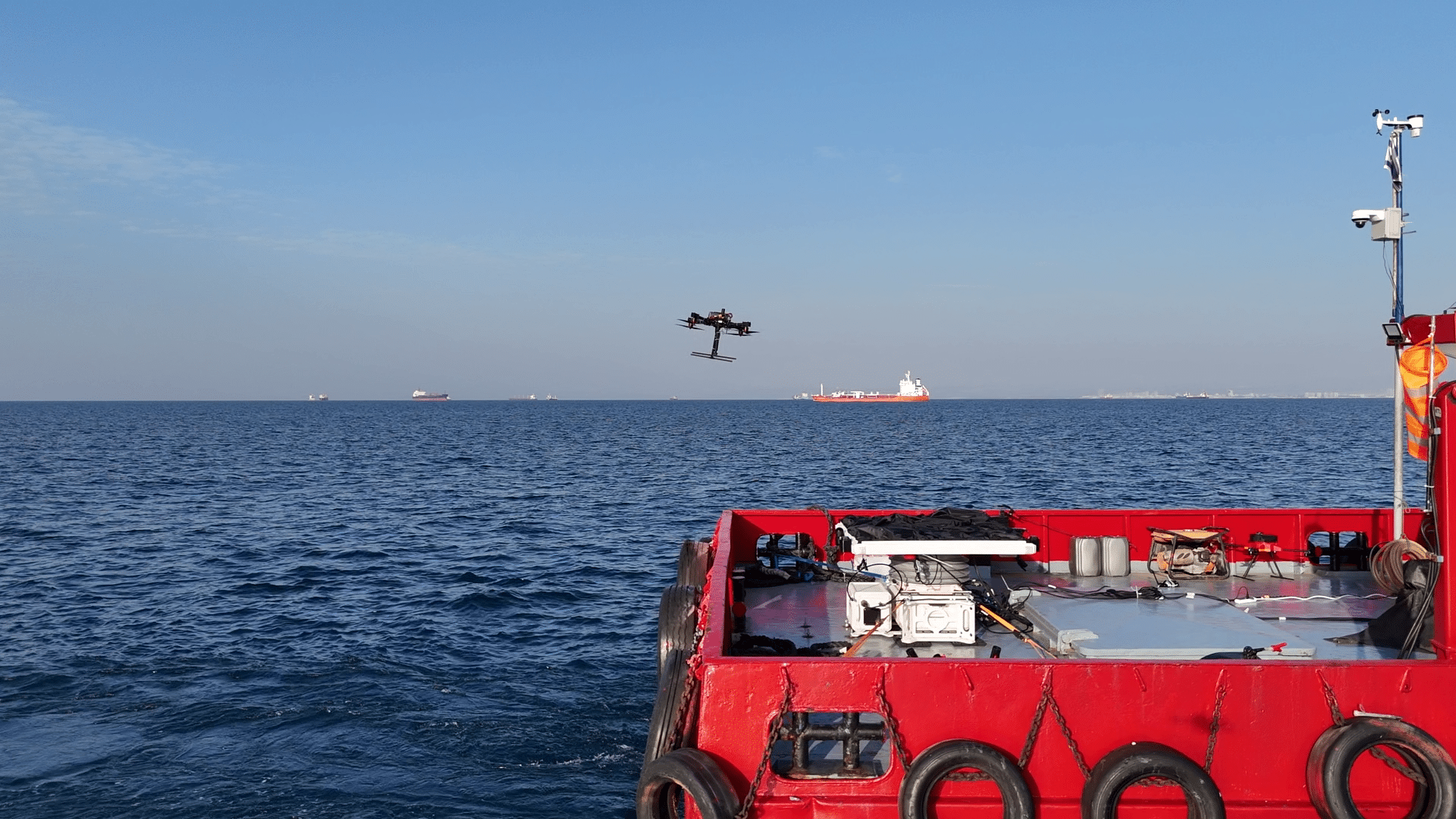
WaiV said its technology can make UAVs a viable option for offshore fleets that have faced deployment constraints. | Source: WaiV Robotics
WaiV Robotics said its technology can benefit any industry that would require launching or landing drones from small or medium-sized vessels. These include commercial, government, and defense use cases.
“Inspection is an enormous industry, and they use drones to do inspections now,” Carni said. In the energy industry, anything from oil rigs to wind farms could be located at sea. These are far enough in the ocean that the drones must take off from a boat closer to the asset for it to have enough energy to get through the inspection.
In addition, Carni said drones are often used in the fishing industry to locate fish, another use case that could benefit from taking off from smaller boats in the ocean.
The technology could also be used in search-and-rescue operations, ocean research, for port authorities or the coast guard, or even for delivering small parcels between ships.
Right now, WaiV has been working with end users, but Carni anticipates that many of its customers will want to get the drone and landing equipment all in one package. This means the company could pivot to working directly with drone OEMs.
The company is also targeting the middle range of drones, so it could also develop systems geared towards heavier drones and smaller drones, he said.



Tell Us What You Think!