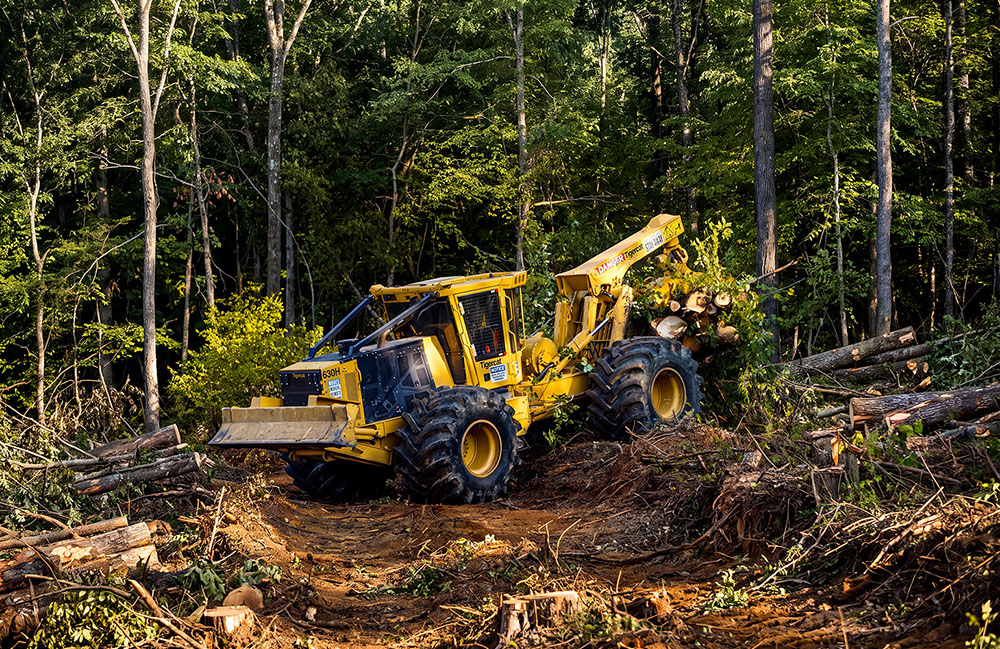
Kodama initially focused on wildfire risk reduction in the western U.S., but it is now focusing on the timber industry in the southeastern U.S. | Source: Kodama
Kodama Systems today said it has raised $7 million to bring physical AI to forestry. The company said it will use the latest funding to support commercial deployments, deepen OEM partnerships, and continue development of supervised autonomy capabilities for complex off-road environments.
“Right now, we’re working with different forestry companies across the southeastern U.S,” Ben Pinfield, a go-to-market associate at Kodama, told The Robot Report. “Our system is really at a point where we’re able to sell it as a product, and we’re at a point where we’re scaling, trying to delve into new machines, and really focusing on the autonomy piece of forestry.”
Kodama’s technology is already deployed in commercial logging operations across the southeastern U.S. Over the past six months, machines equipped with the company’s technology have moved more than 100,000 tons of timber across multiple states.
“We’re focused on specifically plantation timber operations,” said Merritt Jenkins, co-founder and CEO of Kodama. “If we look more broadly, though, this is a tool for land management, and this is absolutely a tool that will be used in wildfire mitigation, from a forest thinning perspective, as well as wildfire suppression.”
Including the latest funding, Kodama has raised a total of $14 million to date. Konvoy Ventures and Breakwater Ventures co-led the round. The round also included participation from Blue Forest Asset Management, NYA Ventures, Breakthrough Energy Ventures, Congruent Ventures, Dangerous Ventures, M1C, and others.
The forestry industry faces tough conditions
Forest contractors are facing a lot of challenges. Demand for timber, forest management, and wildfire-resilience work is rising, but each requires long hours at remote job sites.
“If you’re a 20-something-year-old prospective logger thinking about entering the industry, you need to be on-site at 5:30 a.m., which means you’re usually leaving your home at like 4:00 or 4:30 in the morning,” Jenkins said. “Then, you’re in a machine for nine or 10 hours a day, driving over stumps and rocks and through ruts, beating up your body all day long. There are some loggers that we’ve spoken with who have gone through, for example, eight skidder operators in a year. It’s brutal turnover in this industry for this type of operator.”
As fewer people go into the industry and more operators retire, it’s getting harder and harder to find experienced, reliable operators, and fewer people want to get into the industry.
“For the heavy equipment operations, that [work] can be pretty rough on their bodies,” Pinfield said. “It’s like the bang just isn’t worth the buck as far as the physical trade-off for a lot of these operators. So, our customers are having a hard time hiring talent. Even when they are able to hire talent, a lot of times, it’s unreliable.”
What does Kodama’s technology do on job sites?
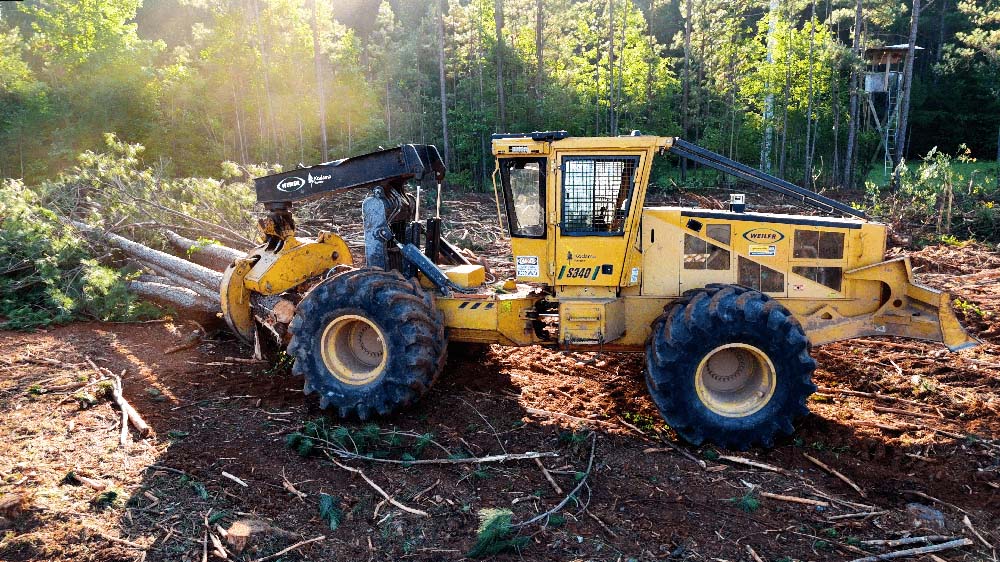
Kodama says its technology is currently running 10 to 14 hours a day on work sites. | Source: Kodama
Kodama combines supervised autonomy with teleoperation, enabling machines to handle repeatable tasks while experienced operators remotely manage complex work and edge cases. The Sonora, Calif.-based company said this hybrid approach amplifies the capabilities of skilled operators and improves machine utilization.
Kodama said it is currently working with skidders on logging sites.
“When a group of trees are cut down, a skidder with a big claw called the grapple picks them up, and drags them to the landing where they are then loaded into trucks. It’s essentially moving these trees from one place to another,” Pinfield explained. “The ultimate goal is also working on the other machines that are in those fleets, which are the cutter and the loader.”
Kodama said as it deploys more machines, its data advantage compounds through a continuous learning loop across equipment, operators, worksites, and forestry workflows.
“Every day that we remotely operate the machine, we’re generating about a terabyte of training data,” Jenkins said. “Starting two and a half years ago, we took the explicit direction of starting with teleoperation, and incrementally adding autonomy, versus autonomy first with a teleoperations failover. That’s been absolutely the right decision. Now the amount of training data that we are generating across different operating environments throughout the southeast is massive.”
Kodama works directly with existing OEMs
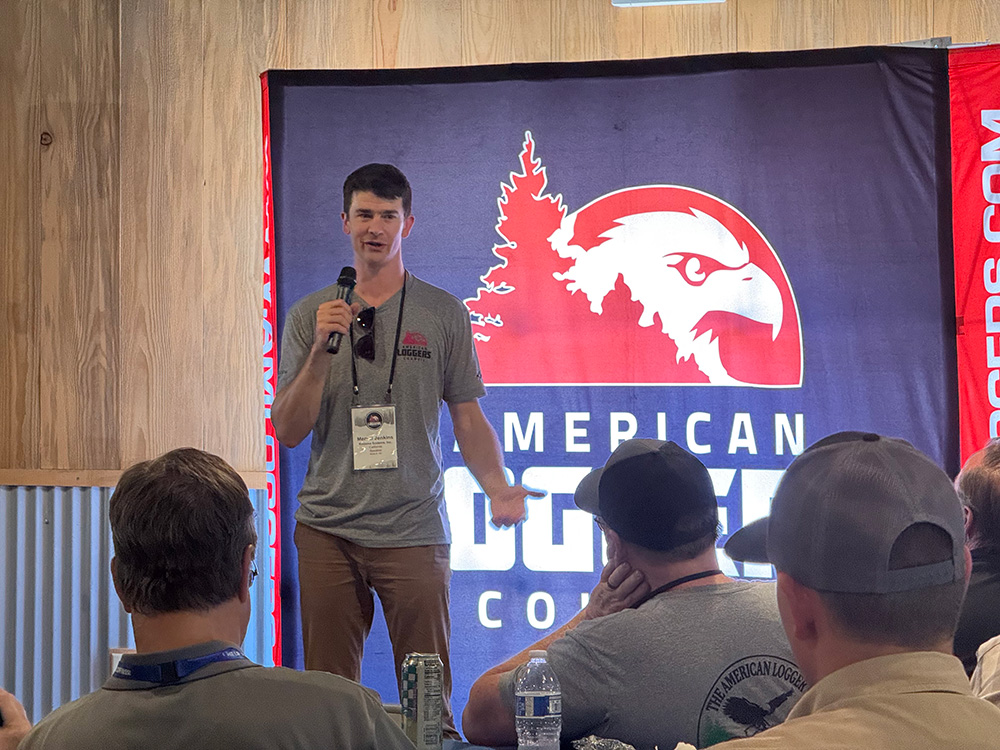
Merritt Jenkins, co-founder and CEO of Kodama. | Source: Kodama
Kodama is building its platform within the existing forestry-equipment ecosystem. This allows customers to adopt new operating capabilities while preserving the value of their existing machine fleets. Jenkins said the company is integrated with two of the three largest equipment manufacturers in the world.
“It’s preferable to integrate with the OEMs because you can leverage all of their knowledge and all of the sensors and fault detection that are already on the machine,” Jenkins said.
Autonomy retrofits are common in the construction world, but these are typically after-market kits. Jenkins said in the construction space, OEMs like Caterpillar create closed systems, so it isn’t possible to collaborate directly with the OEM.
 Register now and help us celebrate 20 years of RoboBusiness!
What has Kodama learned from job sites so far?
Kodama has already had its technology deployed with customers in the southeast U.S. for the past two years. Pinfield said the company has been working with a customer in Georgia for over a year.
“It’s always a learning process. Every logging site is a little bit different, with different terrain and a different crew that you have to work with and introduce this new technology to them,” Pinfield said. Among the biggest benefits of automation for these site operators are reliable and consistent operations.
The team has also seen safety improvements with the technology. “Every person I spoke to on the logging sites has some kind of crazy story about how they know someone in the cab who flipped the machine, or got hurt, or a tree went flying. So, taking them out of the cab and having it be remote controlled or autonomous is a lot safer,” Pinfield said.
Looking ahead, the company plans to expand deployments and use the data it gathers to improve productivity on job sites.
“Right now, it’s several people coordinating via CB radio,” Jenkins said. “We know the real time location of our machines. We have metrics of productivity, fuel use, and the shock and vibration on the machines. So, we believe that we can eventually further optimize these sites in terms of how the machines are used and how they coordinate with each other.”




Tell Us What You Think!