The Robot Report

  • Home
  • News
  • Technologies
    • Batteries / Power Supplies
    • Cameras / Imaging / Vision
    • Controllers
    • End Effectors
    • Microprocessors / SoCs
    • Motion Control
    • Sensors
    • Soft Robotics
    • Software / Simulation
  • Development
    • Artificial Intelligence
    • Human Robot Interaction / Haptics
    • Mobility / Navigation
    • Research
  • Robots
    • AGVs
    • AMRs
    • Consumer
    • Collaborative Robots
    • Drones
    • Humanoids
    • Industrial
    • Self-Driving Vehicles
    • Unmanned Maritime Systems
  • Business
    • Financial
      • Investments
      • Mergers & Acquisitions
      • Earnings
    • Markets
      • Agriculture
      • Healthcare
      • Logistics
      • Manufacturing
      • Mining
      • Security
    • RBR50
      • RBR50 Winners 2025
      • RBR50 Winners 2024
      • RBR50 Winners 2023
      • RBR50 Winners 2022
      • RBR50 Winners 2021
  • Resources
    • Automated Warehouse Research Reports
    • Digital Issues
    • eBooks
    • Publications
      • Automated Warehouse
      • Collaborative Robotics Trends
    • Search Robotics Database
    • Videos
    • Webinars / Digital Events
  • Events
    • RoboBusiness
    • Robotics Summit & Expo
    • DeviceTalks
    • R&D 100
    • Robotics Weeks
  • Podcast
    • Episodes
  • Advertise
  • Subscribe

BEYOND program to build collaborative framework for drone integration into U.S. airspace

By Eleanor Nelsen, Virginia Tech | November 3, 2020

BEYOND program to build collaborative framework for drone integration into U.S. airspace

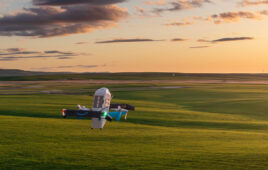
BEYOND is the successor to the UAS Integration Pilot Program, an initiative that included the launch of the first U.S. drone delivery service in Christiansburg, Va. Source: Wing

Last week, U.S. Secretary of Transportation Elaine Chao announced the launch of a new federal drone-integration initiative. The BEYOND program is intended to advance the safe integration of drones into the national airspace by creating a framework for collaboration among the diverse stakeholders committed to realizing the potential of this new form of aviation. The Virginia Polytechnic Institute and State University said it gives drone researchers another opportunity to help shape the evolution of an emerging technology.

BEYOND builds on the Unmanned Aerial Systems Integration Pilot Program (UAS IPP), which was led by the U.S. Department of Transportation and managed by the Federal Aviation Administration (FAA). That three-year program, which ended on Oct. 25, brought together companies, research organizations, state and local governments, and federal agencies on teams focused on drone-integration projects.

The FAA said the BEYOND program is intended to help make beyond visual line-of-sight (BVLOS) operations scalable and economically viable, better quantify the benefits of UAS operations, and engage the community to learn its concerns.

Virginia Tech manages state team projects

Virginia’s selection for the program in 2018 kicked off a two-and-a-half-year effort. The state’s team, which will continue in the BEYOND program, is led by the Center for Innovative Technology.

The Virginia Tech Mid-Atlantic Aviation Partnership (MAAP), an FAA-designated UAS test site, has managed the team’s three projects in collaboration with corporate partners Dominion Energy, State Farm, and Wing.

“The IPP has given us an opportunity to explore the state of the technology and begin to understand what will work for communities, for companies, and for the regulator, all of whom are essential partners in UAS integration,” stated Mark Blanks, MAAP’s director. “Now we’re looking forward to collaborating with the FAA and our partners on the challenge of scaling up, moving the industry beyond case-by-case approvals and waivers toward a framework that will support these operations as they mature from initial tests and trials to routine operations.”
BEYOND Dominion

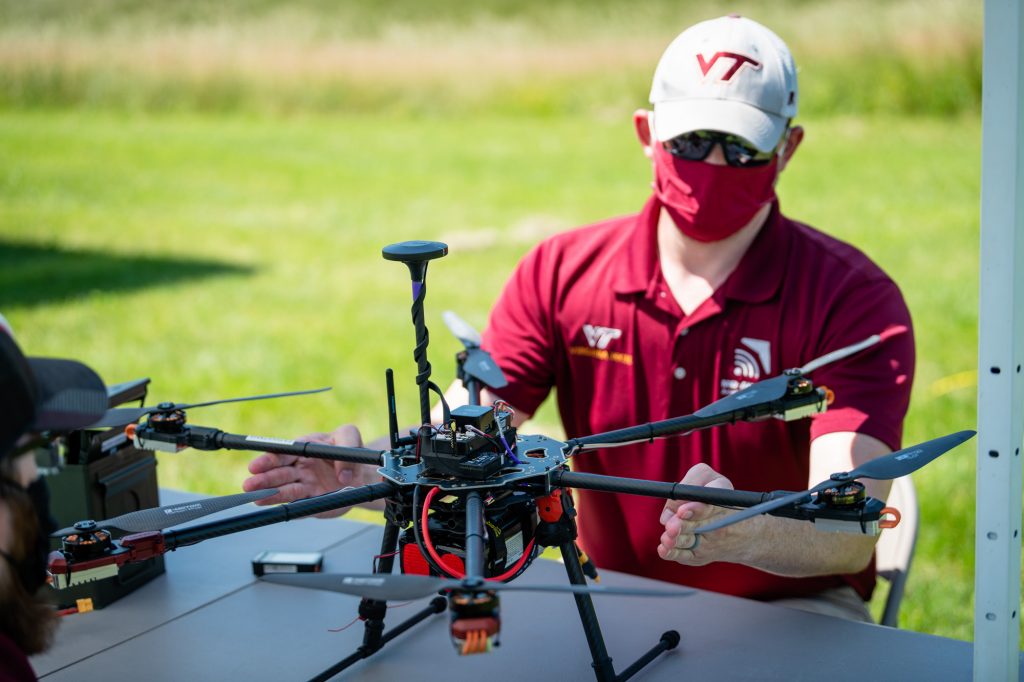
Virginia’s IPP team has explored applications for drones including power-line inspection. Here, MAAP pilot Christopher Stewart checks the balance of a drone during research on detect-and-avoid technology, part of a collaboration with Dominion Energy. Source: Mark Blanks for Virginia Tech

BEYOND plans to balance drone interests

Incorporating drones into organizations’ existing operations can offer a lengthy list of potential benefits, including more reliable power grids, faster search-and-rescue operations, and more efficient recovery from natural disasters. The aircraft also create opportunities for entirely new services, like drone delivery, that provide access to everyday essentials and invigorate local economies.

But drones are a relatively new technology entering a rigorously regulated industry. Creating a space for them effectively means balancing the interests of companies eager to apply their powerful capabilities, communities enthusiastic about potential benefits but sometimes apprehensive about unknown risks, and regulators and government agencies tasked with ensuring safety in a rapidly-evolving industry. What the IPP accomplished was to bring all these groups to the same table and create a framework for dialogue.

Virginia’s team seized the opportunity, focusing on infrastructure inspection, damage assessment after natural disasters, and drone delivery. Over the program’s three-year span, the team conducted advanced testing on the use of UAS for power-line inspection, a challenging application with potential rewards for safety, reliability, and efficiency,

It also obtained unique waivers that lay the groundwork for using drones as a valuable component of disaster response. In addition, the team launched the first commercial drone-delivery service in the country to ferry goods on demand directly to homes, a service that has proven its value during the COVID-19 pandemic.

“Our collaboration with the FAA and our partners as part of the original IPP program has been instrumental in highlighting Virginia’s status as an outstanding state for building a UAS business,” said Bob Stolle, CEO of the Center for Innovative Technology. “Those partnerships have helped catalyze strong working relationships among industry, our legislators, and executive branch agencies, such as the Virginia Department of Aviation and the Virginia Department of Transportation, to make Virginia a place where the UAS industry can grow and thrive, with regulation that helps facilitate economic development. We believe the BEYOND program will continue this outstanding evolution as we move to make routine commercial drone use a normal part of the Virginia landscape.”
Tell Us What You Think! Cancel reply

This site uses Akismet to reduce spam. Learn how your comment data is processed.

Related Articles Read More >

Respondents were evenly split between favorable and unfavorable views of the FCC robotics ban, found MassRobotics.
MassRobotics shares member survey results around FCC restrictions
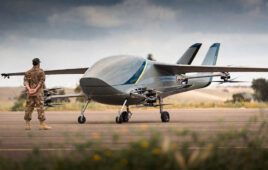
AIR's technology brings together advanced flight systems, intelligent automation, and purpose-built design to create smart aircrafts.
AIR to use Elmo Motion Control technology in uncrewed cargo aircraft
A small sample of Amazon’s vast, deployed warehouse fulfillment fleet.
The differences between decentralized and centralized power in swarm robotics
With Prime Air, Amazon uses drones to deliver groceries, electronics, cosmetics, medications, and household products.
Amazon plans to expand Prime Air to nearly 500 cities by the end of 2026

RBR50 Innovation Awards

“2026”
“rr
EXPAND YOUR KNOWLEDGE AND STAY CONNECTED
Get the latest info on technologies, tools and strategies for Robotics Professionals.

Latest Episode of The Robot Report Podcast

Automated Warehouse Research Reports

Sponsored Content

  • The Missing Layer in Robot Safety Assurance
  • The 370-billion-dollar race: How integrated design can help humanoid manufacturers succeed in a rapidly growing market
  • humanoid robot sorts parts. 5 Physical AI infrastructure platforms shaping robotics in 2026
  • How integrated actuators improve humanoid robot joint performance and system integration
  • Boston Dynamics will discuss human-machine interaction for humanoid robots in a webinar. Boston Dynamics to discuss the art behind human-robot interaction
More Sponsored Content >
The Robot Report
  • Automated Warehouse
  • RoboBusiness
  • Robotics Summit & Expo
  • About The Robot Report
  • Subscribe
  • Contact Us

Copyright © 2026 Arrowfly LLC. All Rights Reserved. The material on this site may not be reproduced, distributed, transmitted, cached or otherwise used, except with the prior written permission of Arrowfly
Privacy Policy | Advertising | About Us

Search The Robot Report

  • Home
  • News
  • Technologies
    • Batteries / Power Supplies
    • Cameras / Imaging / Vision
    • Controllers
    • End Effectors
    • Microprocessors / SoCs
    • Motion Control
    • Sensors
    • Soft Robotics
    • Software / Simulation
  • Development
    • Artificial Intelligence
    • Human Robot Interaction / Haptics
    • Mobility / Navigation
    • Research
  • Robots
    • AGVs
    • AMRs
    • Consumer
    • Collaborative Robots
    • Drones
    • Humanoids
    • Industrial
    • Self-Driving Vehicles
    • Unmanned Maritime Systems
  • Business
    • Financial
      • Investments
      • Mergers & Acquisitions
      • Earnings
    • Markets
      • Agriculture
      • Healthcare
      • Logistics
      • Manufacturing
      • Mining
      • Security
    • RBR50
      • RBR50 Winners 2025
      • RBR50 Winners 2024
      • RBR50 Winners 2023
      • RBR50 Winners 2022
      • RBR50 Winners 2021
  • Resources
    • Automated Warehouse Research Reports
    • Digital Issues
    • eBooks
    • Publications
      • Automated Warehouse
      • Collaborative Robotics Trends
    • Search Robotics Database
    • Videos
    • Webinars / Digital Events
  • Events
    • RoboBusiness
    • Robotics Summit & Expo
    • DeviceTalks
    • R&D 100
    • Robotics Weeks
  • Podcast
    • Episodes
  • Advertise
  • Subscribe