The Robot Report

  • Home
  • News
  • Technologies
    • Batteries / Power Supplies
    • Cameras / Imaging / Vision
    • Controllers
    • End Effectors
    • Microprocessors / SoCs
    • Motion Control
    • Sensors
    • Soft Robotics
    • Software / Simulation
  • Development
    • Artificial Intelligence
    • Human Robot Interaction / Haptics
    • Mobility / Navigation
    • Research
  • Robots
    • AGVs
    • AMRs
    • Consumer
    • Collaborative Robots
    • Drones
    • Humanoids
    • Industrial
    • Self-Driving Vehicles
    • Unmanned Maritime Systems
  • Business
    • Financial
      • Investments
      • Mergers & Acquisitions
      • Earnings
    • Markets
      • Agriculture
      • Healthcare
      • Logistics
      • Manufacturing
      • Mining
      • Security
    • RBR50
      • RBR50 Winners 2025
      • RBR50 Winners 2024
      • RBR50 Winners 2023
      • RBR50 Winners 2022
      • RBR50 Winners 2021
  • Resources
    • Automated Warehouse Research Reports
    • Digital Issues
    • eBooks
    • Publications
      • Automated Warehouse
      • Collaborative Robotics Trends
    • Search Robotics Database
    • Videos
    • Webinars / Digital Events
  • Events
    • RoboBusiness
    • Robotics Summit & Expo
    • DeviceTalks
    • R&D 100
    • Robotics Weeks
  • Podcast
    • Episodes
  • Advertise
  • Subscribe

EnZone wirelessly charges mobile robots

By Steve Crowe | April 10, 2018

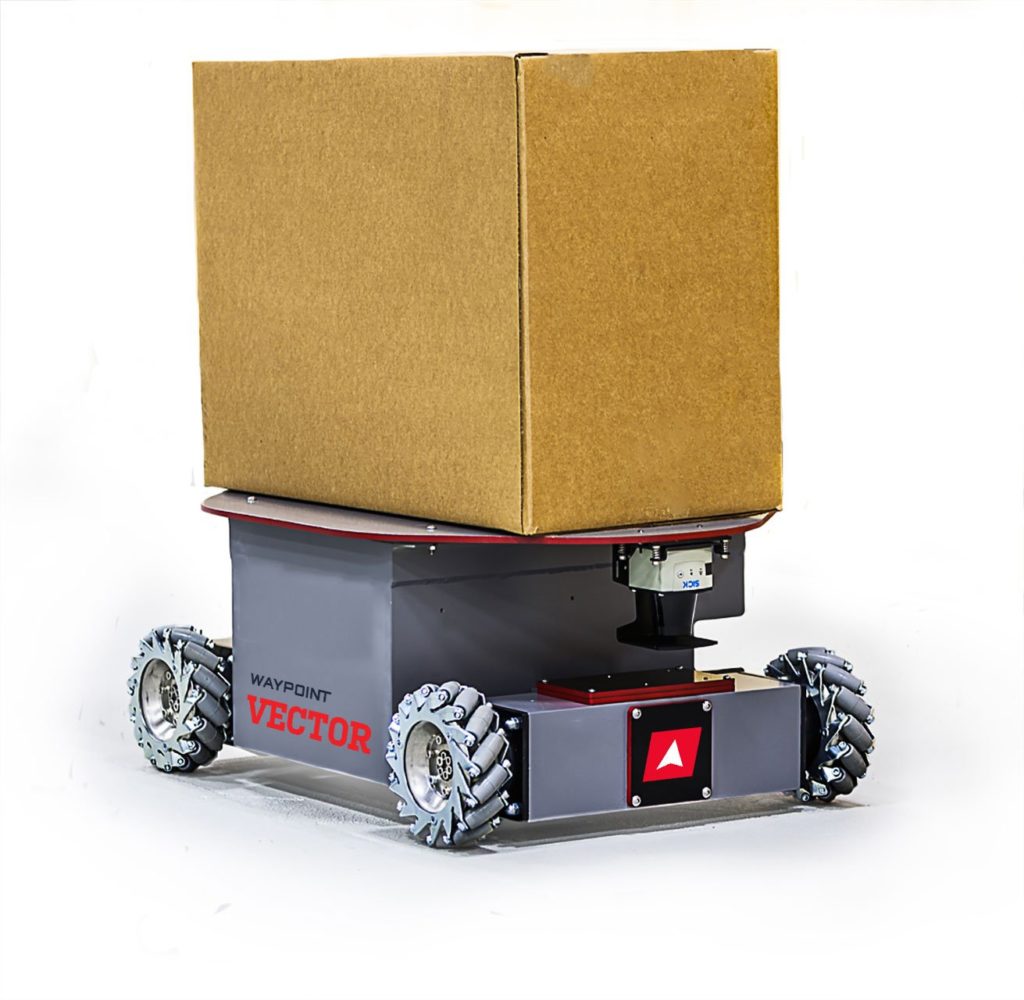
Waypoint Robotics EnZone

EnZone wirelessly charges, among other mobile robots, Waypoint Robotics’ Vector mobile robot.

Waypoint Robotics, which was formerly known as Stanley Robotics, launched at MODEX 2018 its EnZone wireless charging system for autonomous mobile robots. EnZone is based on the Adaptive Wireless Charging standard from WiBotic, a Seattle, Wash.-based startup that partnered with Waypoint.

Unless they’re tethered, robots don’t typically have great battery life. So improving the battery life for robots is a must to keep up with customer demands. Introducing EnZone is a smart move by Waypoint, giving it a differentiator in a sector that’s becoming more competitive each day.

EnZone enables what Waypoint calls “opportunity charging.” This means a mobile robot a company is using can charge anywhere and anytime it has a break in its regular work cycle.

EnZone allows robots to operate longer without having to take it out of service for charging. This, of course, means the robots will be more productive.
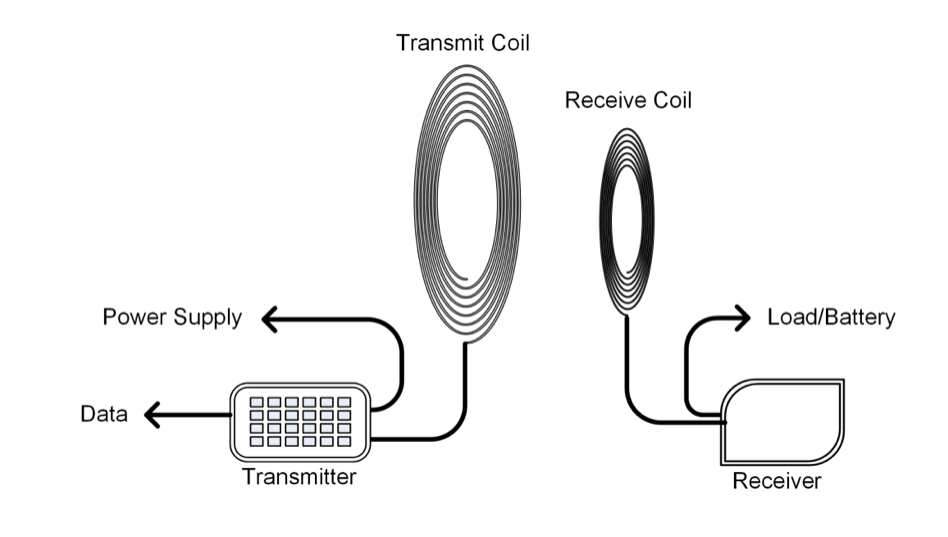
WiBotic Wireless Battery Charging

How EnZone Works

EnZone is based on WiBotic’s Adaptive Wireless Charging standard. Waypoint said EnZone is a software-defined wireless power system that works with any robot. If you have a fleet of different robots, even with different battery chemistry or voltages, the EnZone works with them all.

EnZone is configurable via a software API. This allows users to adjust the charge rate for each charging cycle to charge fast when you need to or slower when you have more time.

Waypoint said EnZone also enables on-demand wireless power for payloads such as robot arms, conveyors, or other equipment. By supplying power to these systems only where needed, this can reduce the cost, space, weight, and maintenance required for cobot mobile manipulation systems.

“Think back to Physics 101,” WiBotic CEO Ben Waters writes on the company’s site. “You may recall that alternating electrical current creates an electromagnetic field as it flows through a conductor. If a second conductor is placed alongside the first, the electromagnetic field will induce electrical current in the second conductor as well.

“By coiling the wire, and changing the number of coils between the primary and secondary wire, electrical energy of one voltage can be converted into another voltage. This is the principle behind electrical transformers — and is essentially the same concept behind wireless inductive charging.”


Engineering the Future of Robotics

Register for the Robotics Summit and Showcase (May 23-24, Boston) by April 20 and save 20% with early bird registration. Learn from and network with the best minds in robotics and unlock the keys to developing next-gen commercial robotics systems.

Agenda | Keynotes | Speakers | Sponsors | Register

Robotics Summit


Waypoint EnZone at Robotics Summit and Showcase

Waypoint will be exhibiting (booth 305) and speaking at the Robotics Summit and Showcase (May 23-24 in Boston). Walker will be featured in the “Autonomy & Opportunity” along with Jason Derenick, Vice President of Technology at Exyn Technologies, and Brad Powers, Chief Roboticist, Locus Robotics.

The panel will cover the gradual increase in the levels of autonomy and the the capacity for systems to move or perform tasks without human intervention. It is important for developers of robotics and automation technology to understand the various forms by which autonomy can be manifested, and what currently is technically possible or soon will be.

Waypoint’s flagship mobile robot – Vector – is a ROS native, omni-directional, mobile robot; perfect for the laboratory or factory floor. Vector comes fully equipped and ready for use — a truly turnkey autonomous robot.

The Robotics Summit is an educational event that addresses the technical issues involved with developing the next generation of commercial robots and intelligent systems. Register by April 20 and save 20% with early bird registration. Learn from and network with the best minds in robotics and unlock the keys to developing next-gen commercial robotics systems.

About The Author

Steve Crowe

Steve Crowe is Executive Editor, Robotics, WTWH Media, and chair of the Robotics Summit & Expo and RoboBusiness. He is also co-host of The Robot Report Podcast, the top-rated podcast for the robotics industry. He joined WTWH Media in January 2018 after spending four-plus years as Managing Editor of Robotics Trends Media. He can be reached at [email protected]

Tell Us What You Think! Cancel reply

This site uses Akismet to reduce spam. Learn how your comment data is processed.

Related Articles Read More >

The 'edge AI wall' by Zhengis Tileubay
The edge AI wall: Why embodied AI requires new mathematics
A small sample of Amazon’s vast, deployed warehouse fulfillment fleet.
The differences between decentralized and centralized power in swarm robotics
Industrial facilities requiring high voltage infrastructure can include manufacturing plants, automotive production lines, logistics hubs, and high-throughput packaging facilities.
How to achieve high voltage in industrial systems without high complexity
The new power chain is designed for industrial applications such as palletizing, says igus.
igus launches energy chain with 600-degree rotation for industrial robots

RBR50 Innovation Awards

“2026”
“rr
EXPAND YOUR KNOWLEDGE AND STAY CONNECTED
Get the latest info on technologies, tools and strategies for Robotics Professionals.

Latest Episode of The Robot Report Podcast

Automated Warehouse Research Reports

Sponsored Content

  • How to select the right rack and pinion system for high-precision linear motion
  • The Missing Layer in Robot Safety Assurance
  • The 370-billion-dollar race: How integrated design can help humanoid manufacturers succeed in a rapidly growing market
  • humanoid robot sorts parts. 5 Physical AI infrastructure platforms shaping robotics in 2026
  • How integrated actuators improve humanoid robot joint performance and system integration
More Sponsored Content >
The Robot Report
  • Automated Warehouse
  • RoboBusiness
  • Robotics Summit & Expo
  • About The Robot Report
  • Subscribe
  • Contact Us

Copyright © 2026 Arrowfly LLC. All Rights Reserved. The material on this site may not be reproduced, distributed, transmitted, cached or otherwise used, except with the prior written permission of Arrowfly
Privacy Policy | Advertising | About Us

Search The Robot Report

  • Home
  • News
  • Technologies
    • Batteries / Power Supplies
    • Cameras / Imaging / Vision
    • Controllers
    • End Effectors
    • Microprocessors / SoCs
    • Motion Control
    • Sensors
    • Soft Robotics
    • Software / Simulation
  • Development
    • Artificial Intelligence
    • Human Robot Interaction / Haptics
    • Mobility / Navigation
    • Research
  • Robots
    • AGVs
    • AMRs
    • Consumer
    • Collaborative Robots
    • Drones
    • Humanoids
    • Industrial
    • Self-Driving Vehicles
    • Unmanned Maritime Systems
  • Business
    • Financial
      • Investments
      • Mergers & Acquisitions
      • Earnings
    • Markets
      • Agriculture
      • Healthcare
      • Logistics
      • Manufacturing
      • Mining
      • Security
    • RBR50
      • RBR50 Winners 2025
      • RBR50 Winners 2024
      • RBR50 Winners 2023
      • RBR50 Winners 2022
      • RBR50 Winners 2021
  • Resources
    • Automated Warehouse Research Reports
    • Digital Issues
    • eBooks
    • Publications
      • Automated Warehouse
      • Collaborative Robotics Trends
    • Search Robotics Database
    • Videos
    • Webinars / Digital Events
  • Events
    • RoboBusiness
    • Robotics Summit & Expo
    • DeviceTalks
    • R&D 100
    • Robotics Weeks
  • Podcast
    • Episodes
  • Advertise
  • Subscribe