The Robot Report

  • Home
  • News
  • Technologies
    • Batteries / Power Supplies
    • Cameras / Imaging / Vision
    • Controllers
    • End Effectors
    • Microprocessors / SoCs
    • Motion Control
    • Sensors
    • Soft Robotics
    • Software / Simulation
  • Development
    • Artificial Intelligence
    • Human Robot Interaction / Haptics
    • Mobility / Navigation
    • Research
  • Robots
    • AGVs
    • AMRs
    • Consumer
    • Collaborative Robots
    • Drones
    • Humanoids
    • Industrial
    • Self-Driving Vehicles
    • Unmanned Maritime Systems
  • Business
    • Financial
      • Investments
      • Mergers & Acquisitions
      • Earnings
    • Markets
      • Agriculture
      • Healthcare
      • Logistics
      • Manufacturing
      • Mining
      • Security
    • RBR50
      • RBR50 Winners 2025
      • RBR50 Winners 2024
      • RBR50 Winners 2023
      • RBR50 Winners 2022
      • RBR50 Winners 2021
  • Resources
    • Automated Warehouse Research Reports
    • Digital Issues
    • eBooks
    • Publications
      • Automated Warehouse
      • Collaborative Robotics Trends
    • Search Robotics Database
    • Videos
    • Webinars / Digital Events
  • Events
    • RoboBusiness
    • Robotics Summit & Expo
    • DeviceTalks
    • R&D 100
    • Robotics Weeks
  • Podcast
    • Episodes
  • Advertise
  • Subscribe

Waymo Adding 20,000 Jaguar Electric I-PACE SUVs to Self-driving Fleet

By Steve Crowe | March 27, 2018

Waymo will be adding 20,000 Jaguar I-PACE electric SUVs to its fleet of self-driving vehicles, the companies announced Tuesday. Jaguar Land Rover introduced the I-PACE earlier this month, and it will serve as a high-end option for consumers willing to pay a premium for driverless ride-hailing services.

According to the companies, the first self-driving I-PACE will begin public testing at the end of 2018. It will officially become part of Waymo’s commercial ride-hailing service starting in 2020. The companies didn’t say what city will be the first to test the self-driving SUVs.

“Our passion for further advancing smart mobility needs expert long-term partners,” said Prof. Dr. Ralf Speth, Jaguar Land Rover chief executive officer. “In joining forces with Waymo we are pioneering to push the boundaries of technology.”

Waymo currently tests its self-driving system on about 600 Chrysler Pacifica minivans built by Fiat Chrysler Automobiles. The company has plans to roll out a ride service to the public in the Phoenix, Arizona area in coming months, with plans to later launch it more widely.


Watch Waymo’s I-PACE Announcement


Waymo has been working on self-driving cars since 2009 and has driven over 5 million miles on public roads. Last month, it released a video designed to help potential passengers envision what it is like to ride inside an autonomous vehicle.

Waymo Builds Lead in Self-Driving Space

This announcement comes about a week after a fatal accident in Arizona that involved a self-driving Uber. Following the crash, some self-driving companies, including Toyota and Uber, paused self-driving tests. But Waymo continues to push forward. And with another major OEM in its corner, Waymo builds upon its lead in the self-driving space.

The self-driving I-PACE SUVs also pose a challenge to other self-driving electric vehicles from GM’s Cruise and Tesla. Cruise is currently testing hundreds of self-driving electric Chevy Bolts in San Francisco and Arizona with the aim of launching a commercial taxi service in 2019.

The I-PACE is Jaguar’s first all-electric SUV, offering 240 miles of range. It starts at $69,500 in the U.S., undercutting the Tesla Model X by about $10,000. Waymo’s partnership with Jaguar Land Rover extends through 2026.
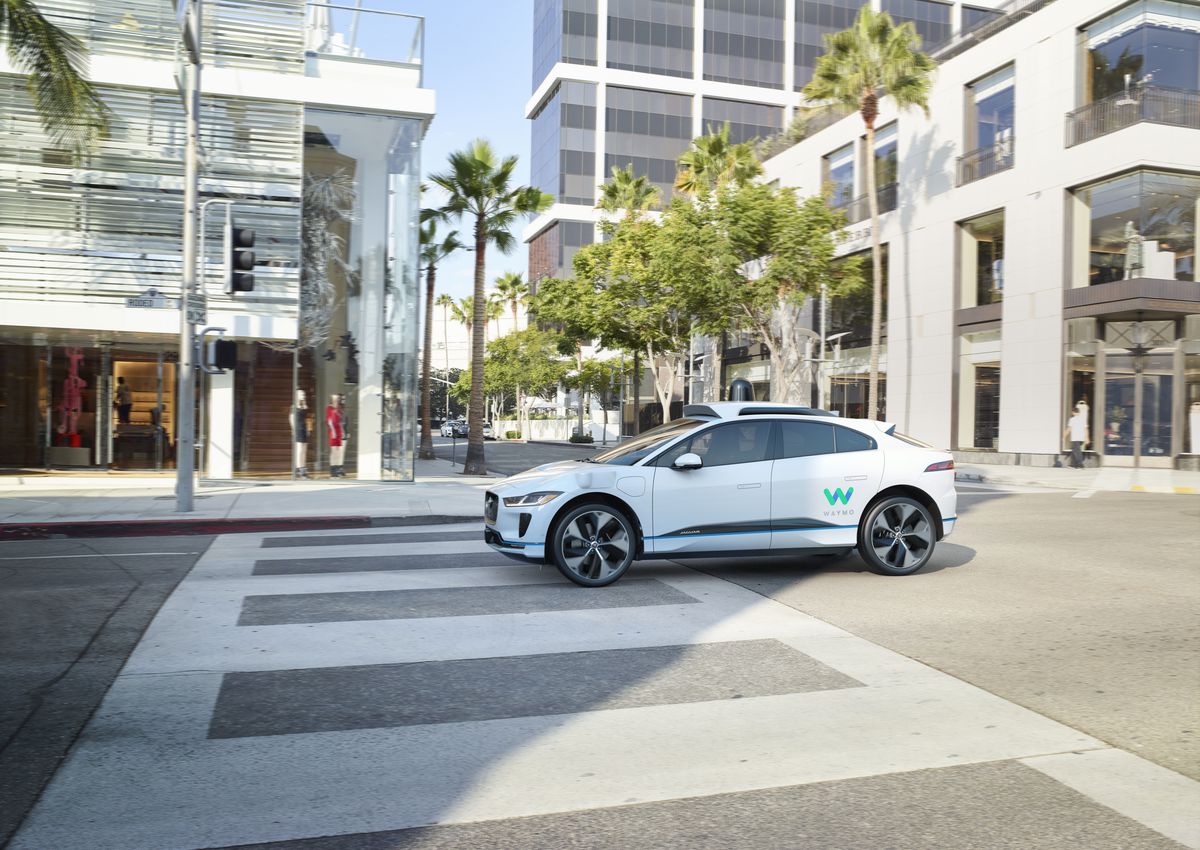
“Its big, fast-charge battery means it can drive all day, which is perfect for our self-driving service,” said Waymo CEO John Krafcik.

Uber announced last year plans to buy up to 24,000 vehicles from Volvo to add to its self-driving fleet. It’s unclear whether this is still the plan following the fatal accident. Krafcik said the 20,000 self-driving I-PACE SUVs could, theoretically, provide up to 1 million driverless trips a day.

Google launched its self-driving car project nine years ago. To date, the company’s self-driving cars have autonomously driven more than 5 million miles on public roads. And they’ve driven billions more in simulated environments.
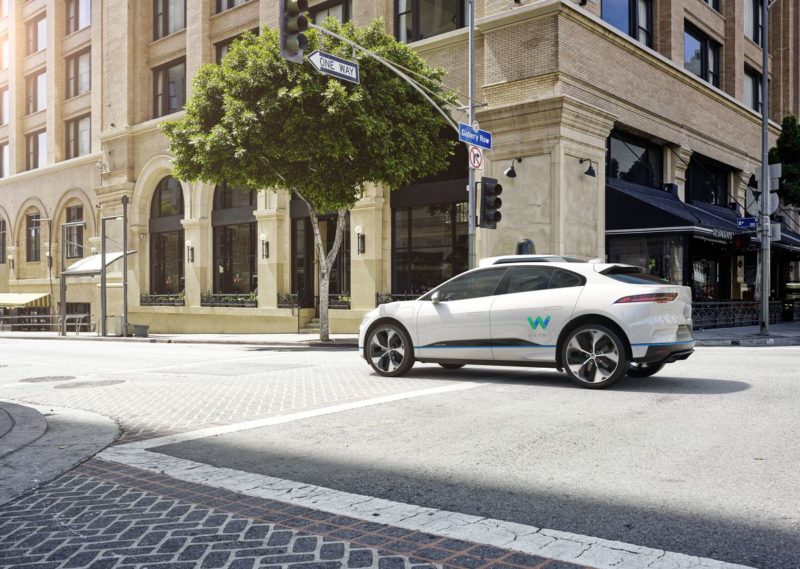
Waymo I-PACE Self-Driving SUVs

About The Author

Steve Crowe

Steve Crowe is Executive Editor, Robotics, WTWH Media, and chair of the Robotics Summit & Expo and RoboBusiness. He is also co-host of The Robot Report Podcast, the top-rated podcast for the robotics industry. He joined WTWH Media in January 2018 after spending four-plus years as Managing Editor of Robotics Trends Media. He can be reached at [email protected]

Tell Us What You Think! Cancel reply

This site uses Akismet to reduce spam. Learn how your comment data is processed.

Related Articles Read More >

The Digit humanoid robot from Agility, which is an example of a SPAC acquisition.
Robots on Wall Street: Non-traditional paths to public markets for robotics companies
hero image of a MILCOTS platform, armored cab vehicle.
Strengthening U.S. Army sustainment: TALUS to deliver autonomous distribution
Illustration showing architecture of Celona Orion.
Celona launches Orion agentic wireless platform built for physical AI and robotics
Einride and DAF Trucks are integrating autonomous and electric trucking.
DAF Trucks to integrate Einride Driver to scale autonomous electric freight

RBR50 Innovation Awards

“2026”
“rr
EXPAND YOUR KNOWLEDGE AND STAY CONNECTED
Get the latest info on technologies, tools and strategies for Robotics Professionals.

Latest Episode of The Robot Report Podcast

Automated Warehouse Research Reports

Sponsored Content

  • The 370-billion-dollar race: How integrated design can help humanoid manufacturers succeed in a rapidly growing market
  • humanoid robot sorts parts. 5 Physical AI infrastructure platforms shaping robotics in 2026
  • How integrated actuators improve humanoid robot joint performance and system integration
  • Boston Dynamics will discuss human-machine interaction for humanoid robots in a webinar. Boston Dynamics to discuss the art behind human-robot interaction
  • In robotics, ruggedization is no longer optional
More Sponsored Content >
The Robot Report
  • Automated Warehouse
  • RoboBusiness
  • Robotics Summit & Expo
  • About The Robot Report
  • Subscribe
  • Contact Us

Copyright © 2026 Arrowfly LLC. All Rights Reserved. The material on this site may not be reproduced, distributed, transmitted, cached or otherwise used, except with the prior written permission of Arrowfly
Privacy Policy | Advertising | About Us

Search The Robot Report

  • Home
  • News
  • Technologies
    • Batteries / Power Supplies
    • Cameras / Imaging / Vision
    • Controllers
    • End Effectors
    • Microprocessors / SoCs
    • Motion Control
    • Sensors
    • Soft Robotics
    • Software / Simulation
  • Development
    • Artificial Intelligence
    • Human Robot Interaction / Haptics
    • Mobility / Navigation
    • Research
  • Robots
    • AGVs
    • AMRs
    • Consumer
    • Collaborative Robots
    • Drones
    • Humanoids
    • Industrial
    • Self-Driving Vehicles
    • Unmanned Maritime Systems
  • Business
    • Financial
      • Investments
      • Mergers & Acquisitions
      • Earnings
    • Markets
      • Agriculture
      • Healthcare
      • Logistics
      • Manufacturing
      • Mining
      • Security
    • RBR50
      • RBR50 Winners 2025
      • RBR50 Winners 2024
      • RBR50 Winners 2023
      • RBR50 Winners 2022
      • RBR50 Winners 2021
  • Resources
    • Automated Warehouse Research Reports
    • Digital Issues
    • eBooks
    • Publications
      • Automated Warehouse
      • Collaborative Robotics Trends
    • Search Robotics Database
    • Videos
    • Webinars / Digital Events
  • Events
    • RoboBusiness
    • Robotics Summit & Expo
    • DeviceTalks
    • R&D 100
    • Robotics Weeks
  • Podcast
    • Episodes
  • Advertise
  • Subscribe