The Robot Report

  • Home
  • News
  • Technologies
    • Batteries / Power Supplies
    • Cameras / Imaging / Vision
    • Controllers
    • End Effectors
    • Microprocessors / SoCs
    • Motion Control
    • Sensors
    • Soft Robotics
    • Software / Simulation
  • Development
    • Artificial Intelligence
    • Human Robot Interaction / Haptics
    • Mobility / Navigation
    • Research
  • Robots
    • AGVs
    • AMRs
    • Consumer
    • Collaborative Robots
    • Drones
    • Humanoids
    • Industrial
    • Self-Driving Vehicles
    • Unmanned Maritime Systems
  • Business
    • Financial
      • Investments
      • Mergers & Acquisitions
      • Earnings
    • Markets
      • Agriculture
      • Healthcare
      • Logistics
      • Manufacturing
      • Mining
      • Security
    • RBR50
      • RBR50 Winners 2025
      • RBR50 Winners 2024
      • RBR50 Winners 2023
      • RBR50 Winners 2022
      • RBR50 Winners 2021
  • Resources
    • Automated Warehouse Research Reports
    • Digital Issues
    • eBooks
    • Publications
      • Automated Warehouse
      • Collaborative Robotics Trends
    • Search Robotics Database
    • Videos
    • Webinars / Digital Events
  • Events
    • RoboBusiness
    • Robotics Summit & Expo
    • DeviceTalks
    • R&D 100
    • Robotics Weeks
  • Podcast
    • Episodes
  • Advertise
  • Subscribe

WATCH: New MIT robot adapts by putting on new exoskeletons

By Alex Beall | September 28, 2017

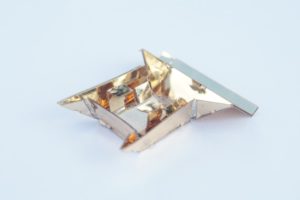
A new robot from MIT can adapt its capabilities with a simple outfit change. The tiny robot called Primer, developed by the Computer Science and Artificial Intelligence Lab, puts on different exoskeletons allowing it to roll, float, drive and even glide.

Primer starts as a cube, but uses heat to put on the new exoskeleton, which are folded from a rectangular sheet. It can also put on multiple to combine their capabilities. Built-in magnets control the robot’s movement, and to remove its suit, Primer submerges itself in water.

Currently, Primer’s exoskeleton options include the walk-bot for walking, the wheel-bot for quicker movement, the boat-bot for floating and carrying twice its weight and the glider-bot for flying.

“If we want robots to help us do things, it’s not very efficient to have a different one for each task,” CSAIL director Daniela Rus told New Atlas. “With this metamorphosis-inspired approach, we can extend the capabilities of a single robot by giving it different ‘accessories’ to use in different situations.”

Currently, the team is working to expand Primer’s abilities to include camouflage, burrowing in sand and driving through water. While at its current size, Primer may not seem capable of much, when scaled up such a multi-purpose robot could aid in exploring space or remote parts of the earth.

The study was originally published in Science Robotics.

Tell Us What You Think! Cancel reply

This site uses Akismet to reduce spam. Learn how your comment data is processed.

Related Articles Read More >

Hugging Face's Reachy Mini robot.
Hugging Face launches agentic toolkit for Reachy Mini
The Project CETI glider.
Project CETI deploys autonomous underwater gliders to better observe sperm whales
Scientists at Binghamton University have developed a robotic guide dog that communicates with the visually impaired and provides real-time feedback during travel.
Binghamton researchers create robotic guide dogs that walk — and talk
Humanoid robots such as Tesla's Optimus, shown, need to evolve from industrial to more general applications.
Humanoid robotics developers must address a wide range of applications

RBR50 Innovation Awards

“2026”
“rr
EXPAND YOUR KNOWLEDGE AND STAY CONNECTED
Get the latest info on technologies, tools and strategies for Robotics Professionals.

Latest Episode of The Robot Report Podcast

Automated Warehouse Research Reports

Sponsored Content

  • How coupling stiffness and misalignment compensation impact servo performance
  • Surgical robotics: Why motion architecture matters more than ever
  • How gearbox ratio selection impacts inertia matching, servo tuning, and machine performance
  • How to avoid over- or under-sizing a servo gearbox
  • Supporting the future of medical robotics with smarter motor solutions
The Robot Report
  • Automated Warehouse
  • RoboBusiness Event
  • Robotics Summit & Expo
  • About The Robot Report
  • Subscribe
  • Contact Us

Copyright © 2026 WTWH Media LLC. All Rights Reserved. The material on this site may not be reproduced, distributed, transmitted, cached or otherwise used, except with the prior written permission of WTWH Media
Privacy Policy | Advertising | About Us

Search The Robot Report

  • Home
  • News
  • Technologies
    • Batteries / Power Supplies
    • Cameras / Imaging / Vision
    • Controllers
    • End Effectors
    • Microprocessors / SoCs
    • Motion Control
    • Sensors
    • Soft Robotics
    • Software / Simulation
  • Development
    • Artificial Intelligence
    • Human Robot Interaction / Haptics
    • Mobility / Navigation
    • Research
  • Robots
    • AGVs
    • AMRs
    • Consumer
    • Collaborative Robots
    • Drones
    • Humanoids
    • Industrial
    • Self-Driving Vehicles
    • Unmanned Maritime Systems
  • Business
    • Financial
      • Investments
      • Mergers & Acquisitions
      • Earnings
    • Markets
      • Agriculture
      • Healthcare
      • Logistics
      • Manufacturing
      • Mining
      • Security
    • RBR50
      • RBR50 Winners 2025
      • RBR50 Winners 2024
      • RBR50 Winners 2023
      • RBR50 Winners 2022
      • RBR50 Winners 2021
  • Resources
    • Automated Warehouse Research Reports
    • Digital Issues
    • eBooks
    • Publications
      • Automated Warehouse
      • Collaborative Robotics Trends
    • Search Robotics Database
    • Videos
    • Webinars / Digital Events
  • Events
    • RoboBusiness
    • Robotics Summit & Expo
    • DeviceTalks
    • R&D 100
    • Robotics Weeks
  • Podcast
    • Episodes
  • Advertise
  • Subscribe