
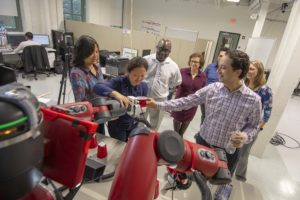
WPI’s projects are designed to immerse 120 graduate students in interdisciplinary research and training that will help tackle future workplace challenges.
Caterpillar’s Crawl May Hold Clues To Future Robotics
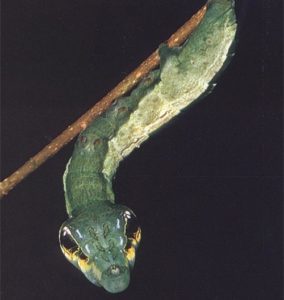
Caterpillars have a unique “two-body” system of movement that may have implications for robotics and human biomechanics, U.S. researchers say. The scientists found that the gut of the crawling hawkmoth caterpillar moves forward independently of and in advance of the surrounding body wall and legs, instead of moving with them. This is the first time […]
Molecular-Sized Robots Can Now Move Independently Up To 100 Nanometers
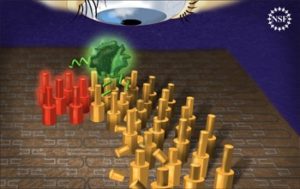
Researchers from Columbia University, Arizona State University, the University of Michigan and the California Institute of Technology (Caltech) have created and programmed robots the size of single molecule that can move independently across a nano-scale track. This development, outlined in the May 13 edition of the journal Nature, marks an important advancement in the nascent […]