The Robot Report

  • Home
  • News
  • Technologies
    • Batteries / Power Supplies
    • Cameras / Imaging / Vision
    • Controllers
    • End Effectors
    • Microprocessors / SoCs
    • Motion Control
    • Sensors
    • Soft Robotics
    • Software / Simulation
  • Development
    • Artificial Intelligence
    • Human Robot Interaction / Haptics
    • Mobility / Navigation
    • Research
  • Robots
    • AGVs
    • AMRs
    • Consumer
    • Collaborative Robots
    • Drones
    • Humanoids
    • Industrial
    • Self-Driving Vehicles
    • Unmanned Maritime Systems
  • Business
    • Financial
      • Investments
      • Mergers & Acquisitions
      • Earnings
    • Markets
      • Agriculture
      • Healthcare
      • Logistics
      • Manufacturing
      • Mining
      • Security
    • RBR50
      • RBR50 Winners 2025
      • RBR50 Winners 2024
      • RBR50 Winners 2023
      • RBR50 Winners 2022
      • RBR50 Winners 2021
  • Resources
    • Automated Warehouse Research Reports
    • Digital Issues
    • eBooks
    • Publications
      • Automated Warehouse
      • Collaborative Robotics Trends
    • Search Robotics Database
    • Videos
    • Webinars / Digital Events
  • Events
    • RoboBusiness
    • Robotics Summit & Expo
    • DeviceTalks
    • R&D 100
    • Robotics Weeks
  • Podcast
    • Episodes
  • Advertise
  • Subscribe

ReWalk Robotics touts Harvard-led Restore soft exosuit study

By Fink Densford | August 2, 2017

ReWalk Robotics' Restore soft powered exoskeleton

ReWalk Robotics (NSDQ:RWLK) today released results from a study of a soft suit exoskeleton system designed to aid ambulatory stroke patients, touting that the system was able to facilitate normal walking ability in patients.

The study was authored by researchers at Harvard University’s Wyss Institute for Biologically Inspired Engineering and Boston University, and utilized a prototype that Marlborough, Mass.-based ReWalk Robotics plans to commercialize as the Restore system.

Results from the study were published in the Journal of Science Translational Medicine.

The Restore system is designed to transmit power to key joints in the legs with cable technologies, powered by software and mechanics similar to those used in its ReWalk exoskeleton system for patients with spinal cord injuries. The cables are connect to fabric-based designs that attach to the leg and foot, and make it a ‘soft suit’.

“Exoskeletons are now a commercially available, disruptive technology that have changed the lives of many individuals in the paraplegic community. The ongoing research at the Wyss Institute on soft exosuits adds a new dimension to exoskeletons that can potentially meet the needs of individuals that have had a stroke, as well as for those diagnosed with Multiple Sclerosis, Parkinson’s disease or people who have limitations in walking. The Restore is a unique lightweight design that can assist and constantly adjust in real time to the user’s needs on every step they take. The depth of this fundamental science is a meaningful element in applying research to the everyday needs of this patient community,” ReWalk CEO Larry Jasinski said in a press release.

The seminal study included 9 study participants and aimed to explore immediate improvements in walking capability while wearing the Restore system. Results indicated that the system had the potential to provide gait assistance and training during walking.

The system contributed to an approximately 20% reduction in forward propulsion interlimb asymmetry and a 10% reduction in the energy cost of walking, according to the study, equivalent to an approximately 32% reduction in the metabolic burden associated with post-stroke walking.

“Relatively low assistance (~12% of biological torques) delivered with a lightweight and nonrestrictive exosuit was sufficient to facilitate more normal walking in ambulatory individuals after stroke,” study authors wrote.

ReWalk said it is working with the Wyss Institute to develop lightweight designs for clinical studies, as well as plans to pursue regulatory clearance and commercialization for the system on a global scale.

“This foundational study shows that soft wearable robots can have significant positive impact on gait functions in patients post-stroke, and it is the result of a translational-focused multidisciplinary team of engineers, designers, biomechanists, physical therapists and most importantly patients who volunteered for this study and gave valuable feedback that guided our research,” Harvard Biodesign Lab founder Conor Walsh of the Wyss Institute said in a prepared statement.

The Restore system’s initial application will be for stroke survivors, the company said, followed by multiple sclerosis patients and additional applications after.
Tell Us What You Think! Cancel reply

This site uses Akismet to reduce spam. Learn how your comment data is processed.

Related Articles Read More >

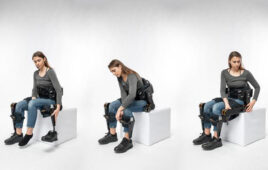
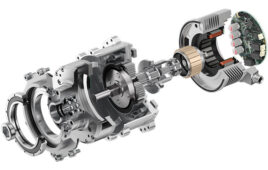
AILOS Robotics says its R2poweR gearbox, shown here, combines the agility of quasi-direct drives with exceptionally high torque density.
AILOS Robotics introduces drive technology to make robots lighter, more agile, and safer
A person walking with a Wandercraft exoskeleton.
Wandercraft earns second FDA clearance for Atalante X exoskeleton
Wearable robot helps ALS patients regain daily function
Comau debuted its myMR autonomous mobile robot at Automatica 2025.
Comau launches mobile robots, cobots, and exoskeletons at Automatica

RBR50 Innovation Awards

“rr
EXPAND YOUR KNOWLEDGE AND STAY CONNECTED
Get the latest info on technologies, tools and strategies for Robotics Professionals.

Latest Episode of The Robot Report Podcast

Automated Warehouse Research Reports

Sponsored Content

  • Supporting the future of medical robotics with smarter motor solutions
  • YUAN Unveils Next-Gen AI Robotics Powered by NVIDIA for Land, Sea & Air
  • ASMPT chooses Renishaw for high-quality motion control
  • Revolutionizing Manufacturing with Smart Factories
  • How to Set Up a Planetary Gear Motion with SOLIDWORKS
The Robot Report
  • Automated Warehouse
  • RoboBusiness Event
  • Robotics Summit & Expo
  • About The Robot Report
  • Subscribe
  • Contact Us

Copyright © 2026 WTWH Media LLC. All Rights Reserved. The material on this site may not be reproduced, distributed, transmitted, cached or otherwise used, except with the prior written permission of WTWH Media
Privacy Policy | Advertising | About Us

Search The Robot Report

  • Home
  • News
  • Technologies
    • Batteries / Power Supplies
    • Cameras / Imaging / Vision
    • Controllers
    • End Effectors
    • Microprocessors / SoCs
    • Motion Control
    • Sensors
    • Soft Robotics
    • Software / Simulation
  • Development
    • Artificial Intelligence
    • Human Robot Interaction / Haptics
    • Mobility / Navigation
    • Research
  • Robots
    • AGVs
    • AMRs
    • Consumer
    • Collaborative Robots
    • Drones
    • Humanoids
    • Industrial
    • Self-Driving Vehicles
    • Unmanned Maritime Systems
  • Business
    • Financial
      • Investments
      • Mergers & Acquisitions
      • Earnings
    • Markets
      • Agriculture
      • Healthcare
      • Logistics
      • Manufacturing
      • Mining
      • Security
    • RBR50
      • RBR50 Winners 2025
      • RBR50 Winners 2024
      • RBR50 Winners 2023
      • RBR50 Winners 2022
      • RBR50 Winners 2021
  • Resources
    • Automated Warehouse Research Reports
    • Digital Issues
    • eBooks
    • Publications
      • Automated Warehouse
      • Collaborative Robotics Trends
    • Search Robotics Database
    • Videos
    • Webinars / Digital Events
  • Events
    • RoboBusiness
    • Robotics Summit & Expo
    • DeviceTalks
    • R&D 100
    • Robotics Weeks
  • Podcast
    • Episodes
  • Advertise
  • Subscribe