The Robot Report

  • Home
  • News
  • Technologies
    • Batteries / Power Supplies
    • Cameras / Imaging / Vision
    • Controllers
    • End Effectors
    • Microprocessors / SoCs
    • Motion Control
    • Sensors
    • Soft Robotics
    • Software / Simulation
  • Development
    • Artificial Intelligence
    • Human Robot Interaction / Haptics
    • Mobility / Navigation
    • Research
  • Robots
    • AGVs
    • AMRs
    • Consumer
    • Collaborative Robots
    • Drones
    • Humanoids
    • Industrial
    • Self-Driving Vehicles
    • Unmanned Maritime Systems
  • Business
    • Financial
      • Investments
      • Mergers & Acquisitions
      • Earnings
    • Markets
      • Agriculture
      • Healthcare
      • Logistics
      • Manufacturing
      • Mining
      • Security
    • RBR50
      • RBR50 Winners 2025
      • RBR50 Winners 2024
      • RBR50 Winners 2023
      • RBR50 Winners 2022
      • RBR50 Winners 2021
  • Resources
    • Automated Warehouse Research Reports
    • Digital Issues
    • eBooks
    • Publications
      • Automated Warehouse
      • Collaborative Robotics Trends
    • Search Robotics Database
    • Videos
    • Webinars / Digital Events
  • Events
    • RoboBusiness
    • Robotics Summit & Expo
    • DeviceTalks
    • R&D 100
    • Robotics Weeks
  • Podcast
    • Episodes
  • Advertise
  • Subscribe

LUCID releases 65 Megapixel Atlas10 camera featuring CMOS0 sensor

By Mike Oitzman | April 24, 2023

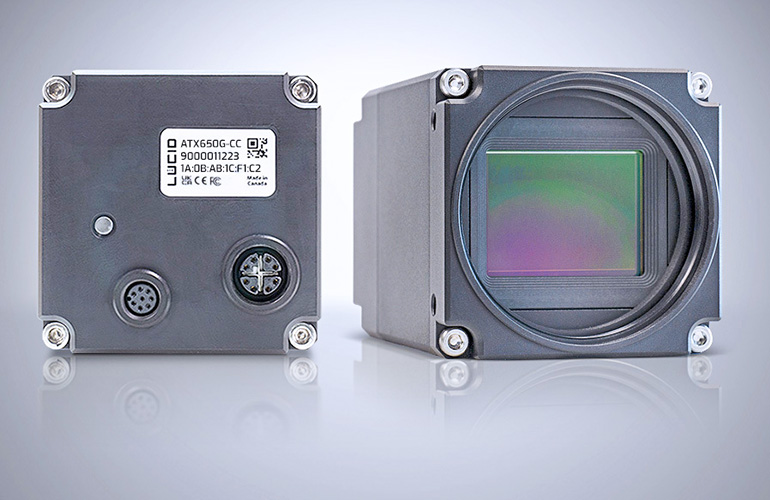
a front and rear view of the Lucid camera.

The ATX650G Atlas10 is a high-performance camera that delivers exceptional image quality and speed for applications that require high bandwidth and low latency. | Credit: LUCID

LUCID Vision Labs, Inc. announced the series production of its new Atlas10 camera featuring the 65 MP Gpixel GMAX3265 image sensor.

The ATX650G Atlas10 is a high-performance camera that delivers exceptional image quality and speed for applications that require high bandwidth and low latency. The camera is designed for industrial, scientific, and medical imaging applications where high-resolution images with high-speed data transfer and global shutter functionality are critical. The Gpixel GMAX3265 CMOS image sensor offers 9344 (H) x 7000 (V) charge global shutter pixels with ultra-low read noise of less than 2e,  greater than 70dB dynamic range, and 1e-/p/s dark current at room temperature. Thanks to its light pipe technology, the sensor exhibits excellent shutter efficiency of 1/30,000 and a large angular response.

“The 65 MP Atlas10 featuring Gpixel’s GMAX3265 image sensor is our highest resolution camera yet,” says Rod Barman, President at LUCID Vision Labs. “By adding this sensor to our camera portfolio, we’re addressing the growing demand for higher resolution sensors to capture a larger inspection area with even more detail and exceptional image quality, such as flat panel display and semiconductor inspection, aerial surveillance and metrology.”

“Gpixel is excited to see LUCID bringing our GMAX3265 signature product to the market as part of their Atlas10 camera portfolio,” says Wim Wuyts, Chief Commercial Officer of Gpixel. “LUCID is a valuable, long-term partner, and we are confident that this partnership will continue to bring the market additional excellent vision solutions”.

The Atlas10 10BASE-T camera is known for its industrial reliability offering Power over Ethernet (PoE+), robust M12 and M8 connectors, Active Sensor Alignment for superior optical performance, and a wide ambient temperature range of -20°C to 50°C. The ATX650G Atlas10 features a TFL-II lens mount designed specifically for large sensor formats. The camera is compatible with 10GigE RDMA technology championed by LUCID for low latency and high throughput image transfer with optimized CPU load.

The Atlas10 is a GigE Vision and GenICam-compliant camera capable of 10 Gbps data transfer rates and allows the use of standard CAT6 cables up to 25 meters. Atlas10 features Power over Ethernet (PoE+) that simplifies integration and reduces cost.

All LUCID cameras conform to the GigE Vision 2.0 and GenICam3 standards and are supported by LUCID’s own Arena software development kit. The Arena SDK provides customers with easy access to the latest industry standards and software technology. The SDK supports Windows, Linux 64bit and Linux ARM operating systems, and C, C++, C# and Python programming languages.

The new ATX650G-MT2/CT2 is now available to order.

About The Author

Mike Oitzman

Mike Oitzman is Senior Editor of WTWH's Robotics Group and founder of the Mobile Robot Guide. Oitzman is a robotics industry veteran with 25-plus years of experience at various high-tech companies in the roles of marketing, sales and product management. Mike has a BS in Systems Engineering from UCSD and an MBA from Golden Gate University. He can be reached at [email protected].

Comments

  1. Steven Star says

    April 26, 2023 at 3:47 am

    What’s the price

    Reply

Tell Us What You Think! Cancel reply

This site uses Akismet to reduce spam. Learn how your comment data is processed.

Related Articles Read More >

headshot of Fareed Aljawhari, ceo of micropolis, along with the podcast logo.
Micropolis builds the future of robotics in Dubai
The ANYmal gas-leak and presence-detection robot is an example of where autonomous operations are going. Source: ANYbotics
Beyond the robot: Shaping the future of autonomous operations
a2rl race car on track.
A2RL autonomous racecars take to the track in Abu Dhabi
profile image of the Burnbot robot.
California agencies eye BurnBot for wildfire prevention

RBR50 Innovation Awards

“rr
EXPAND YOUR KNOWLEDGE AND STAY CONNECTED
Get the latest info on technologies, tools and strategies for Robotics Professionals.

Latest Episode of The Robot Report Podcast

Automated Warehouse Research Reports

Sponsored Content

  • Supporting the future of medical robotics with smarter motor solutions
  • YUAN Unveils Next-Gen AI Robotics Powered by NVIDIA for Land, Sea & Air
  • ASMPT chooses Renishaw for high-quality motion control
  • Revolutionizing Manufacturing with Smart Factories
  • How to Set Up a Planetary Gear Motion with SOLIDWORKS
The Robot Report
  • Automated Warehouse
  • RoboBusiness Event
  • Robotics Summit & Expo
  • About The Robot Report
  • Subscribe
  • Contact Us

Copyright © 2025 WTWH Media LLC. All Rights Reserved. The material on this site may not be reproduced, distributed, transmitted, cached or otherwise used, except with the prior written permission of WTWH Media
Privacy Policy | Advertising | About Us

Search The Robot Report

  • Home
  • News
  • Technologies
    • Batteries / Power Supplies
    • Cameras / Imaging / Vision
    • Controllers
    • End Effectors
    • Microprocessors / SoCs
    • Motion Control
    • Sensors
    • Soft Robotics
    • Software / Simulation
  • Development
    • Artificial Intelligence
    • Human Robot Interaction / Haptics
    • Mobility / Navigation
    • Research
  • Robots
    • AGVs
    • AMRs
    • Consumer
    • Collaborative Robots
    • Drones
    • Humanoids
    • Industrial
    • Self-Driving Vehicles
    • Unmanned Maritime Systems
  • Business
    • Financial
      • Investments
      • Mergers & Acquisitions
      • Earnings
    • Markets
      • Agriculture
      • Healthcare
      • Logistics
      • Manufacturing
      • Mining
      • Security
    • RBR50
      • RBR50 Winners 2025
      • RBR50 Winners 2024
      • RBR50 Winners 2023
      • RBR50 Winners 2022
      • RBR50 Winners 2021
  • Resources
    • Automated Warehouse Research Reports
    • Digital Issues
    • eBooks
    • Publications
      • Automated Warehouse
      • Collaborative Robotics Trends
    • Search Robotics Database
    • Videos
    • Webinars / Digital Events
  • Events
    • RoboBusiness
    • Robotics Summit & Expo
    • DeviceTalks
    • R&D 100
    • Robotics Weeks
  • Podcast
    • Episodes
  • Advertise
  • Subscribe