The Robot Report

  • Home
  • News
  • Technologies
    • Batteries / Power Supplies
    • Cameras / Imaging / Vision
    • Controllers
    • End Effectors
    • Microprocessors / SoCs
    • Motion Control
    • Sensors
    • Soft Robotics
    • Software / Simulation
  • Development
    • Artificial Intelligence
    • Human Robot Interaction / Haptics
    • Mobility / Navigation
    • Research
  • Robots
    • AGVs
    • AMRs
    • Consumer
    • Collaborative Robots
    • Drones
    • Humanoids
    • Industrial
    • Self-Driving Vehicles
    • Unmanned Maritime Systems
  • Business
    • Financial
      • Investments
      • Mergers & Acquisitions
      • Earnings
    • Markets
      • Agriculture
      • Healthcare
      • Logistics
      • Manufacturing
      • Mining
      • Security
    • RBR50
      • RBR50 Winners 2025
      • RBR50 Winners 2024
      • RBR50 Winners 2023
      • RBR50 Winners 2022
      • RBR50 Winners 2021
  • Resources
    • Automated Warehouse Research Reports
    • Digital Issues
    • eBooks
    • Publications
      • Automated Warehouse
      • Collaborative Robotics Trends
    • Search Robotics Database
    • Videos
    • Webinars / Digital Events
  • Events
    • RoboBusiness
    • Robotics Summit & Expo
    • DeviceTalks
    • R&D 100
    • Robotics Weeks
  • Podcast
    • Episodes
  • Advertise
  • Subscribe

Fabric pivots from RaaS to platform sales model

By Mike Oitzman | December 21, 2022

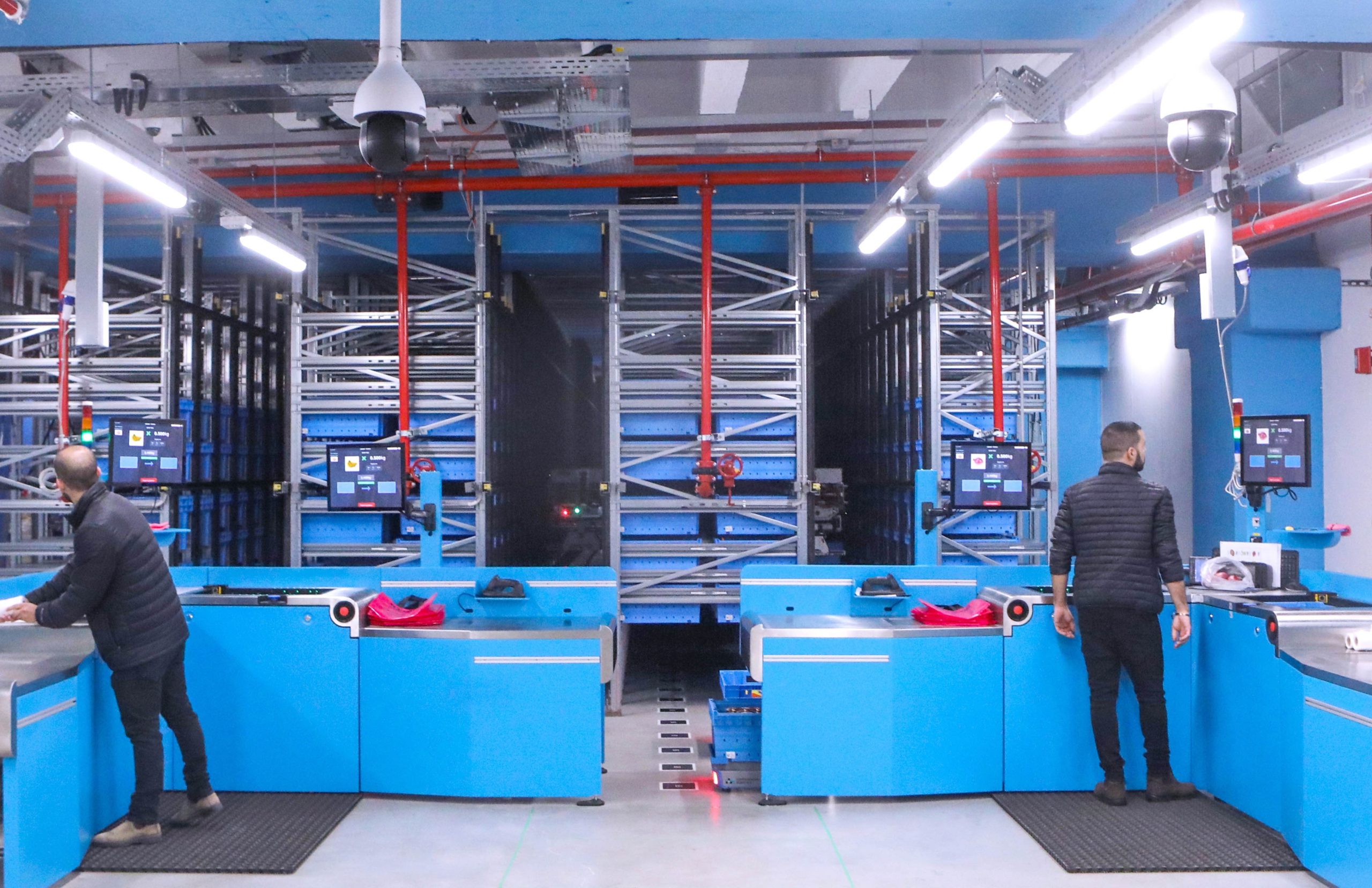
Fabric is an automation supplier to retailers who want to create a micro fulfillment center (MFC) to automate order picking for their curbside and home delivery order management workflows. The company designs and builds an automated storage and retrieval system (ASRS) specifically for automating grocery order picking.

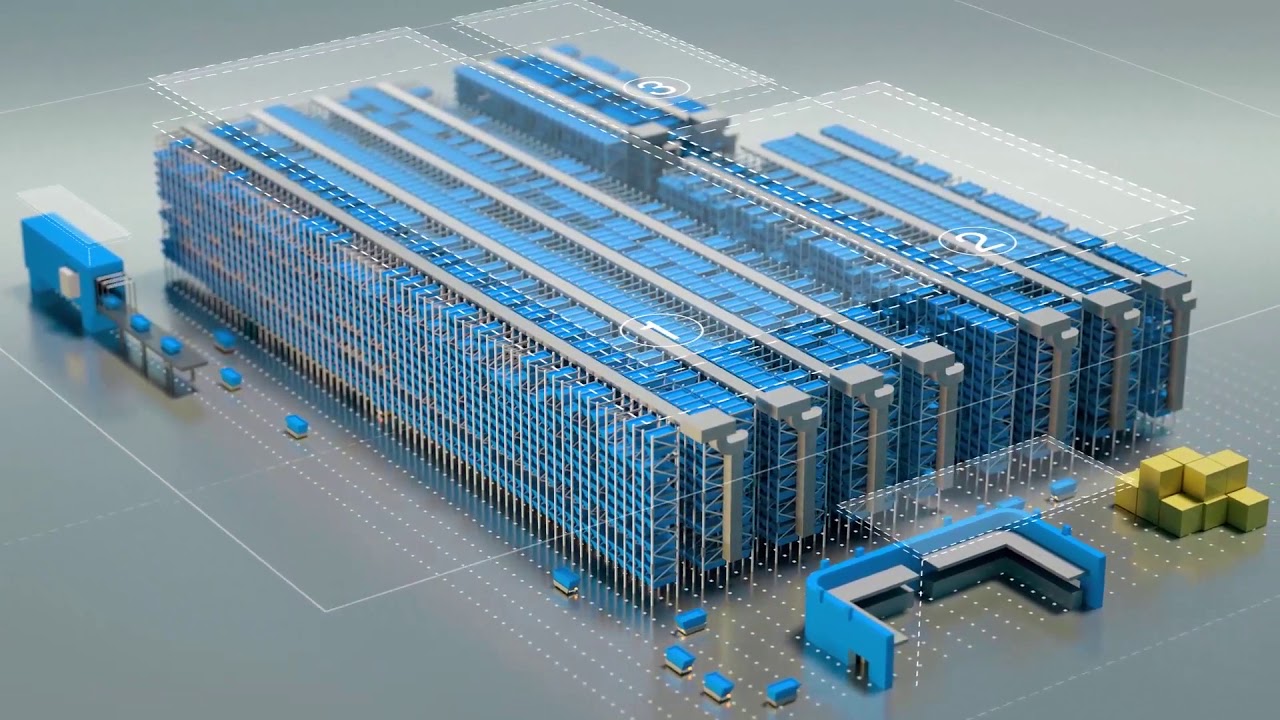
The Fabric solution delivers totes of product SKUs to a pack-out station by leveraging a fleet of autonomous mobile robots (AMR) running around on the warehouse floor, beneath a storage array of totes. The AMRs move the totes into and out of the storage array where the totes are then hoisted into a storage position within the storage array.

Fabric was founded in 2015, and it has raised $336M (source: Crunchbase) through its most recent series C in October 2021.
FreshDirect partners with Fabric for grocery micro-fulfillment in Washington, D.C.

A grocery and ambient micro-fulfillment center in Tel Aviv. | Source: Fabric

Until recently, the company delivered its solution in a Robots as a Service (RaaS) business model. However, in July 2022, the company pivoted from its original RaaS business model to begin selling a platform solution to its end customers. 

This is a significant business decision as it is a deep organizational change from building and deploying a Fabric-owned and operated MFC, to a business model of configuring and then selling the MFC to the end client.

Avi Jacoby, CEO of Fabric said, “the main thing that we understand from our last few years in the market, including the US market is of the online growth and the demand for quick, cheap and high-quality orders combined with dispatch. We see the fact that the customer experience shopping in brick and mortar is significantly reduced due to the fact that retailers are trying to support and address customers both in-store and online.”

Jacoby went on, “Robot startups that deploy their solutions using a RaaS model put themselves on a path that requires additional fundraising. Once the solution is designed and ready for deployment, the startup must then raise the money to build its fleet of robots. For Fabric, the operational solution also requires the installation of the storage array, likely into a green field application and using empty warehouse space. This requires a large capital investment, which is why the company has raised more than $330M to date.”

Fabric also had the opportunity to provide the last mile, delivering goods to the end customer, and according to Jacoby, one of the lessons from the grocery market in the US is that the grocers want to have a relationship with the end customer and provide that last mile delivery interaction. 

The ultimate decision made by Fabric was to pivot from operating the infrastructure to making it possible for the grocers to own and operate this infrastructure.

According to Jacoby, “The retailers were telling us that we have the best-in-class system and topology, and they would like to use the Fabric solution, but they would like to run it by them by themselves, both in general merchandise and grocery, but mainly in grocery and this is the way the path forward.”
Fabric raises $110M Series B for robotic micro fulfillment centers

An example of a large MFC warehouse. | Source: Fabric

The best business-model analogy for what Fabric is attempting to do is that they are moving from building and renting apartments, to building and selling condominiums. MFCs are large infrastructure investments, and the end client (i.e. a grocer) wants to own that infrastructure, rather than pay Fabric an ongoing fee to build and operate it.

There has been a lot of turmoil in the grocery industry over the last few years, primarily due to the Covid pandemic. Buyer behavior changed during the pandemic, and the fear of going out into a public space was the incentive necessary to change buying behavior for a large segment of the population. The result is that online shopping and home/curbside delivery evolved from being a niche market for the most technical-savvy buyers to something that many consumers tried and liked.

Now grocers have to be able to quickly pivot on consumer trends and be able to optimize the shopping experience regardless of whether it’s all online, all in-store, or some mix of both for any consumer.

In summary, Jacoby said, “I can say that we learned so much from the previous experience of providing service to customers [in a Raas model], and especially that we operate our own system; and just imagine how much benefit this brings you when the closed loop learning cycle and the feedback between the operators and R&D is so short, that you’re gonna respond immediately”.

One of the core benefits of a RaaS-based business model is customer intimacy and the ability to know when things aren’t going well in the deployment. The good news for Fabric is that they have been able to learn deep knowledge about the MFC market and to iterate quickly in the product evolution. The solution is relatively mature now, so pivoting to a capital equipment sales model should be easier than if the company had started with this go-to-market strategy.


About The Author

Mike Oitzman

Mike Oitzman is Senior Editor of WTWH's Robotics Group and founder of the Mobile Robot Guide. Oitzman is a robotics industry veteran with 25-plus years of experience at various high-tech companies in the roles of marketing, sales and product management. Mike has a BS in Systems Engineering from UCSD and an MBA from Golden Gate University. He can be reached at [email protected].

Tell Us What You Think! Cancel reply

This site uses Akismet to reduce spam. Learn how your comment data is processed.

Related Articles Read More >

DHL displays different robots at its Experience Center in Illinois. Experts will discuss the future of warehouse automation in a free webinar.
Expert roundtable to examine the future of warehouse automation
The PCI Express Mini Card, part of the mPCIe-DAAI16-8F Family.
ACCES I/O Products releases PCI Express Mini Card multifunction analog I/O module
Alpha version of Humanoid's robot.
QSS partners with Humanoid to advance robotics in Saudi Arabia
Carbon Robotics Founder and CEO Paul Mikesell with the company's LaserWeeder G2.
How Carbon Robotics built the large plant model for its laser weeding robot

RBR50 Innovation Awards

“rr
EXPAND YOUR KNOWLEDGE AND STAY CONNECTED
Get the latest info on technologies, tools and strategies for Robotics Professionals.

Latest Episode of The Robot Report Podcast

Automated Warehouse Research Reports

Sponsored Content

  • Supporting the future of medical robotics with smarter motor solutions
  • YUAN Unveils Next-Gen AI Robotics Powered by NVIDIA for Land, Sea & Air
  • ASMPT chooses Renishaw for high-quality motion control
  • Revolutionizing Manufacturing with Smart Factories
  • How to Set Up a Planetary Gear Motion with SOLIDWORKS
The Robot Report
  • Automated Warehouse
  • RoboBusiness Event
  • Robotics Summit & Expo
  • About The Robot Report
  • Subscribe
  • Contact Us

Copyright © 2025 WTWH Media LLC. All Rights Reserved. The material on this site may not be reproduced, distributed, transmitted, cached or otherwise used, except with the prior written permission of WTWH Media
Privacy Policy | Advertising | About Us

Search The Robot Report

  • Home
  • News
  • Technologies
    • Batteries / Power Supplies
    • Cameras / Imaging / Vision
    • Controllers
    • End Effectors
    • Microprocessors / SoCs
    • Motion Control
    • Sensors
    • Soft Robotics
    • Software / Simulation
  • Development
    • Artificial Intelligence
    • Human Robot Interaction / Haptics
    • Mobility / Navigation
    • Research
  • Robots
    • AGVs
    • AMRs
    • Consumer
    • Collaborative Robots
    • Drones
    • Humanoids
    • Industrial
    • Self-Driving Vehicles
    • Unmanned Maritime Systems
  • Business
    • Financial
      • Investments
      • Mergers & Acquisitions
      • Earnings
    • Markets
      • Agriculture
      • Healthcare
      • Logistics
      • Manufacturing
      • Mining
      • Security
    • RBR50
      • RBR50 Winners 2025
      • RBR50 Winners 2024
      • RBR50 Winners 2023
      • RBR50 Winners 2022
      • RBR50 Winners 2021
  • Resources
    • Automated Warehouse Research Reports
    • Digital Issues
    • eBooks
    • Publications
      • Automated Warehouse
      • Collaborative Robotics Trends
    • Search Robotics Database
    • Videos
    • Webinars / Digital Events
  • Events
    • RoboBusiness
    • Robotics Summit & Expo
    • DeviceTalks
    • R&D 100
    • Robotics Weeks
  • Podcast
    • Episodes
  • Advertise
  • Subscribe