The Robot Report

  • Home
  • News
  • Technologies
    • Batteries / Power Supplies
    • Cameras / Imaging / Vision
    • Controllers
    • End Effectors
    • Microprocessors / SoCs
    • Motion Control
    • Sensors
    • Soft Robotics
    • Software / Simulation
  • Development
    • Artificial Intelligence
    • Human Robot Interaction / Haptics
    • Mobility / Navigation
    • Research
  • Robots
    • AGVs
    • AMRs
    • Consumer
    • Collaborative Robots
    • Drones
    • Humanoids
    • Industrial
    • Self-Driving Vehicles
    • Unmanned Maritime Systems
  • Business
    • Financial
      • Investments
      • Mergers & Acquisitions
      • Earnings
    • Markets
      • Agriculture
      • Healthcare
      • Logistics
      • Manufacturing
      • Mining
      • Security
    • RBR50
      • RBR50 Winners 2025
      • RBR50 Winners 2024
      • RBR50 Winners 2023
      • RBR50 Winners 2022
      • RBR50 Winners 2021
  • Resources
    • Automated Warehouse Research Reports
    • Digital Issues
    • eBooks
    • Publications
      • Automated Warehouse
      • Collaborative Robotics Trends
    • Search Robotics Database
    • Videos
    • Webinars / Digital Events
  • Events
    • RoboBusiness
    • Robotics Summit & Expo
    • DeviceTalks
    • R&D 100
    • Robotics Weeks
  • Podcast
    • Episodes
  • Advertise
  • Subscribe

101 years ago: origins of the word ‘robot’

By Brianna Wessling | January 25, 2022

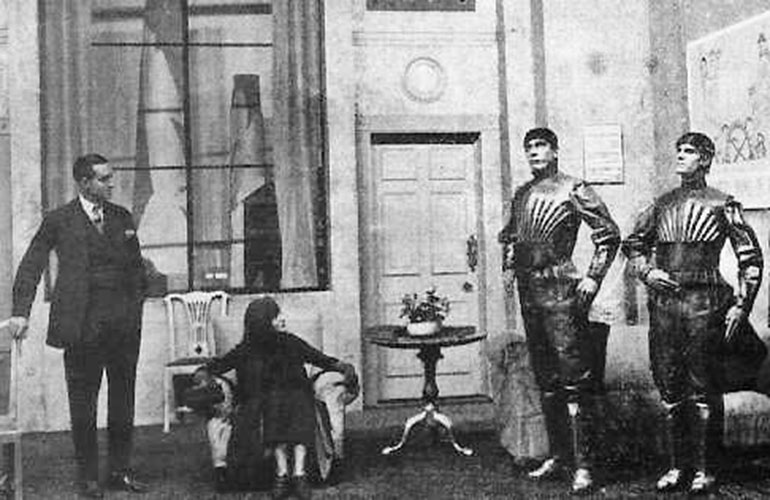
Capek Play

A scene from the 1938 BBC adaptation of R.U.R. | Source: Wikimedia Commons

It’s been 101 years since the Czech play R.U.R., which stands for Rossum’s Universal Robots, premiered on January 25, 1921, introducing the word ‘robot’ to the world.

Karel Čapek, the playwright behind the work, premiered the science fiction play at the National Theatre in Prague, Czech Republic. Čapek drew the word from an old Church Slavic word robota, meaning “servitude” or “forced labor.”

Originally, Čapek wanted to use the Latin word for work, labori. His brother, Josef Čapek, suggested he use roboti, or robot in English, instead.

Čapek’s robots have distinct differences from robots today. In the play, the robots were created using the latest biology, chemistry and physiology, and are meant to “lack everything but a soul.” They’re more artificial biological organisms than machines.

In the play, robots begin doing all the tasks that humans don’t want to do. At the end of the play, the robots revolt against their creators. After wiping out the human population on earth, they realize they don’t have the ability to create more robots without humans.

Čapek died in 1938 at the age of 48 of influenza. The play has since been adapted for television and radio by the BBC.


About The Author

Brianna Wessling

Brianna Wessling is an Associate Editor, Robotics, WTWH Media. She joined WTWH Media in November 2021, after graduating from the University of Kansas with degrees in Journalism and English. She covers a wide range of robotics topics, but specializes in women in robotics, robotics in healthcare, and space robotics.

She can be reached at [email protected]

Tell Us What You Think! Cancel reply

This site uses Akismet to reduce spam. Learn how your comment data is processed.

Related Articles Read More >

Glacier’s robots promise to help the circular economy become more efficient and to improve sustainability.
Inside Glacier’s mission to modernize recycling
headshot of kristian kassow and the podcast logo.
Kristian Kassow: A pioneer in the cobot industry speaks
headshot of Fareed Aljawhari, ceo of micropolis, along with the podcast logo.
Micropolis builds the future of robotics in Dubai
headshot of chris finger and the podcast logo.
Designing space robots: Harmonic Drive shares history, looks ahead

RBR50 Innovation Awards

“rr
EXPAND YOUR KNOWLEDGE AND STAY CONNECTED
Get the latest info on technologies, tools and strategies for Robotics Professionals.

Latest Episode of The Robot Report Podcast

Automated Warehouse Research Reports

Sponsored Content

  • Supporting the future of medical robotics with smarter motor solutions
  • YUAN Unveils Next-Gen AI Robotics Powered by NVIDIA for Land, Sea & Air
  • ASMPT chooses Renishaw for high-quality motion control
  • Revolutionizing Manufacturing with Smart Factories
  • How to Set Up a Planetary Gear Motion with SOLIDWORKS
The Robot Report
  • Automated Warehouse
  • RoboBusiness Event
  • Robotics Summit & Expo
  • About The Robot Report
  • Subscribe
  • Contact Us

Copyright © 2025 WTWH Media LLC. All Rights Reserved. The material on this site may not be reproduced, distributed, transmitted, cached or otherwise used, except with the prior written permission of WTWH Media
Privacy Policy | Advertising | About Us

Search The Robot Report

  • Home
  • News
  • Technologies
    • Batteries / Power Supplies
    • Cameras / Imaging / Vision
    • Controllers
    • End Effectors
    • Microprocessors / SoCs
    • Motion Control
    • Sensors
    • Soft Robotics
    • Software / Simulation
  • Development
    • Artificial Intelligence
    • Human Robot Interaction / Haptics
    • Mobility / Navigation
    • Research
  • Robots
    • AGVs
    • AMRs
    • Consumer
    • Collaborative Robots
    • Drones
    • Humanoids
    • Industrial
    • Self-Driving Vehicles
    • Unmanned Maritime Systems
  • Business
    • Financial
      • Investments
      • Mergers & Acquisitions
      • Earnings
    • Markets
      • Agriculture
      • Healthcare
      • Logistics
      • Manufacturing
      • Mining
      • Security
    • RBR50
      • RBR50 Winners 2025
      • RBR50 Winners 2024
      • RBR50 Winners 2023
      • RBR50 Winners 2022
      • RBR50 Winners 2021
  • Resources
    • Automated Warehouse Research Reports
    • Digital Issues
    • eBooks
    • Publications
      • Automated Warehouse
      • Collaborative Robotics Trends
    • Search Robotics Database
    • Videos
    • Webinars / Digital Events
  • Events
    • RoboBusiness
    • Robotics Summit & Expo
    • DeviceTalks
    • R&D 100
    • Robotics Weeks
  • Podcast
    • Episodes
  • Advertise
  • Subscribe